National Dish Czechia: Medovník (Recipe)
In this article
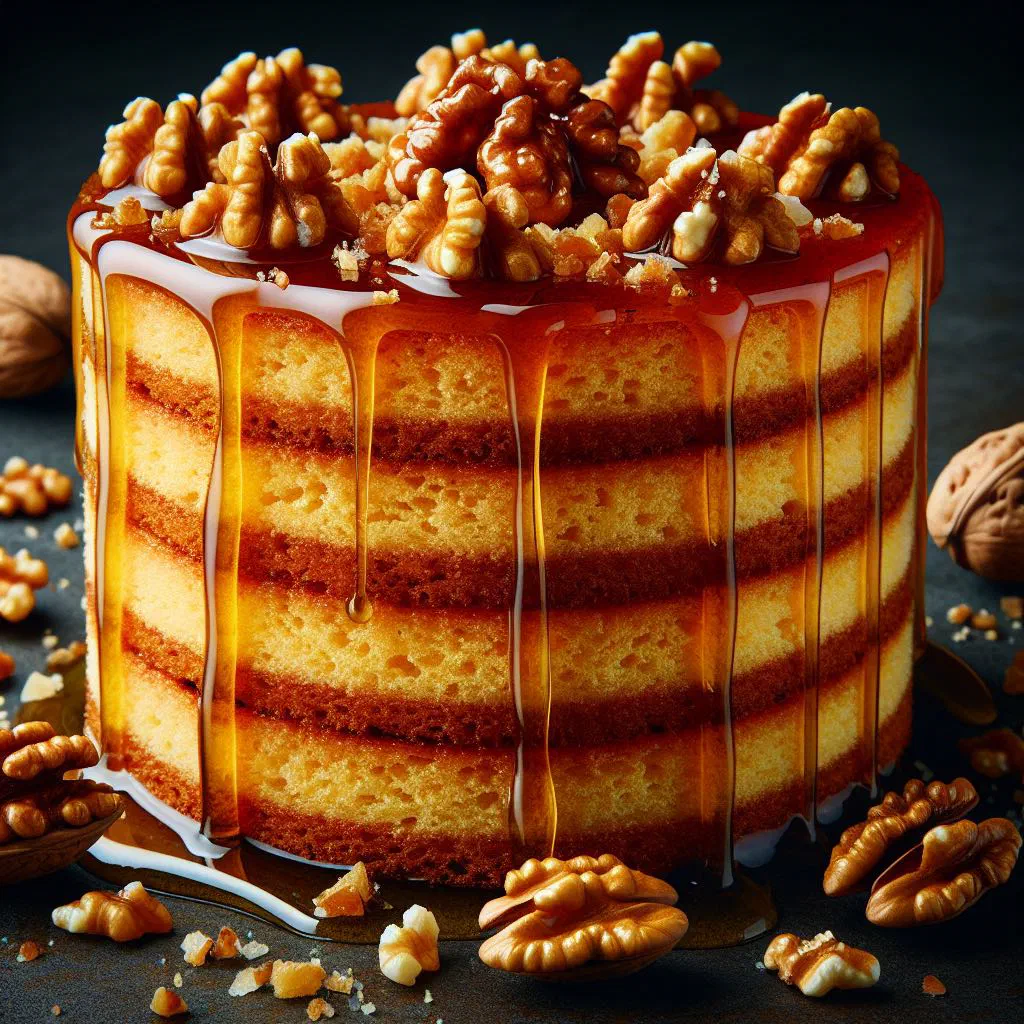
Meet Medovník, the Czech Republic’s beloved honey cake of wafer-thin layers and silky cream. Fragrant with golden honey and finished with a cloud of whipped cream, it is the sort of cake that turns a simple coffee break into an occasion. Traditionally served at celebrations, it rewards a little patience, a day’s rest lets the layers soften and the flavours bloom. Bring this Central European classic to your own kitchen and watch it disappear.
About Medovník
Medovník is a traditional Czech honey cake, treasured for its delicate layers and warm, aromatic honey flavour. It is not only a favourite treat within the Czech Republic but has also won admirers all over the world. With its lavish layer of cream and its tender, melting texture, medovník is often served at festive occasions. This cake never fails to please your guests.
Ingredients (serves 1–2)
- 200 g honey
- 100 g sugar
- 50 g butter
- 3 eggs
- 500 g plain flour
- 1 tsp bicarbonate of soda
- 500 ml whipping cream
- 1 sachet vanilla sugar
Shopping for the ingredients
To make medovník you need only basic ingredients, most of which are available in any supermarket. When shopping, look for good-quality honey, as it shapes the cake’s characteristic flavour more than anything else. Many bakers reach for regional honey to make the recipe feel that bit more authentic. Choose fresh eggs and butter too, so the filling turns out especially creamy and rich.
Preparing the dish
Start by setting out all of your ingredients so the whole process runs smoothly from start to finish. Weighing and preparing everything in advance is key to a satisfying result. Make sure you have plenty of room on your work surface and that all the kitchen tools you need are within easy reach. Good preparation helps you keep track of each step and avoid mistakes while the cake bakes.
Step-by-step instructions
- Melt the honey, sugar and butter together in a pan over low heat until the mixture is smooth and even.
- Add the eggs and stir well to combine.
- Tip the flour and bicarbonate of soda into a bowl, then stir in the warm honey mixture.
- Knead the dough thoroughly until it is smooth, then divide it into 7–8 equal portions.
- Roll each portion out thinly and bake the layers in a preheated oven at 180°C for about 5–8 minutes.
- Leave the layers to cool on a wire rack.
- For the filling, whip the cream with the vanilla sugar until stiff, then spread it over the cooled layers.
- Stack the layers into a cake and cover the outside with the remaining cream.
Gluten-free / lactose-free version
For a gluten-free version of medovník you can use special gluten-free flours, such as rice flour or buckwheat flour. Just make sure every other ingredient is gluten-free too. For a lactose-free cake, use lactose-free cream and butter, both widely available in most supermarkets. That way you can work around food intolerances and let everyone enjoy this wonderful cake.
Tips for vegans and vegetarians
Vegans can adapt medovník by swapping the eggs and butter for plant-based alternatives. You might use aquafaba in place of the eggs, for example, and vegetable oil instead of butter. For the filling, a plant-based whipping cream made from coconut or soya works beautifully. The result is a cake that is not only delicious but suitable for everyone at the table.
More tips and tricks
To make medovník even more delicious, you can stir warming spices such as cinnamon or cloves into the dough. Adding nuts or chocolate to the filling brings an extra layer of flavour, too. Above all, let the cake rest for at least a day after assembling, as this gives the aromas time to develop fully. A cake that has had time to mature often tastes even better than a freshly baked one.
Adapting the recipe to your taste
The lovely thing about medovník is how versatile it is and how easily it adapts to your own preferences. Fancy something fruity? Fold puréed fruit through the cream. Chocolate lovers can work cocoa powder into the dough or the filling. Experiment with different flavourings to create your very own favourite version of this Czech classic.
Ingredient substitutions
If you would rather not use honey, you can reach for maple syrup or agave nectar instead. Vegetarians who prefer to avoid honey will find an agave-based product a fine stand-in. There are also plenty of plant-based cream alternatives on the market that work perfectly for the filling. Substitutions like these give you the freedom to shape the recipe around your own needs, much as you would with the layered Bublanina.
Drink pairing ideas
Medovník pairs wonderfully with a range of drinks. An aromatic coffee or a fine tea underlines the sweetness of the cake. For special occasions you might serve a fragrant rooibos or a glass of rosé wine, both of which complement the honey and cream notes. Choose whatever your guests will enjoy most to round off the experience.
Serving and presentation ideas
A handsome presentation makes serving medovník feel like a real moment. Set the cake on an elegant stand and decorate it with fresh fruit or edible flowers. You could also dress the serving platter with sliced fruit or a pretty cloth to refine the overall look. A creative presentation turns this dessert into a genuine showstopper at any celebration.
A bit of history
Medovník has its origins in Czech cuisine and has been made in the traditional way for centuries. The pairing of honey drawn from nature with tender, wafer-thin layers is characteristic of many Czech desserts, from festive bakes to everyday treats within Czech cuisine. The cake is often served at special occasions and celebrations, where it stands for traditional values and a love of good food. Over the years it has taken root in various forms in other countries too.
More recipe ideas
Summary: Medovník
Medovník is more than a heavenly dessert that seduces the palate; it is also a symbol of Czech gastronomy. With its many-layered flavours it is ideal for special occasions, yet just as perfect for treating yourself. This cake is always a highlight. Let this sweet temptation inspire you and conjure up a version all your own.