National Dish Denmark: Stegt Flæsk med Persillesauce (Recipe)
In this article
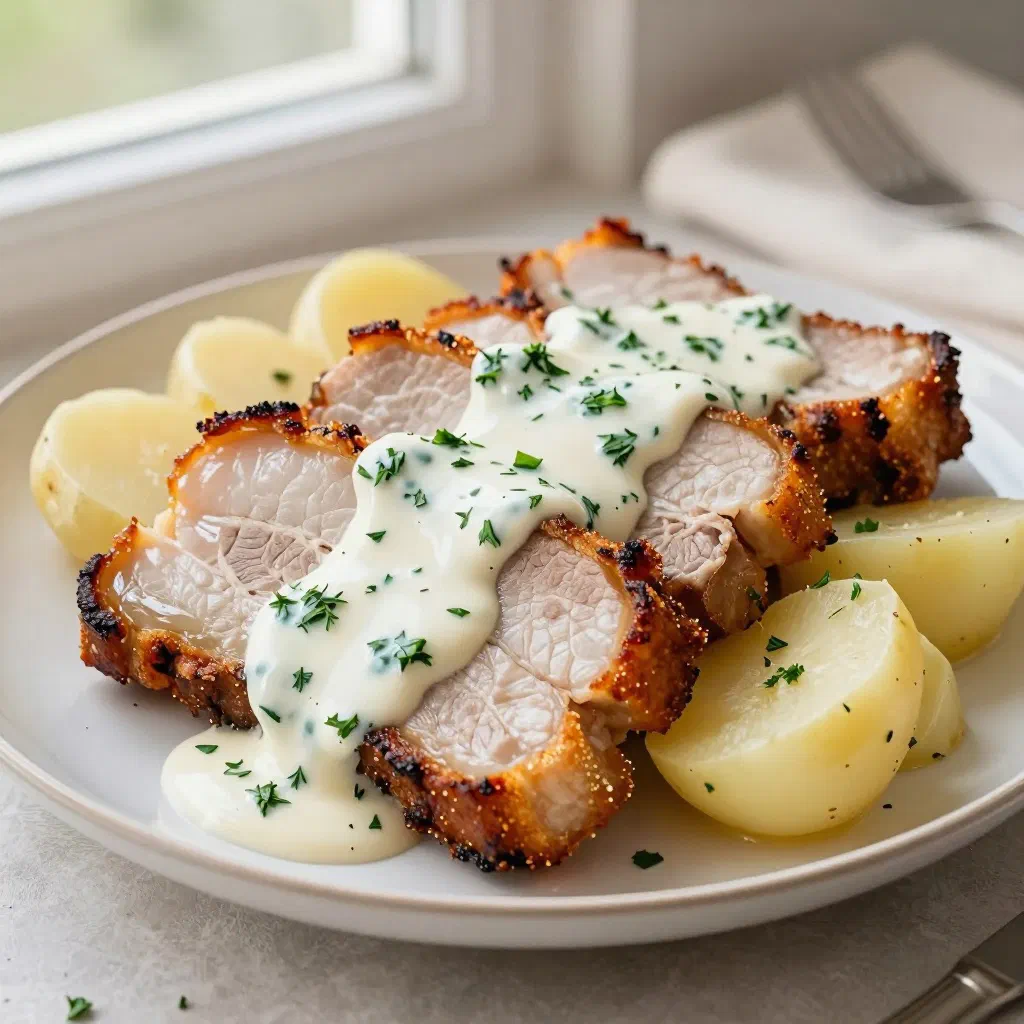
Stegt Flæsk med Persillesauce won a public vote in 2014 to become Denmark’s official national dish, beating everything more fashionable. It is fried pork belly, boiled potatoes and a parsley cream sauce. The pork is fried dry, without added fat, until it snaps.
About Stegt Flæsk med Persillesauce
The dish is a stegt flæsk ad libitum in Danish restaurants, meaning the pork keeps coming until you stop. It is unglamorous by design: three components, no garnish, nothing modern about it.
The parsley sauce is a béchamel with a large quantity of flat-leaf parsley folded through. It should be green, not white with flecks.
Ingredients (serves 1–2)
- 500 g pork belly, sliced
- 1 bunch fresh parsley
- 300 ml double cream
- 2 tablespoons plain flour
- 100 g butter
- Salt and pepper to taste
- 500 g potatoes
Shopping for the ingredients
Ask the butcher for pork belly sliced about 5 mm thick, rind on. Thinner slices burn, thicker ones stay chewy. Use flat-leaf parsley and a lot of it: a full bunch for 300 ml of sauce is correct, not excessive. Waxy potatoes hold together when boiled.
Preparing the dish
Pat the pork slices completely dry. Chop the parsley finely just before it goes in the sauce, since it darkens quickly. Boil the potatoes while the pork fries, so everything is ready together.
Step-by-step instructions
- Fry the pork belly slices in a dry pan over medium heat, without extra fat, until they are golden and crisp.
- Meanwhile, boil the potatoes until tender, then drain them well.
- For the sauce, melt the butter in a saucepan and stir in the flour to make a roux.
- Add the cream slowly, stirring constantly, until the sauce thickens to a smooth, pourable consistency.
- Stir in the chopped parsley and season generously with salt and pepper.
- Serve the fried pork with the parsley sauce spooned over the boiled potatoes.
Gluten-free / lactose-free version
Replace the flour in the roux with cornflour and the sauce is gluten-free. Lactose-free is harder, since the sauce is butter and cream; a lactose-free cream works, and oat cream is a passable plant alternative that holds together when heated.
Tips for vegans and vegetarians
The pork is not replaceable. The parsley sauce over new potatoes is a real Danish side dish on its own, and with a plant cream and oil-based roux it becomes vegan. Serve it with roasted root vegetables for a plate that makes sense.
More tips and tricks
Start the pork in a cold dry pan and let the fat render slowly. Adding oil is the classic mistake: the belly has plenty of its own and the added fat stops it crisping. Pour off the rendered fat as it accumulates and keep it, since Danes fry potatoes in it. And do not stint on the parsley.
Adapting the recipe to your taste
Some households add a splash of the potato water to loosen the sauce, which is worth doing. Oven-baking the pork at 200°C on a rack is the easier route for a crowd. Pickled beetroot on the side is common.
Ingredient substitutions
Streaky bacon works but is saltier and less satisfying. Milk in place of cream makes a lighter sauce, which is the more traditional version. Chives can join the parsley.
Drink pairing ideas
A Danish pilsner and a schnapps, in that order and then repeated, is the correct answer. Aquavit specifically. Buttermilk is the non-alcoholic tradition and suits it better than it sounds.
Serving and presentation ideas
Potatoes on the plate, sauce over the potatoes, pork alongside so it stays crisp. Never sauce the pork. It is a plain white plate of food and any attempt to dress it up misses what Danes voted for.
A bit of history
Pork has been Denmark’s meat for centuries and the country still exports more of it per head than almost anywhere. The 2014 vote, run by the Ministry of Food, was won by a dish that most commentators expected to lose to smørrebrød. Danes chose the plainer thing. It anchors Danish cuisine.
More recipe ideas
Summary: Stegt Flæsk med Persillesauce
Crisp fried pork belly, boiled potatoes and a parsley cream sauce. Fry the pork dry from a cold pan, use a whole bunch of parsley, and never pour the sauce over the meat.