National Dish Egypt: Dukkah (Recipe)
In this article
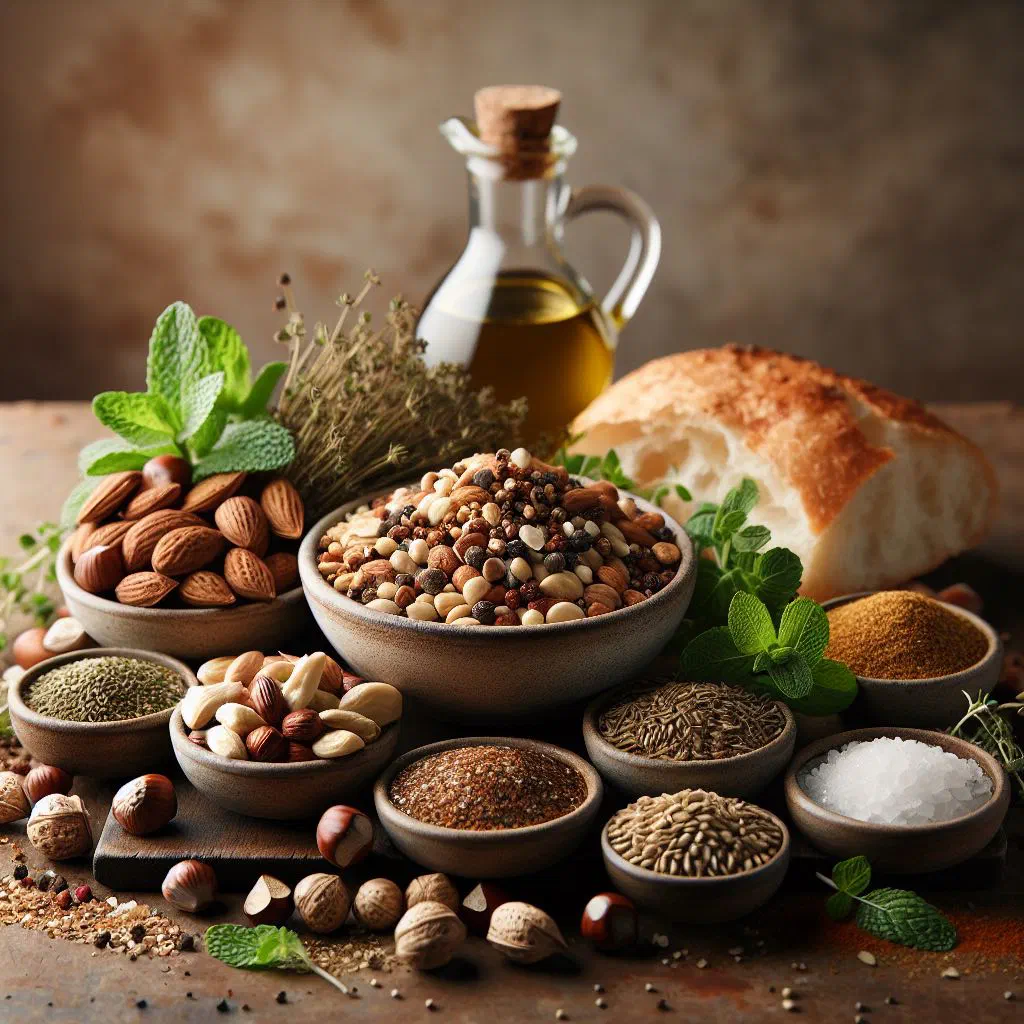
Say hello to Dukkah, Egypt’s wonderfully fragrant blend of toasted nuts, seeds and warming spices. Crunchy, nutty and gently spiced, it is the kind of pantry staple that turns the simplest bite into something memorable. Traditionally served alongside good olive oil for dipping bread, it is endlessly adaptable, scattered over salads, pressed onto meats or sprinkled across roasted vegetables. Once you have a jar in the cupboard, you will reach for it again and again.
About Dukkah
Dukkah is a traditional Egyptian spice blend prized for its singular combination of hazelnuts, sesame seeds and aromatic spices. With its roots firmly in Egyptian cooking, it has gone on to win admirers around the world. Most often it is enjoyed as a dip, served with a pool of olive oil for a moreish and genuinely healthy snack. Beyond that, dukkah is remarkably versatile and finds its way into all manner of dishes, from fresh salads to hearty meat dishes.
Ingredients (serves 1–2)
- 50g roasted hazelnuts
- 25g sesame seeds
- 25g coriander seeds
- 25g cumin seeds
- 1 tsp sea salt
- 1 tsp black pepper
- 1 tsp paprika (optional)
Shopping for the ingredients
For the best dukkah, it pays to choose nuts and seeds that are fresh and of good quality. A health-food shop or a busy fruit-and-veg market is the ideal place to track down top-notch produce. Some of these ingredients can also be bought in bulk from wholefood stores. Try to buy your spices in small batches so you can be sure of their aroma and freshness, much as you would when sourcing the ingredients for a fragrant Tabbouleh.
Preparing the dish
To get dukkah ready, it helps to weigh out and set aside all of your ingredients in advance. Begin by roughly chopping the hazelnuts and seeds so their flavours come through more clearly during toasting. You can also decide whether to grind whole spices such as coriander and cumin fresh, or to reach for ready-ground versions instead. A combination of the two can deepen the layers of flavour and make the finished blend that little bit more exciting.
Step-by-step instructions
- Preheat the oven to 180°C and line a baking tray with baking paper.
- Spread the hazelnuts, sesame, coriander and cumin seeds across the tray.
- Toast the mixture for about 10–15 minutes, until golden and fragrant.
- Once cooled, tip everything into a food processor and grind to a coarse texture.
- Add the sea salt, black pepper and paprika, then mix well to combine.
- Spoon the dukkah into an airtight jar and store somewhere cool and dark.
Gluten-free / lactose-free version
Dukkah is naturally gluten-free and lactose-free, since it contains no dairy and no gluten-bearing ingredients. You can add it to your diet with complete confidence if you live with coeliac disease or lactose intolerance. It is also easy to choose every ingredient in organic quality, ensuring you enjoy the purest possible form of the spices and nuts.
Tips for vegans and vegetarians
Dukkah is a brilliant choice for vegans and vegetarians, as every ingredient is entirely plant-based. It makes for a fantastic little package of protein and nutrients, equally at home on salads, with vegetable dishes or simply as a dip. To ring the changes, try swapping in other nuts and seeds such as almonds or sunflower seeds. This lets you tailor your dukkah to your own taste and to whatever you happen to have in the cupboard.
More tips and tricks
One of the most important tips when making dukkah is to watch the toasting time closely. Take care not to scorch the nuts and seeds, as burning will spoil the flavour. Keep an eye on the mixture while it is in the oven and check it regularly. You can also experiment with different spices to create flavours all your own, a little cinnamon or nutmeg can lift the whole blend to a new level.
Adapting the recipe to your taste
One of the best things about dukkah is its sheer versatility. You can tweak the recipe easily to suit what you like or what you have to hand. Add more paprika, for instance, for a spicier edge, or combine different nuts to explore new textures.
Ingredient substitutions
If you do not have roasted hazelnuts to hand, almonds or even pistachios make excellent stand-ins for dukkah. The sesame can likewise be swapped for other seeds, such as sunflower seeds. Stick to the basic principles of the blend and experiment freely to arrive at a unique version of your own, the same spirit of improvisation that gives a dish like Baba Ghanoush its character.
Drink pairing ideas
Dukkah goes beautifully with sparkling drinks such as mineral water, or with fruity lemonades that round out its flavours. A surprisingly good companion is a light rosé wine, which harmonises the various spices and aromas. A cup of green tea also makes for a refreshing pairing that brightens the whole spread.
Serving and presentation ideas
The presentation of dukkah should be every bit as appealing as its taste. Serve the blend in a small bowl alongside a portion of good-quality olive oil for dipping. Alternatively, lay out a generous spread of vegetables, bread and dips, with the dukkah standing out as a special topping. Scatter over fresh herbs and spices to finish, conjuring an authentic taste of Egyptian cuisine. It works wonderfully as part of a mezze table alongside creamy Hummus.
A bit of history
Dukkah has its roots in Egypt and has been a fixture of the country’s cooking for centuries. Its name comes from the Arabic word dakka, meaning “to pound” or “to crush”. The blend began life as a quick, sustaining snack for workers and farmers. Today dukkah is popular not only in Egypt but across many other parts of the world, cherished everywhere for its distinctive flavour and its versatility.
More recipe ideas
Summary: Dukkah
Dukkah offers a delicious and versatile way to experience the authentic flavours of Egyptian cooking. With its mix of toasted nuts, seeds and assorted spices, this dip is simple to make and healthy and full of flavour. Give it a try and discover the culinary variety that dukkah can bring to your table.