National Dish Egypt: Eish Shamsi (Recipe)
In this article
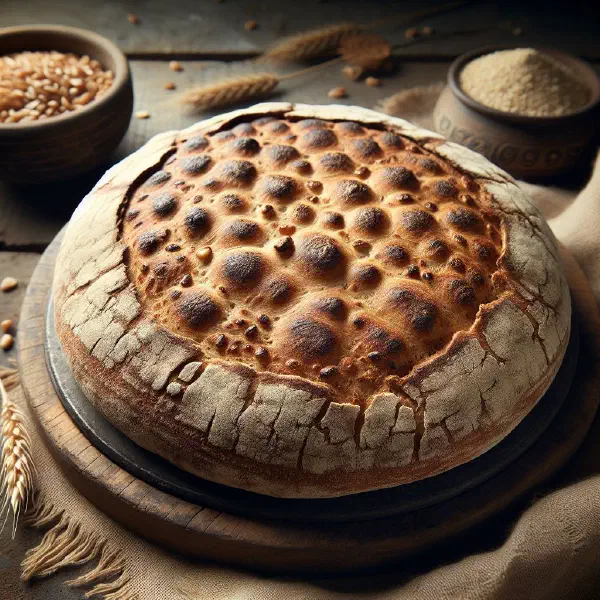
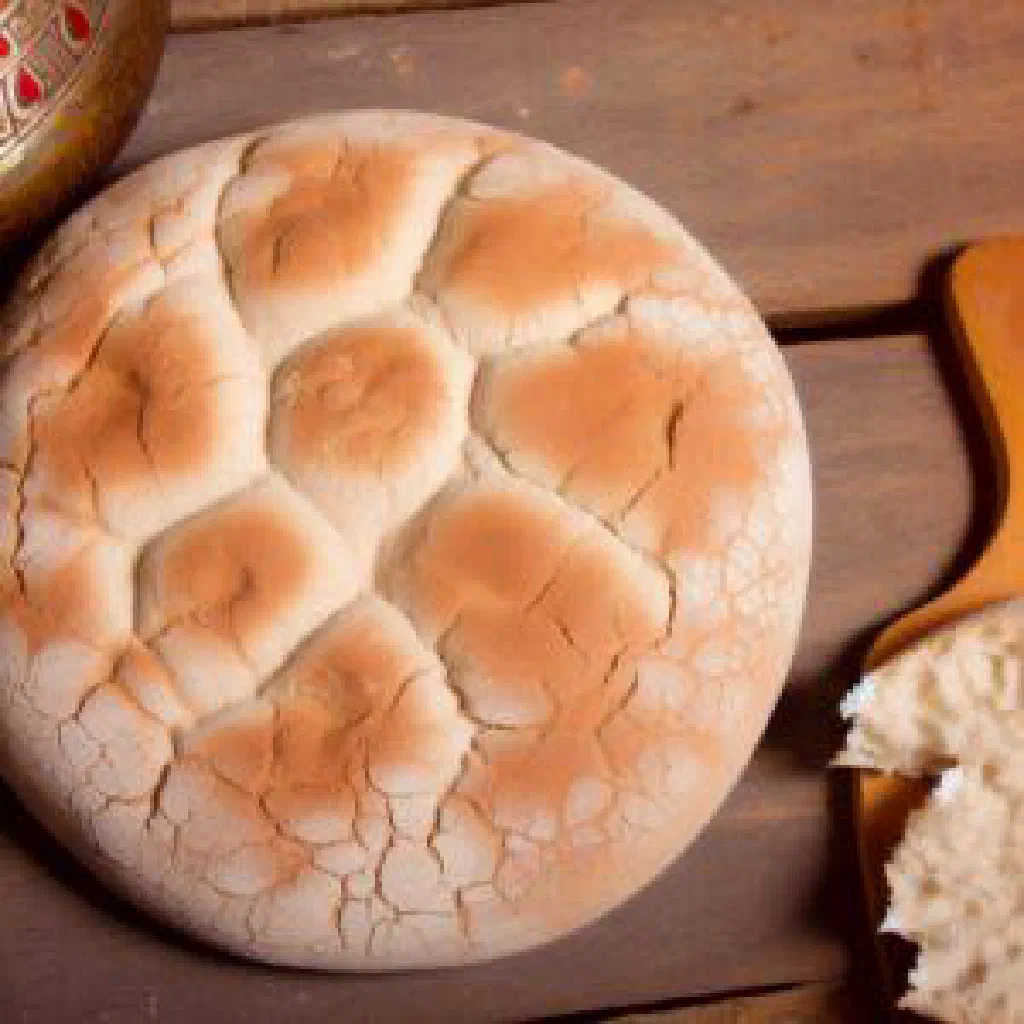
Eish Shamsi means “sun bread”, and the name is entirely literal: in Upper Egypt the shaped loaves are left to rise outdoors under the sun, covered against the dust, before they go into a fiercely hot oven. The result is a rustic sourdough with a robust, faintly tangy flavour, a crisp crust and an open crumb — and it works just as well proved on a warm windowsill.
About Eish Shamsi
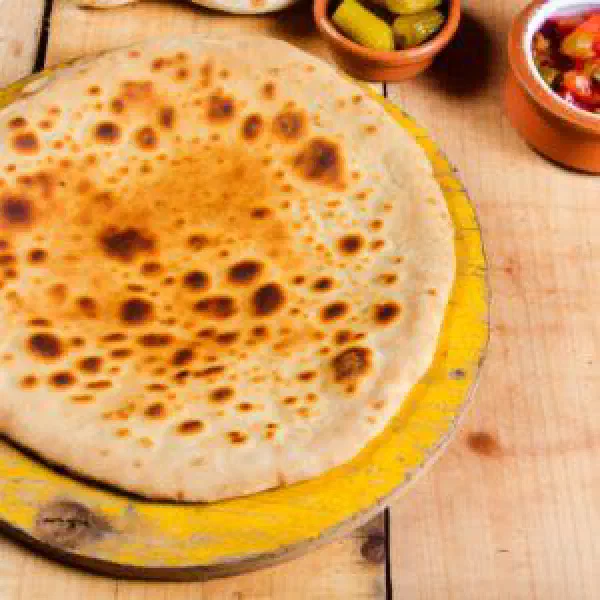
Eish Shamsi translates literally as “sun bread” and refers to a traditional Egyptian flatbread made with a natural sourdough starter. Its name comes from the method: the shaped dough is left to rise in the sun, covered, before baking, which gives the bread its characteristic aroma. It is usually made from a mixture of wholemeal and white wheat flour, which lends it a hearty, slightly sour note.
Ingredients (serves 1–2)
- 150 g wholemeal wheat flour
- 100 g plain wheat flour
- 150 ml lukewarm water
- 50 g active sourdough starter (or 3 g dried yeast as an alternative)
- ½ teaspoon salt
- 1 teaspoon sugar
- 1 tablespoon olive oil
Shopping for the ingredients
A stone-ground wholemeal flour makes a noticeable difference here, since it carries most of the flavour, look for one that smells nutty rather than dusty. If you keep a sourdough starter, feed it the day before so it is lively; otherwise dried yeast produces a perfectly good loaf with a milder taste. Everything else is standard pantry stock.
Preparing the dish
Mix the starter with the lukewarm water so it disperses evenly. Combine both flours with the salt and sugar in a large bowl. Find a genuinely warm spot for proving, a sunny windowsill, the top of a radiator or an oven with only the light on. Have a baking stone or heavy tray in the oven and preheat it thoroughly; this bread wants fierce bottom heat.
Step-by-step instructions
- Stir the sourdough starter into the lukewarm water until dispersed.
- Add both flours, the salt, sugar and olive oil, and knead to a soft dough (8–10 minutes).
- Cover and leave to rise in a warm place for 3–4 hours with sourdough, or 1 hour with yeast.
- Divide the dough and shape into flat rounds about 1.5 cm thick.
- Cover and let them prove again in the warmest spot you have, 45–60 minutes.
- Bake on a preheated stone or tray at 250 °C for 12–15 minutes, until puffed and browned.
- Wrap the hot loaves briefly in a cloth to keep the crust from hardening too much.
Gluten-free / lactose-free version
The bread is naturally lactose-free. A gluten-free version needs a bread-specific blend with psyllium husk and a gluten-free sourdough starter (buckwheat or rice-based work well), the flavour comes out surprisingly close, though the crumb will be tighter and the loaf should be baked slightly longer at a lower temperature.
Tips for vegans and vegetarians
Eish Shamsi is vegan exactly as written. It is the natural partner to Egypt’s great plant-based dishes: tear it into ful medames, scoop up ta’ameya, or use it to mop a plate of mulukhiyah. A drizzle of olive oil and a dusting of dukkah turns a piece of it into a meal in itself.
More tips and tricks
Warmth is everything for the rise, if your kitchen is cool, the sourdough version will simply take longer, so judge by the dough rather than the clock. Bake as hot as your oven allows; the sudden heat is what makes the bread puff. And do not skip the cloth after baking: it traps steam and keeps the crumb soft.
Adapting the recipe to your taste
Some bakers work a spoonful of cornmeal or a handful of bran into the dough for extra rustic texture. Sprinkling the shaped loaves with sesame or nigella seeds before baking is common and adds real character. For a softer, more everyday loaf, increase the proportion of white flour.
Ingredient substitutions
Dried yeast replaces sourdough directly, though you lose the tang, a spoonful of plain yoghurt in the dough gets some of it back. Spelt flour makes an excellent substitute for the wholemeal wheat. Any neutral oil stands in for the olive oil without much loss.
Drink pairing ideas
Bread of this kind is eaten with meals rather than alongside a drink, but in Egypt the accompaniment is usually sweet black tea or, at breakfast, a glass of milk. Anise tea is another traditional companion, especially in the cooler months.
Serving and presentation ideas
Serve Eish Shamsi warm and whole, stacked in a cloth-lined basket, and let people tear it themselves. It is best used as an edible utensil, for scooping ful, dipping in olive oil and dukkah, or wrapping around falafel. Any leftovers dry beautifully and can be crumbled into fattah.
A bit of history
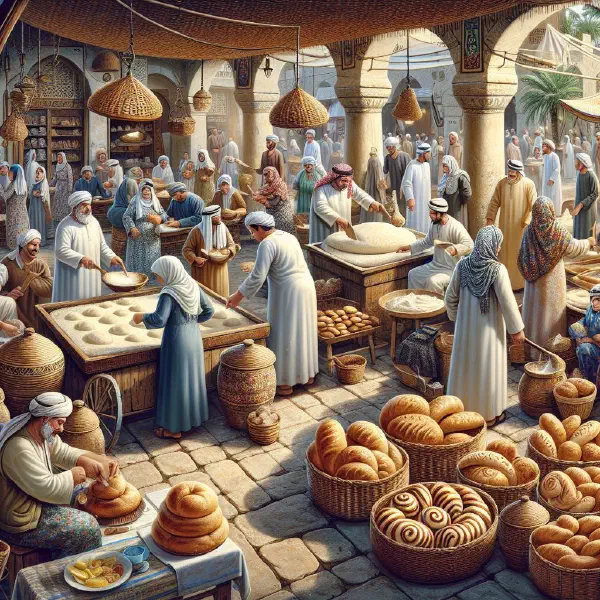
Sun-proved breads are among the oldest documented in Egypt, and the technique is depicted in tomb paintings from the pharaonic era, bread and beer were the twin staples of ancient Egyptian life. In villages of Upper Egypt the practice survives almost unchanged, with communal ovens and dough left to rise on wooden boards in the sun. It is a genuine window onto Egyptian cuisine and its extraordinary continuity.
More recipe ideas
Summary: Eish Shamsi
Eish Shamsi is Egypt’s sun-risen sourdough: wholemeal and white flour, a lively starter, a warm place to prove and a very hot oven. It rewards patience with a crackling crust and a tangy, open crumb, and it turns simple dishes like ful or falafel into something complete. Bake it once and you will understand why the method has survived for millennia.