National Dish Egypt: Shakshouka (Recipe)
In this article
Few dishes capture the warmth of North African cooking quite like Shakshouka, a sizzling pan of poached eggs set in a rich, spiced tomato sauce. Beloved across Egypt and the wider Middle East, it brings together ripe tomatoes, peppers and onions with a fragrant blend of cumin and paprika. Equally at home on the breakfast table or as a relaxed supper, it is the kind of comforting, one-pan meal that turns simple ingredients into something truly memorable.
About Shakshouka
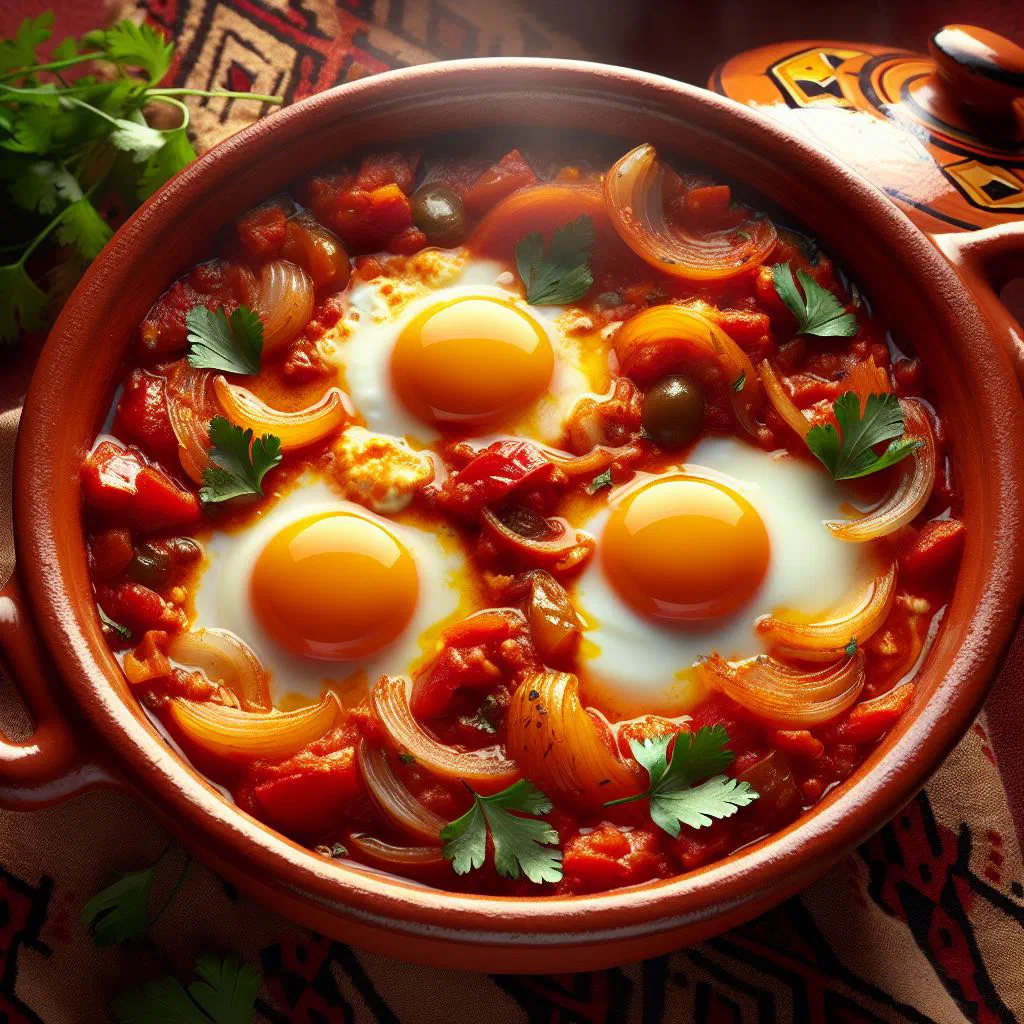
Shakshouka is a traditional Egyptian dish distinguished by its very good combination of poached eggs and a deeply aromatic tomato sauce. Though its origins lie in North Africa, it quickly won fans across many countries of the Middle East and the Mediterranean. The foundation of the dish is built on ripe tomatoes, harmoniously brought together with onions, peppers and a generous mix of spices. The crowning glory is the freshly poached eggs, cracked straight into the bubbling sauce so they cook gently among the well-seasoned vegetables.
Ingredients (serves 1–2)
- 2–4 eggs
- 1 large tin of chopped tomatoes, or 4 fresh tomatoes, diced
- 1 medium onion, diced
- 1 red pepper, diced
- 2 cloves of garlic, finely chopped
- 1 tsp paprika
- 1 tsp ground cumin
- Salt and pepper, to taste
- Olive oil, for frying
- Fresh herbs such as parsley or coriander, to garnish
Shopping for the ingredients
To make Shakshouka you will need a handful of fresh ingredients, most of which are easy to find in any supermarket. When choosing your tomatoes, look for ripe, juicy specimens, as these have a real influence on the flavour of your sauce. Spices such as paprika and cumin matter just as much, rounding out the dish and giving it the warmth it needs. Fresh herbs are a flavour boost and a pretty garnish for the finished result, much as they would be for a refreshing Tabbouleh.
Preparing the dish
Before you begin cooking your Shakshouka, it pays to get all the ingredients ready. Chop the vegetables, such as the onions and peppers, into small dice, and finely chop the garlic. This ensures everything cooks evenly and gives the flavours the chance to mingle beautifully. It is also worth measuring out the spices in advance, so you can move quickly and confidently once the pan is hot.
Step-by-step instructions
- Heat the olive oil in a large frying pan over a medium heat.
- Add the onion and the pepper and fry until softened.
- Stir in the garlic and continue to cook for about a minute.
- Add the chopped tomatoes and the spices, then let the mixture simmer until it has thickened slightly.
- Using a spoon, make small wells in the sauce and gently crack the eggs into them.
- Cover the pan and let the eggs cook for 5–7 minutes, until the whites are set but the yolks remain slightly runny.
- Garnish with fresh herbs and serve straight away.
Gluten-free / lactose-free version
Shakshouka is naturally a gluten-free and lactose-free dish, making it a wonderful choice for anyone with related allergies or intolerances. Simply take care to use fresh ingredients and spices that contain no hidden allergens. Because the dish is built around eggs and vegetables, you can prepare it without any additives at all. As a result, no adjustments are needed for a gluten-free or lactose-free version of the recipe.
Tips for vegans and vegetarians
For vegans, Shakshouka can be made with plant-based egg alternatives. Several products on the market, often based on chickpea flour or tofu, offer a texture similar to eggs. Alternatively, you can simply leave the eggs out altogether and enjoy the recipe as a hearty vegetable dish. Be sure to adjust the spices and herbs to your own taste to draw out the fullest possible flavour. The dish naturally suits vegetarians, much like a comforting bowl of Foul Medames.
More tips and tricks
To get the very best from your Shakshouka, do experiment with different spices and aromatics. Some like a little heat from fresh chilli or chilli powder, while others prefer a hint of sweetness from a pinch of sugar or honey. You can also enrich the dish with feta or a splash of cream for a more velvety consistency. One important tip is not to overcook the sauce, so it stays fresh and lively.
Adapting the recipe to your taste
Shakshouka is wonderfully versatile and easy to tailor to your own preferences. Instead of fresh tomatoes you can reach for tinned varieties when fresh ones are not available. You can also vary the vegetables, adding courgette, aubergine or spinach to the pan. If you would like it more filling, you might even stir through chickpeas or lentils for an extra boost of protein and fibre.
Ingredient substitutions
Shakshouka is extremely adaptable and lends itself easily to swaps. In place of fresh tomatoes, tinned tomatoes work perfectly when fresh are out of season. You can also switch up the vegetables, courgette, aubergine or spinach all sit happily in the sauce. For a more substantial result, fold in chickpeas, much as you would in a creamy bowl of Hummus, or add lentils for extra heartiness.
Drink pairing ideas
A hearty Shakshouka pairs beautifully with a fresh mint tea or a light yoghurt drink to round off the flavours. A tangy pomegranate juice can also harmonise well, bringing a sweet note into play. For a traditional touch, you might offer a strong, aromatic Arabic coffee. Depending on your preference, alcohol-free cocktails made with citrus fruits make refreshing companions too.
Serving and presentation ideas
An attractive presentation can lift the whole experience considerably. Serve Shakshouka straight from the pan in which it was cooked, garnished with fresh herbs and a drizzle of olive oil. It looks especially inviting when accompanied by crusty bread or warm flatbreads such as Aish Baladi. A colourful selection of sides, such as pickled vegetables or a fresh salad, can also offer a pleasing visual and flavour contrast.
A bit of history
Shakshouka has its roots in Arabic cuisine and has been a much-loved dish in countless forms and variations for centuries. Its exact origins are debated, but many believe it began in North Africa. The word “Shakshouka” means “mixture” in Arabic, a nod to the medley of ingredients prepared together in the pan. It is frequently served at breakfast, yet enjoyed just as happily as a hearty lunch or dinner, a true gem of Egyptian cuisine.
More recipe ideas
Summary: Shakshouka
Shakshouka is a culinary pleasure and a simple way to bring a little piece of Egypt into your own kitchen. With fresh ingredients and a preparation that can be adjusted to suit every palate, this dish offers endless possibilities. Enjoy trying out new variations and discovering the story behind this delicious dish.