National Dish England: Battenberg Cake (Recipe)
In this article
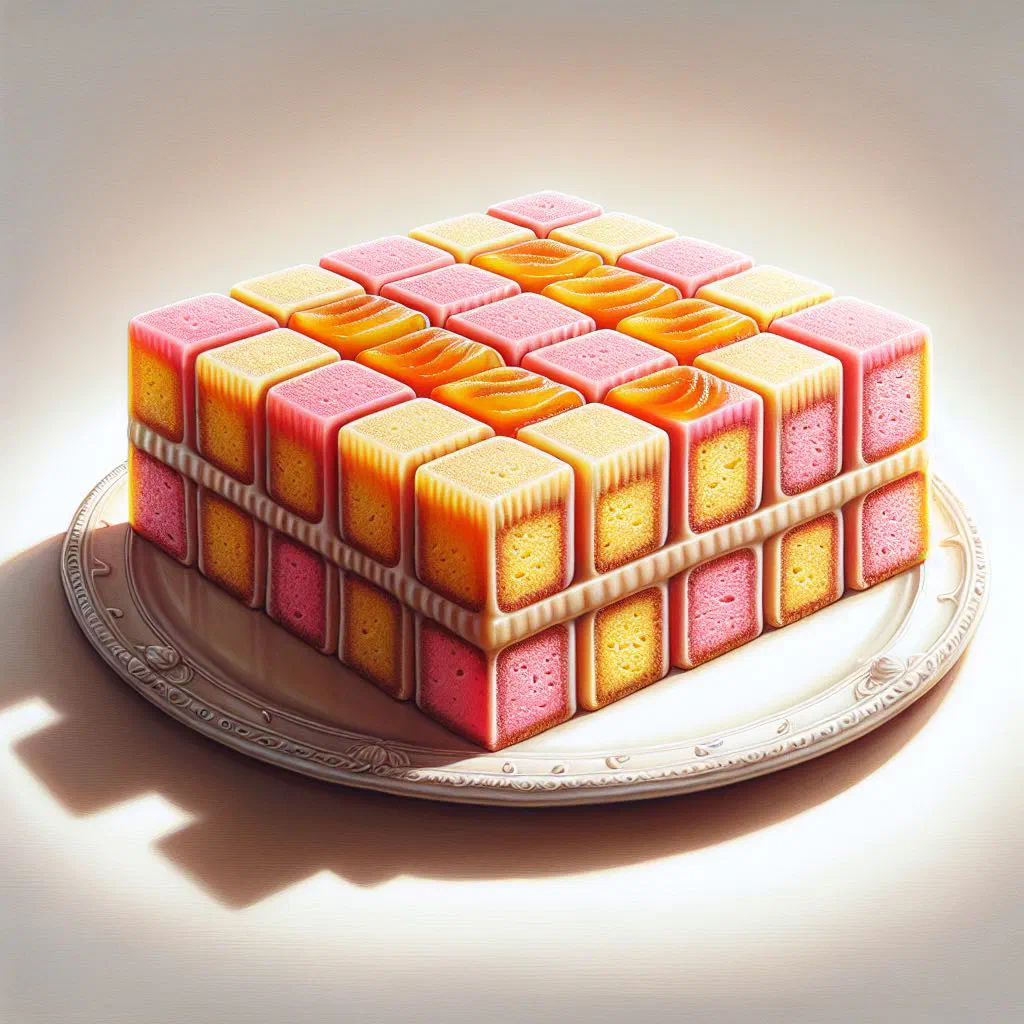
Discover Battenberg Cake, one of England’s most charming teatime treats. This elegant two-tone sponge pairs delicate almond and vanilla flavours with a soft marzipan wrap, and its striking pink-and-yellow chequerboard pattern makes it a real showstopper. Steeped in royal history and perfect alongside a pot of tea, it brings a touch of tradition and a flourish of colour to any afternoon spread.
About Battenberg Cake
Battenberg Cake is a truly classic piece of British baking, impressing in equal measure with its flavour and its looks. Its hallmark is the arrangement of alternating squares of almond and vanilla sponge, which create an instantly recognisable chequerboard when the cake is sliced. The gentle combination of aromas makes it an ideal companion for afternoon coffee or special occasions. The cake was originally created to mark the wedding of Prince Louis of Battenberg and Princess Victoria of Hesse, giving it an especially strong link to British history.
Ingredients (serves 1–2)
- 100 g butter, softened
- 100 g sugar
- 2 eggs
- 100 g flour
- 50 g ground almonds
- 1 tsp baking powder
- 1 tsp vanilla extract
- 100 g marzipan
- Food colouring (optional)
Shopping for the ingredients
When shopping for Battenberg Cake, it is worth choosing fresh, good-quality ingredients. Pay particular attention to the butter and the marzipan, as both have a real bearing on how the cake tastes. Most supermarkets stock everything you need, though the quality can vary from one shop to another. For something a little more special, you can also visit a local delicatessen or a dedicated online shop to track down fresh almonds or top-notch marzipan.
Preparing the dish
Preparing the Battenberg Cake is a creative and genuinely enjoyable process. Start by weighing out all the ingredients and laying them out, which makes the whole bake run far more smoothly. The pairing of vanilla and almond lends the cake a distinctive character and ensures it impresses on both the palate and the plate. You can even tailor the colours of the sponge by reaching for a little food colouring.
Step-by-step instructions
- Preheat the oven to 180°C and grease a baking tin.
- Beat the butter and sugar together in a bowl until pale and fluffy.
- Add the eggs one at a time, stirring well after each addition.
- In a separate bowl, combine the flour, almonds, baking powder and vanilla extract.
- Fold the dry ingredients into the wet mixture and stir until smooth.
- Divide the batter into two equal portions and colour one half with food colouring.
- Spoon the two batters into the tin in alternating sections to form the signature squares.
- Bake for 25–30 minutes, until golden brown.
- Leave the cake to cool, then wrap it in a layer of marzipan.
Gluten-free / lactose-free version
To make the Battenberg Cake gluten-free, swap the wheat flour for a gluten-free flour blend. This keeps the cake’s tender texture intact while making it suitable for anyone with a gluten intolerance. For a lactose-free bake, simply use lactose-free butter. These small adjustments mean the cake can be enjoyed by all your guests without anyone missing out.
Tips for vegans and vegetarians
Vegans can adapt the Battenberg Cake by replacing the eggs with apple purée, ground flaxseed or mashed banana, all of which provide a similar binding effect in the batter. For an even richer crumb, use plant-based fats in place of butter. Just be sure the marzipan is vegan too, or make your own version, so that every component is animal-free.
More tips and tricks
To ring the changes on the Battenberg Cake, try adding other flavours such as lemon zest or hazelnuts. Another handy tip is to dust the cake lightly with icing sugar before serving to smarten up its appearance. Experiment with different combinations to find your own favourite version. Remember that the look of the cake matters just as much as the taste, so give your creativity free rein.
Adapting the recipe to your taste
The recipe for Battenberg Cake is wonderfully adaptable and easy to tailor to personal preference. You might enrich the batter with fruit or nuts of your choosing, for instance. If you prefer a less sweet result, simply cut back on the sugar. Small tweaks like these let you shape the cake exactly to your liking while keeping its classic character.
Ingredient substitutions
If you do not have every ingredient for the Battenberg Cake to hand, there are plenty of alternatives to fall back on. Yoghurt or apple purée can stand in for butter, giving you an even moister crumb. For the marzipan, a mixture of icing sugar and almond essence can be used to achieve a similar sweetness and texture. The same spirit of improvisation works a treat in other bakes too, such as a Lemon Drizzle Cake.
Drink pairing ideas
A slice of Battenberg Cake goes beautifully with a range of drinks. A cup of freshly brewed black tea with a squeeze of lemon juice and perhaps a dash of milk is a perfect match for the cake’s sweetness, much in the spirit of a traditional Cream Tea. A lightly sparkling prosecco or a fruity herbal tea can make interesting companions too. Experiment with different varieties to find the pairing that suits your taste best.
Serving and presentation ideas
The presentation of the Battenberg Cake is key to making it a genuine highlight on any table. Serve it on a smart cake stand and garnish with fresh berries or edible flowers for a touch of elegance. A bowl of whipped cream or ice cream alongside can lift the spread even further. Don’t forget to cut the cake into even slices to show off the colourful layers that make every bite an occasion.
A bit of history
The Battenberg Cake has its origins in England and dates back to the 19th century. The cake was originally created to celebrate the wedding of Prince Louis of Battenberg and Princess Victoria of Hesse. Its distinctive striped form was said to symbolise the colours and crest of the family. To this day it remains an emblem of England cuisine and its baking traditions, enjoyed both at festive occasions and as an everyday indulgence.
More recipe ideas
Summary: Battenberg Cake
The Battenberg Cake is not only a delicious dessert but a visually striking one too, bringing tradition and flavour together in a single slice. Its tender texture and the harmonious blend of almonds and vanilla make it ideal for special occasions or simply as a sweet treat with tea. Thanks to its many possibilities for adaptation, it is easily shaped to personal taste while remaining a timeless classic that appeals to generation after generation. Enjoy the bake and bring a touch of British tradition into your own kitchen.