National Dish England: Beef Wellington (Recipe)

In this article
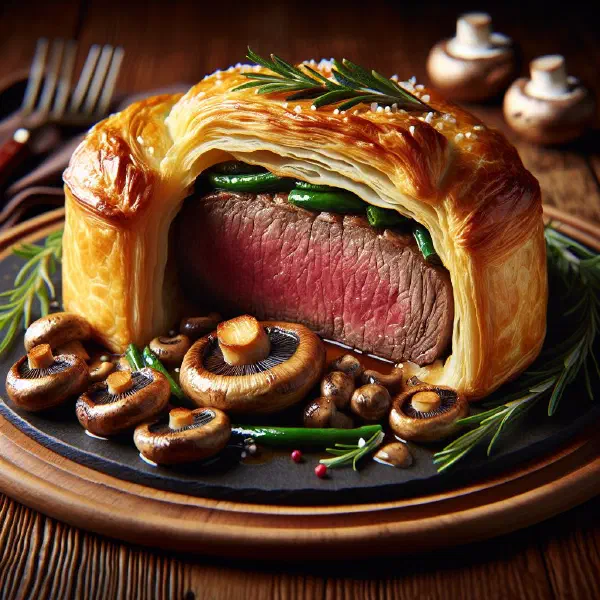
Few dishes say “special occasion” quite like Beef Wellington. A tender beef fillet is cloaked in a richly savoury layer of mushrooms, then sealed inside crisp, golden puff pastry that shatters at the first cut. The contrast of textures, buttery pastry, earthy mushroom and rosy, melt-in-the-mouth beef, makes it a true showstopper for Christmas, New Year or any celebration dinner. Bring this icon of British cooking to your own table and watch your guests fall silent in admiration.
About Beef Wellington
Beef Wellington is a classic dish prized not only in England but right around the world. It centres on a tender beef fillet wrapped in an aromatic layer of mushroom duxelles and baked inside a crisp puff pastry case. The interplay of different textures and flavours turns it into a real feast, perfectly suited to special occasions. On New Year’s Eve or at a festive dinner, Beef Wellington always leaves a lasting impression and sits proudly among the finest of England’s cuisine.
Ingredients (serves 1–2)
- 500 g beef fillet
- 250 g mushrooms
- 1 shallot
- 2 tbsp Dijon mustard
- 1 pack puff pastry
- 1 egg yolk
- Salt and pepper
- Olive oil
- Fresh herbs (e.g. thyme)
Shopping for the ingredients
When it comes to Beef Wellington, the quality of the ingredients really matters. Choose a fresh, top-quality beef fillet, as it is the heart of the whole dish. The mushrooms should be fresh and firm too, so that the flavour shines through. Pop along to a local market if you can. You will find the very best produce there while supporting small, independent businesses at the same time.
Preparing the dish
Preparing Beef Wellington takes a few steps, but none of them is especially complicated. Begin by cleaning the mushrooms and chopping them down into a fine duxelles. This mixture is then fried off in a pan with the shallot and seasoning. While the mushroom mixture cools, you can sear the beef fillet to give it a lovely golden colour all over. Getting the components ready in advance makes the final assembly, and the wrapping in pastry, far easier.
Step-by-step instructions
- Blitz the mushrooms and shallot in a food processor until finely chopped.
- Heat a little olive oil in a pan and fry the mushroom and shallot mixture for about 5–7 minutes, until dry. Season with salt and pepper.
- Sear the beef fillet in a hot pan on all sides, then brush it all over with Dijon mustard.
- Spread the cooled mushroom mixture evenly over the beef fillet.
- Roll out the puff pastry, wrap the beef fillet inside and seal the edges well.
- Brush with egg yolk and bake at 200°C for about 25 minutes, until golden brown.
Gluten-free / lactose-free version
For a gluten-free version of Beef Wellington, simply use a specialist gluten-free puff pastry. Do check that all the other ingredients are gluten-free too, especially spices and sauces, which can sometimes contain traces of gluten. If you want to cook lactose-free, the egg yolk can be swapped for a plant-based alternative, and it is worth checking any creams or butter you use. That way, those with allergies can enjoy this dish too.
Tips for vegans and vegetarians
For a vegan or vegetarian version of Beef Wellington, you can be wonderfully creative with the alternatives. Soya, seitan or mushroom fillets all make an excellent centrepiece. In place of the beef fillet, a robust portobello mushroom brings real depth of flavour to the dish. The preparation of the duxelles stays much the same, so the aromatic mixture remains a treat for every guest, whatever their preference.
More tips and tricks
There are a few tricks that will help you nail Beef Wellington every time. Make sure the beef fillet is completely cool before wrapping it in pastry, to stop the base from going soggy. It is also wise to chill the puff pastry well before baking. Beyond that, fresh herbs such as rosemary or thyme will intensify the aroma beautifully. Experiment with different combinations to create a flavour that is all your own.
Adapting the recipe to your taste
The recipe for Beef Wellington is very easy to tailor to your own preferences. If you fancy a bolder flavour, for example, you could fold smoked bacon or ham into the duxelles mixture. The seasonings can vary to taste too; a pinch of cinnamon or nutmeg lends the dish an intriguing note.
Ingredient substitutions
If you do not have all the ingredients to hand, there are plenty of alternatives. The beef fillet, for instance, can be swapped for lamb or game, giving the dish a whole new dimension, much like the slow-cooked richness of a Lamb Hotpot. For the duxelles, other mushroom varieties such as porcini or shiitake offer different flavour nuances. Have a look in your store cupboard and use what you already have to create your own twist on this classic British dish, in the same resourceful spirit as a hearty Steak and Ale Pie.
Drink pairing ideas
Choosing the right drink for Beef Wellington can lift the whole dining experience. A full-bodied red wine, such as a Cabernet Sauvignon or a Merlot, complements the rich flavour of the beef perfectly. If you prefer something with a bit of sparkle, a good-quality sparkling wine or Champagne will underline the festive character of the dish. Water infused with fresh herbs or fruit also makes a refreshing, understated accompaniment.
Serving and presentation ideas
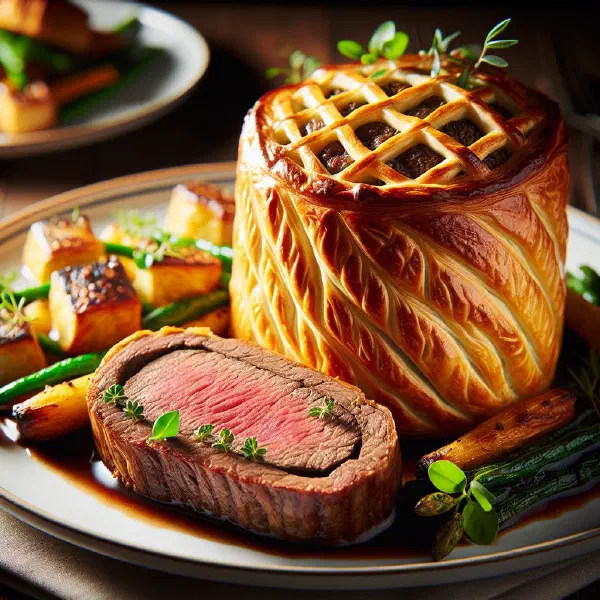
The presentation of Beef Wellington should be every bit as impressive as the taste. Serve the dish on a handsome wooden board or an elegant platter. A decorative garnish of fresh herbs, and perhaps a fine sauce on the side, will dress the plate beautifully. Presentation counts for a great deal on festive occasions, so do not be afraid to be creative and show the dish off in a stylish setting.
A bit of history
Beef Wellington has an intriguing history that reaches back to the 19th century. It is said to have been named after the British Duke of Wellington, famous for his victories over Napoleon. The dish grew popular during the Victorian era, when elaborate cooking was very much part of grand celebratory dinners. Today it remains a firm fixture of British gastronomy and is often served at special occasions, alongside other roasting-day favourites such as Roast Beef and Yorkshire Pudding.
More recipe ideas
Summary: Beef Wellington
To sum up, Beef Wellington is a magnificent dish that appeals to in both flavour and presentation. With a careful choice of top-quality ingredients and a little skill in the kitchen, you can recreate this culinary masterpiece at home with ease. Whether for festive occasions or a romantic dinner, Beef Wellington is sure to be the highlight of any table. Let this traditional dish inspire you and savour its wonderful combination of flavours and textures.