National Dish England: Cornish Pasty (Recipe)
In this article
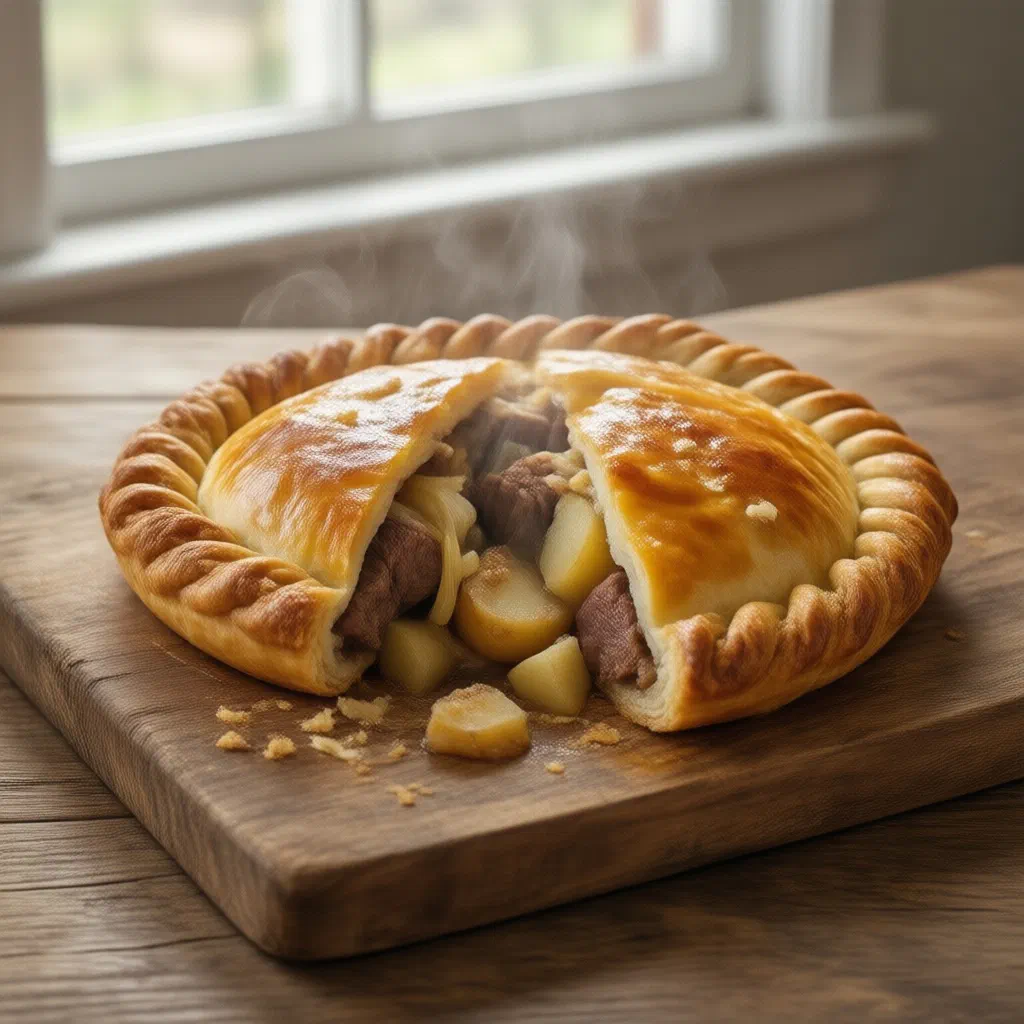
Tuck into the Cornish pasty, one of England’s most enduring savoury classics. These handheld pastries wrap a hearty filling of beef, potato and onion in a crisp, golden crust that holds together beautifully in the hand. Born in the tin mines of Cornwall as a portable lunch, the pasty has become a much-loved staple right across the country. Perfect for a quick midday bite or a comforting supper, it brings rustic English baking straight to your kitchen.
About Cornish Pasty
The Cornish pasty is a traditional dish with its roots in the county of Cornwall in the south-west of England. These neat little pastries are practical and offer a wonderful range of flavours and textures to please any palate. They were originally carried by tin miners as a nourishing meal for the working day, as they travelled well and kept fresh for hours. Today, Cornish pasties are enjoyed as both a popular snack and a satisfying main course throughout England and far beyond.
Ingredients (serves 1–2)
- 250g plain flour
- 125g butter
- 100ml water
- 150g minced beef
- 1 large potato, diced
- 1 onion, finely chopped
- Salt and pepper, to taste
- 1 egg yolk (for glazing)
Shopping for the ingredients
To make an authentic Cornish pasty, it pays to choose fresh, good-quality ingredients. Visit your local market or a well-stocked supermarket and make sure the meat is fresh. The potatoes should be firm and crisp, while the onions lend a gentle sweetness. The flour and butter should be of good quality too, so you can achieve the perfect pastry. Much like a Steak and Ale Pie, the better the beef, the more satisfying the result.
Preparing the dish
Preparing Cornish pasties takes a little time and patience, but the result is well worth the effort. Begin by making the shortcrust pastry: rub the flour and butter together until you have a crumbly, breadcrumb-like texture. Then add the water to bring it together into a smooth dough. Let the pastry rest in the fridge for at least 30 minutes so that it becomes easier to work with.
Step-by-step instructions
- Take the pastry from the fridge and roll it out on a floured surface.
- Cut out round circles using a large cutter or a plate.
- Spoon some of the beef filling into the centre of each circle.
- Brush the edges of the pastry with water and fold the pasties over.
- Press the edges firmly together to create a tight seal.
- Place the pasties on a baking tray and brush with egg yolk.
- Bake in a preheated oven at 200°C for about 30 minutes, until golden brown.
Gluten-free / lactose-free version
For a gluten-free version of the Cornish pasties, you can use a gluten-free flour blend. Do check the other ingredients for any hidden gluten as well. For a lactose-free preparation, swap the butter for lactose-free margarine or a plant-based alternative. These small adjustments mean even more people can enjoy this delicious dish without worrying about tolerance.
Tips for vegans and vegetarians
Vegan Cornish pasties are perfectly possible too. Replace the beef with diced vegetables such as carrots, mushrooms and sweet potatoes. Use a vegan butter or oil for the pastry. There are plenty of ways to vary the flavour. Try adding spices like curry or paprika for an extra dimension of taste. For inspiration, the cheesy filling of a Lancashire Cheese and Onion Pie works wonderfully in a meat-free pasty.
More tips and tricks
To make your Cornish pasties especially crisp and full of flavour, roll the pastry a little thinner. Take care not to overfill them, as too much filling makes the pastries harder to seal. Before baking, you can cut small slits in the top to let steam escape, which makes the crust even crisper. At the same time, feel free to experiment with different fillings to discover exciting new flavours.
Adapting the recipe to your taste
The great thing about Cornish pasties is how flexible the recipe is. You can adjust the filling entirely to your own taste. If beef is not your thing, try chicken or even a vegetarian mix of different vegetables. The herbs and spices can be tweaked to suit you too, adding extra aroma to your filling. The same spirit of adaptation works for a comforting Shepherd’s Pie.
Ingredient substitutions
If you fancy getting a little creative, there are plenty of ingredients in your Cornish pasty you can swap out. In the filling, for example, you could use pumpkin or courgette in place of the potatoes. You can experiment with the herbs too, to find the perfect flavour for you. For the pastry base, wholemeal flour or other alternative flours can be used to vary both taste and nutrition.
Drink pairing ideas
A delicious Cornish pasty goes beautifully with a crisp, refreshing beer or a light white wine. If you are after a non-alcoholic option, a fizzy apple or grape juice can pair wonderfully. Herbal teas also make a pleasant accompaniment, especially if you want to highlight the flavours of the dish. Experiment to find the perfect combination that suits your palate.
Serving and presentation ideas
The way you present your Cornish pasties plays an important part in the overall experience. Serve the pasties on a rustic wooden board alongside a small dish of dipping sauce or salad. Garnish the plate with fresh herbs such as parsley or chives to add colour contrast and freshness. A simple, attractive arrangement makes the dish even more inviting and is sure to impress your guests, much like a generous spread of Sausage Rolls at a gathering.
A bit of history
The history of the Cornish pasty reaches back to the 13th century, when it was created by miners as a practical meal. It was, in essence, a portable lunch that also provided the energy needed for hard physical work. Traditionally, the pasties were made with a thicker edge of crust, sometimes called the “crust for throwing”, which was used to hold the pasty with grubby hands and then discarded. Today they are part of Cornwall’s cultural heritage and a much-loved dish throughout England and a fine example of English cuisine.
More recipe ideas
Summary: Cornish Pasty
A Cornish pasty is a wonderful dish that brings together tradition and flavour in a single bite. With the versatility of its filling and the freedom to adapt the recipe to your own preferences, it is an ideal choice for any occasion. Get creative and let the preparation inspire you.