National Dish Eritrea: Injera (Recipe)
In this article
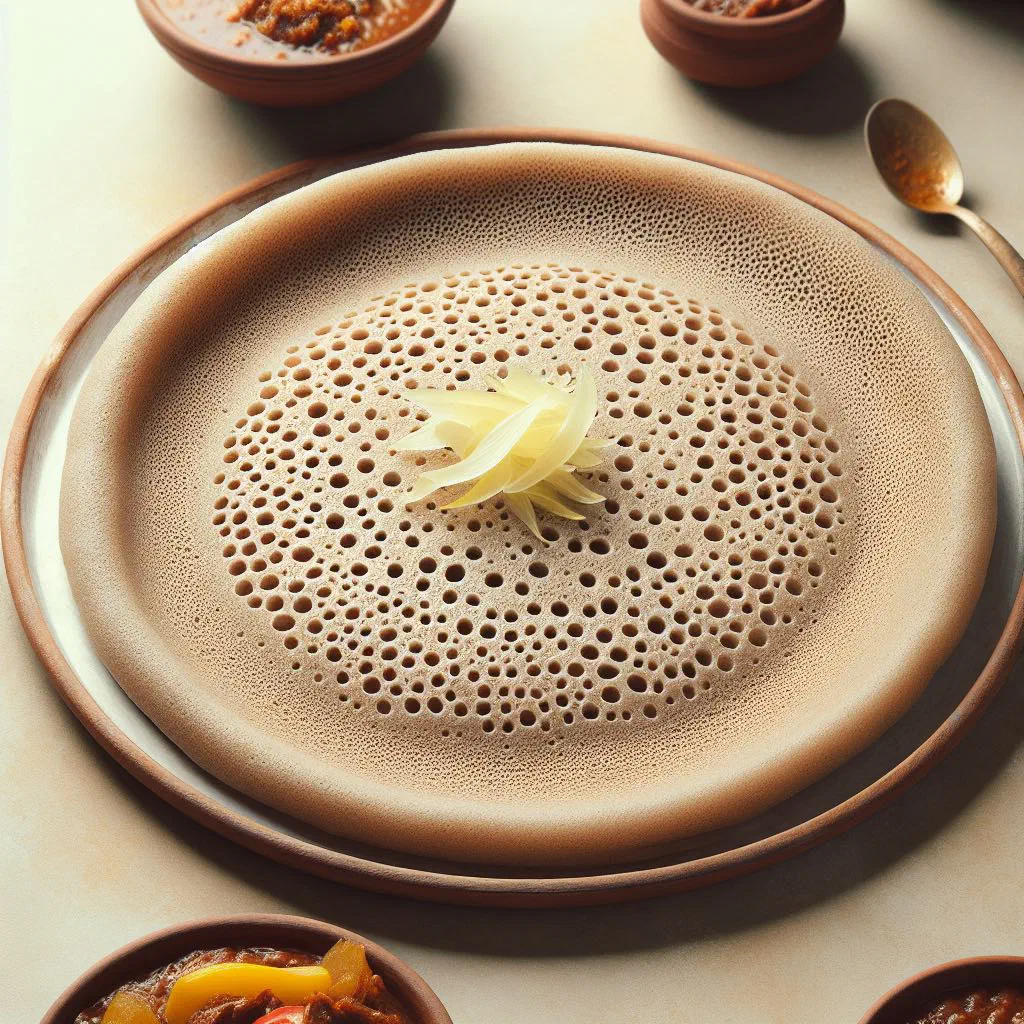
Discover Injera, the soft, spongy flatbread at the very heart of Eritrean cooking. Made from nutty teff flour and given its signature tang by a slow fermentation, injera is far more than a side dish. It doubles as edible cutlery, scooping up the rich, aromatic stews it is served with. Whether it graces a festive gathering or an everyday meal, this humble bread brings tradition and flavour together in every bite. Let it carry you straight into the warmth of the Eritrean table.
About Injera
Injera is much more than a flatbread; it is a cornerstone of Eritrean culture and cuisine. Made from teff flour, injera is known for its distinctive slightly sour note, which develops as the batter ferments. Its spongy, porous texture is perfectly suited to soaking up the aromatic stews and sauces that traditionally accompany it. Injera is always a treat that unites heritage and taste.
Ingredients (serves 1–2)
- 1 cup teff flour
- 1¼ cups warm water
- ¼ teaspoon salt
- 1 teaspoon honey or agave syrup (optional)
- ½ teaspoon yeast (optional, for faster fermentation)
Shopping for the ingredients
The right ingredients are essential for making injera. Teff flour is available in most African, Asian or Eritrean grocery shops, and sometimes in organic supermarkets too. If you cannot find teff flour on your local supermarket shelves, you can order it online or substitute other gluten-free flours, though this will affect both the flavour and the texture. If you follow a special diet or have allergies, be sure to check the quality of your ingredients carefully, particularly the yeast and any sweetener. Teff sits at the centre of Eritrean cuisine much as pulses do in a hearty Timtimo.
Preparing the dish
Making injera calls for a little patience and forward planning, as the batter needs to ferment before baking. It is best to start a day ahead so the characteristic aromas have time to develop fully. Mix the teff flour, water, salt and any yeast thoroughly in a bowl, then cover and leave it to rest at room temperature for 12–24 hours. Watch for bubbles forming on the surface, a sure sign that fermentation is working and that the batter will produce injera’s signature texture.
Step-by-step instructions
- Heat a pan (ideally a special injera pan, or a good non-stick pan) over medium heat.
- Give the fermented batter a quick stir and pour a ladleful into the hot pan.
- Spread the batter evenly so it stays thin and covers the base in a uniform layer.
- Cover the pan with a lid and let the injera cook for about 2–3 minutes, until bubbles have formed and the surface is set but the underside is not too dark.
- Carefully lift out the injera and let it cool on a clean cloth. Repeat with the remaining batter.
Gluten-free / lactose-free version
Injera is naturally gluten-free when made purely from teff flour. Just make sure no other gluten-containing flours slip into the mix. It is equally suitable as a lactose-free option, since the traditional preparation contains no dairy at all. If you do add yeast, simply check that it too is lactose-free so the whole dish stays friendly to sensitive stomachs.
Tips for vegans and vegetarians
Injera is an excellent choice for vegans and vegetarians, as it contains no animal products whatsoever. It pairs beautifully with a variety of plant-based stews and vegetable dishes that are rich in vitamins and nutrients. Many Eritrean stews, such as the spinach-based Hamli or a spiced Alicha Birsen, are entirely plant-based and offer wonderful flavour combinations. When shopping, simply take care that every ingredient is genuinely vegan.
More tips and tricks
A crucial trick when baking injera is getting the temperature of the pan just right. It should be hot enough for the batter to puff up a little straight away, but not so hot that it scorches. Try out different pans to find the one best suited to your hob, and reheat the pan between batches if needed. You can also adjust the consistency of the batter by adding a little more or less water until you achieve the texture you are after.
Adapting the recipe to your taste
The recipe for injera is wonderfully adaptable. You can blend in different flours, such as chickpea flour or cornmeal, to give the bread a different flavour note. Adding spices like cumin or pepper can also deepen the aroma. Experiment until you find a version that suits your personal taste and impresses your guests.
Ingredient substitutions
If you cannot find teff flour, you can try a blend of other gluten-free flours such as rice flour or oat flour. Bear in mind that these changes will affect both the flavour and the texture. Yeast is optional, but if you want a quicker preparation, reach for fast-action yeast blends developed specifically for gluten-free breads. Just make sure every alternative is genuinely gluten-free if you are making a gluten-free version.
Drink pairing ideas
To round off your injera experience, you might serve a range of drinks. A traditional Eritrean choice is t’ej, a honey wine that pairs perfectly with the spiced stews and enriches the whole meal. Alternatively, a mineral-rich herbal tea or a glass of freshly pressed fruit juice makes a lovely accompaniment to the flavours on the plate. Serve your drinks well chilled to keep everything fresh and lively.
Serving and presentation ideas
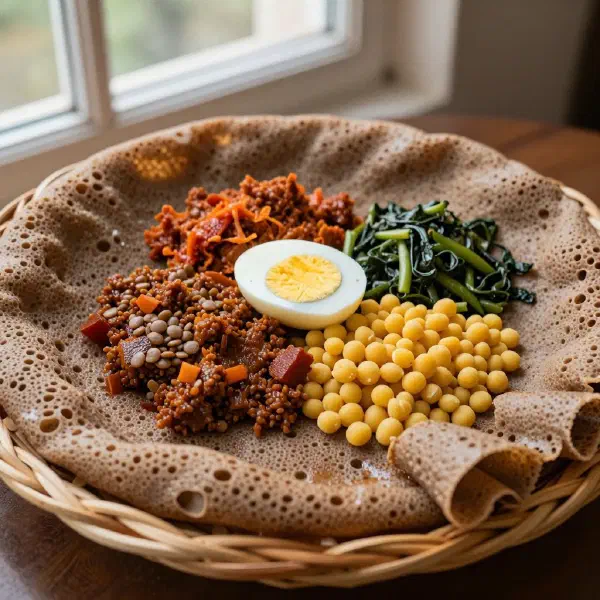
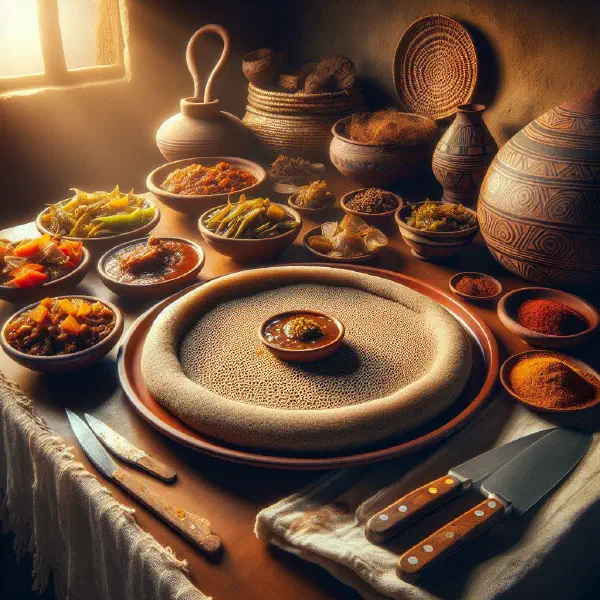
Presentation is an important part of eating injera. Traditionally it is served on a large platter or a flat woven basket, with the various stews and sides arranged attractively on top. Spoon the dishes into small mounds on the injera so each guest can simply tear off a piece of bread and dig in. This makes the meal wonderfully sociable and turns the presentation into a feast for the senses. It sits beautifully alongside a spicy Zigni or a comforting Tsebhi Dorho.
A bit of history
Injera has a history, deeply rooted in Eritrean culture. It is said to be at least 2,000 years old, with origins in the wider Ethiopian and Horn of Africa region. Originally it offered a way to preserve the region’s grains while retaining their nutrients. Injera symbolises a connection to the past and the hospitality and togetherness that play such a central role in Eritrean cuisine.
More recipe ideas
Summary: Injera
Injera is an extraordinary flatbread made from teff flour that plays a central role in Eritrean cuisine. With its distinctive texture and gently sour flavour, it pairs perfectly with a wide array of stews and sides. Injera is simple to prepare and adapts beautifully to different dietary needs, including vegan and gluten-free versions. Let the flavours of Eritrea enchant you and savour the traditions that come alive with every single bite.