National Dish Eswatini: Ligusha (Recipe)
In this article
Ligusha is jute leaves — the same plant that gives Egypt its mulukhiyah — braised with onion, tomato and peanut butter until slippery and rich. In Eswatini it goes beside a mound of stiff maize porridge, and the mucilaginous texture that puts some people off is precisely what everyone else is there for.
About Ligusha
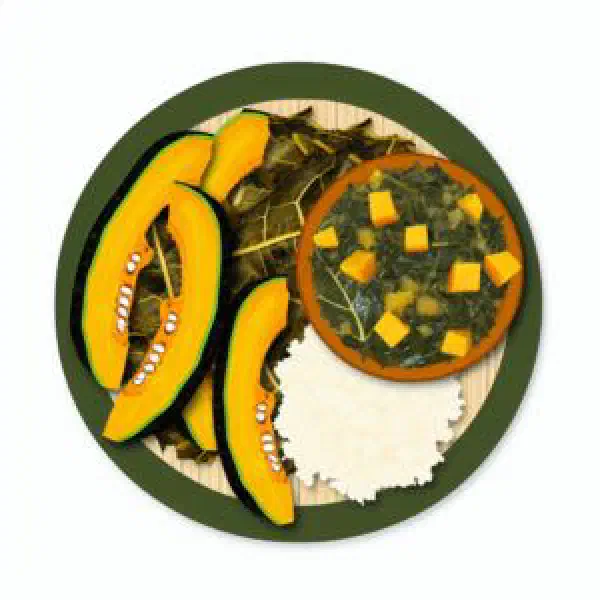
Ligusha is the much-loved leafy green dish of Eswatini. Tender jute leaves are braised with peanut butter, onions and tomatoes into a thick, well-seasoned side dish and served traditionally with maize porridge. Simple, nourishing and characteristic of southern African cooking, it is one of the dishes that turns a plain plate of sishwala into a meal.
Ingredients (serves 1–2)
- 300 g fresh jute leaves (ligusha/delele) — chard or young spinach as substitutes
- 1 onion, finely chopped
- 1–2 tomatoes, diced
- 2 tablespoons peanut butter (or finely ground peanuts)
- 1 tablespoon oil
- 1 small chilli, optional
- Salt, to taste
- For the side: 150 g maize meal and 400 ml water (for sishwala/pap)
Shopping for the ingredients
Jute leaves are sold frozen or dried in African and Middle Eastern shops, often labelled mulukhiyah or molokhia. Frozen are far better than dried. If you cannot find them, chard gives a similar body without the characteristic slipperiness. Use a peanut butter with no added sugar.
Preparing the dish
Wash the leaves and strip them from any tough stems. Chop them roughly. Make the pap first, since it takes longer than the greens and holds well covered. Slacken the peanut butter with a little warm water before it goes into the pan, so it disperses rather than seizing.
Step-by-step instructions
- Make the pap: whisk the maize meal into the water, bring to a simmer and cook, stirring, for 20 minutes until stiff.
- Wash the jute leaves, strip from the stems and chop roughly.
- Heat the oil and soften the onion for 6 minutes.
- Add the tomatoes and chilli and cook down for 6 minutes.
- Add the leaves with a splash of water, cover and braise for 8 minutes until wilted and tender.
- Slacken the peanut butter with a little warm water and stir it in.
- Simmer uncovered for 5 minutes until thick and glossy.
- Season with salt and serve alongside the pap.
Gluten-free / lactose-free version
Ligusha is naturally gluten-free and lactose-free, greens, vegetables and peanuts. Maize pap is likewise gluten-free, so the whole plate is suitable as it stands.
Tips for vegans and vegetarians
The dish is vegan as written, and the peanut butter makes it a genuinely complete plate of protein alongside the maize. It is everyday food in Eswatini rather than a special provision, which is why it works so well.
More tips and tricks
Slacken the peanut butter before it goes in, or it clumps and never disperses. Do not overcook the leaves; eight minutes is enough and longer turns them grey. And make the pap stiff. It should hold its shape on the plate.
Adapting the recipe to your taste
Pumpkin leaves, cowpea leaves or imbuya (amaranth) can all replace the jute and are equally traditional. More chilli suits it. A splash of coconut milk gives a richer, coastal variation.
Ingredient substitutions
Frozen mulukhiyah works perfectly. Chard or spinach substitute with a different texture. Tahini or ground sesame can stand in for the peanut butter.
Drink pairing ideas
Emahewu, the fermented maize drink, is the traditional accompaniment. Cold water is the everyday choice. A light beer suits it at a meal.
Serving and presentation ideas
Serve ligusha in a bowl beside a mound of stiff pap, which is pulled off in pieces with the fingers and used to scoop up the greens. Meat, if there is any, sits on the same plate. It is communal, hand-eaten food.
A bit of history
Jute was cultivated across Africa long before it became a fibre crop, and its leaves are eaten from Egypt to Eswatini under a dozen names. Green relishes eaten with maize porridge are the backbone of southern African eating, the porridge supplies bulk, the greens supply everything else. It offers a genuine window onto Eswatini cuisine.
More recipe ideas
Summary: Ligusha
Ligusha is jute leaves braised with onion, tomato and peanut butter, served with stiff maize pap. Slacken the peanut butter first, keep the greens brief, and eat it with your hands.