National Dish Eswatini: Sishwala (Recipe)
In this article
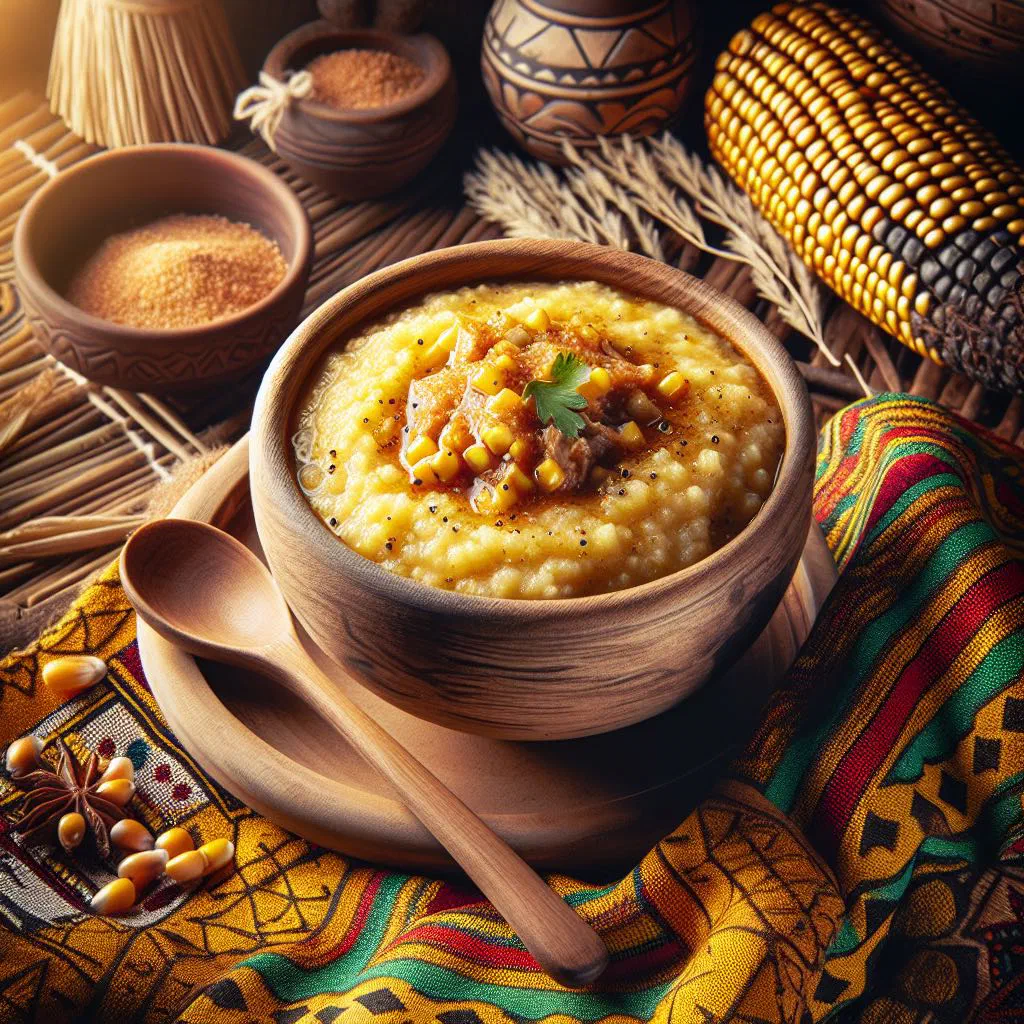
Sishwala is maize meal and water cooked into a stiff porridge. It has no seasoning beyond salt and it is not supposed to. Eswatini eats it with everything, and the sauces and relishes around it are where the flavour lives.
About Sishwala
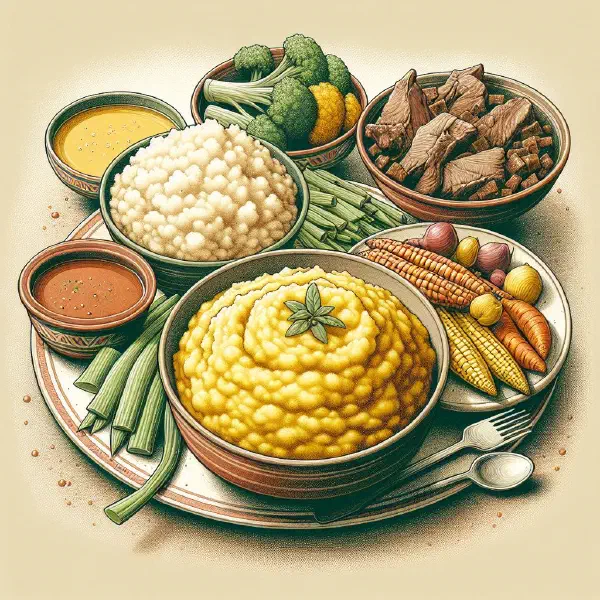
Sishwala is the staple of Eswatini and the base of most meals. Maize meal is stirred into boiling water and cooked until it is thick enough to hold a shape, then served in a mound with meat, beans or greens beside it.
The stiffness varies by household and by what it is being eaten with. A thinner version is breakfast porridge; a stiff one is dinner.
Ingredients (serves 1–2)
- 1 cup maize meal (finely ground)
- 4 cups water
- 1/2 teaspoon salt
Shopping for the ingredients
Fine white maize meal is what southern Africa uses, sold as mealie meal or pap meal in African shops. Yellow maize meal makes a different, sweeter porridge. Polenta is coarser and will not give the same smooth texture.
Preparing the dish
Mix the maize meal with a cup of cold water into a slurry before it meets the boiling water. That is the only technique here and it is the difference between smooth sishwala and a lumpy one. Use a heavy pot and a sturdy wooden spoon.
Step-by-step instructions
- Bring 3 cups of water to the boil in a medium saucepan.
- Dissolve the maize meal in the remaining cup of cold water, then stir the mixture into the boiling water.
- Add the salt and let the porridge simmer over medium heat, stirring occasionally, until it thickens and takes on a creamy consistency. This can take up to 30 minutes.
- Lower the heat if needed and continue cooking the Sishwala until it reaches your desired thickness.
Gluten-free / lactose-free version
Maize contains no gluten and there is no dairy in the dish. Sishwala is naturally suitable for both restrictions, which makes it one of the more useful staples to know.
Tips for vegans and vegetarians
Sishwala is maize and water, so it is vegan. What goes with it decides the rest: umbhidvo wemfino, the greens with peanut, and indumba cowpeas are both plant-based and both standard.
More tips and tricks
Give it the full thirty minutes. Undercooked maize meal tastes raw and chalky, and this is the single most common failure. Stir often and scrape the base. And serve it hot, since it sets firm and reheats poorly.
Adapting the recipe to your taste
A knob of butter stirred in is a modern addition. Sorghum meal makes sidlawu semabele, the older version. Cooking it looser gives lipalishi, the breakfast porridge.
Ingredient substitutions
Sorghum or millet meal both work. Polenta makes a coarser version. Water is water; some households use half milk for a breakfast porridge.
Drink pairing ideas
Emahewu, the lightly fermented maize drink, is the traditional accompaniment and is essentially the same grain in liquid form. Rooibos tea is common. Water is what most meals have.
Serving and presentation ideas
Serve it as a mound on a shared plate with the relish beside it. It is eaten with the right hand: pinch off a piece, roll it into a ball, press a hollow with the thumb, scoop. Cutlery is unusual at home.
A bit of history
Maize arrived in southern Africa from the Americas in the sixteenth century and displaced sorghum and millet over the following centuries, though both survive in traditional dishes. The stiff porridge format is older than the crop: the same dish was made with sorghum long before. It is the base of Eswatini cuisine.
More recipe ideas
Summary: Sishwala
Sishwala is maize meal cooked in water into a stiff, plain porridge. Slurry the meal first, cook it a full thirty minutes, and serve it hot with a relish alongside.