National Dish Ethiopia: Doro Wat (Recipe)
In this article
Doro Wat is the dish Ethiopians cook when it matters, and the work is in the onions. Six or more, chopped fine, cooked dry and then in niter kibbeh for the better part of an hour before the chicken appears. Rushing that step produces something else.
About Doro Wat
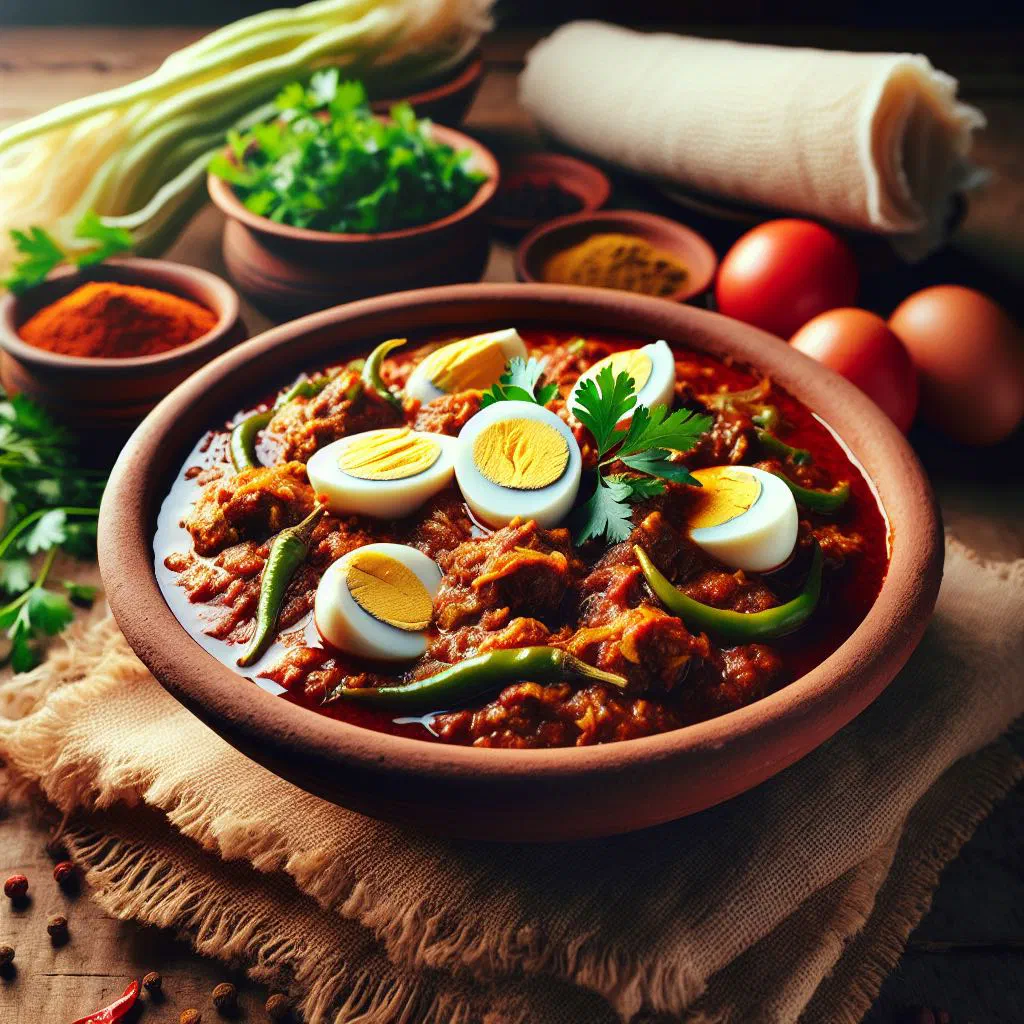
Doro wat is Ethiopia’s national dish and the centre of every feast. Chicken and hard-boiled eggs simmer in a deep red sauce of onion, berbere and spiced clarified butter. Traditionally the chicken is cut into twelve pieces, one for each apostle, and the sauce should be thick enough to hold a spoon upright.
It is served on injera, and eaten with the right hand, and it takes the better part of an afternoon.
Ingredients (serves 1–2)
- 500g chicken (preferably thighs or drumsticks, with skin and bone)
- 2 large onions, finely chopped
- 3 cloves garlic, crushed
- 2 tablespoons berbere spice blend
- 1 teaspoon grated ginger
- 250ml chicken stock
- 2 tablespoons niter kibbeh (Ethiopian clarified butter) or ghee
- 1 lemon, juiced
- 4 eggs (optional, hard-boiled)
- Salt to taste
Shopping for the ingredients
Niter kibbeh is butter clarified with cardamom, fenugreek, koseret and other spices, and it is worth making or buying rather than substituting. Berbere from an Ethiopian shop is a different thing from the supermarket version. Bone-in thighs, always.
Preparing the dish
Chop the onions as finely as you can manage. Rub the chicken with lemon juice and salt and leave it half an hour, which is standard Ethiopian practice. Then cook the onions in a dry pot, no fat, stirring, for a good fifteen minutes before the niter kibbeh goes in.
Step-by-step instructions
- Cook the finely chopped onions in a dry pot over medium heat for 15 minutes, stirring, until they collapse and darken.
- Melt the niter kibbeh into the onions and continue cooking for a further 20 minutes until deep golden.
- Stir in the garlic, ginger and berbere and cook for 2 minutes until the spices are fragrant.
- Add the lemon-marinated chicken and coat it well with the onions and spices.
- Pour in the chicken stock and bring to the boil, then reduce the heat, cover and simmer for around 45 minutes until the chicken is tender.
- If using, nestle the hard-boiled eggs into the sauce and warm them through.
- Season with salt to taste and serve the dish piping hot.
Gluten-free / lactose-free version
The stew itself is gluten-free. Injera made from pure teff is too, but most commercial injera is cut with wheat, so check. Niter kibbeh is butter; use oil for a lactose-free version, though the flavour changes noticeably.
Tips for vegans and vegetarians
Ethiopia has one of the world’s great vegan repertoires, driven by around 180 Orthodox fasting days a year. Misir wat, red lentils in berbere, is the direct vegan parallel to doro wat, and shiro, the chickpea flour stew, is the everyday staple.
More tips and tricks
The dry-cooked onions are the whole dish. Give them the full time and do not add fat early. Score the hard-boiled eggs before they go in so the sauce penetrates. And make it a day ahead: doro wat improves overnight more than almost any stew.
Adapting the recipe to your taste
Doro alicha is the mild version, made with turmeric instead of berbere, and is what is served to children. More berbere is the usual direction otherwise. A splash of tej or dry wine in the sauce is common.
Ingredient substitutions
Ghee replaces niter kibbeh at some cost. Beef makes sega wat. Chicken stock can be water if you have none; the onions provide enough.
Drink pairing ideas
Tej, the honey wine, is the traditional pairing and stands up to the chilli. Ethiopian coffee follows, prepared at the table in the buna ceremony. St George lager is the everyday option.
Serving and presentation ideas
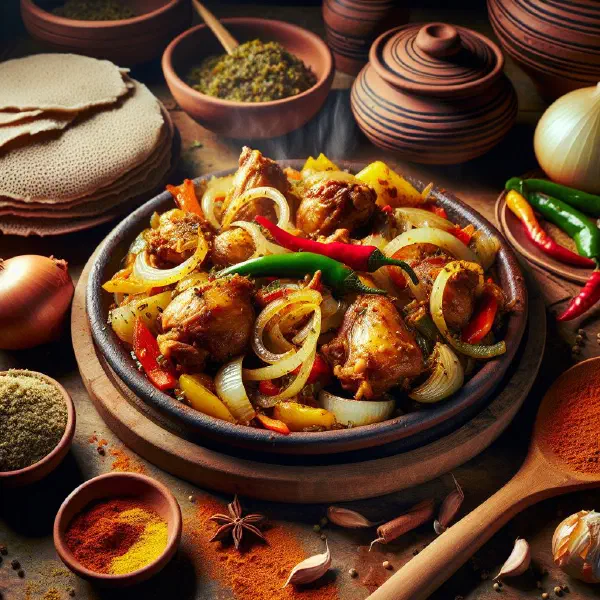
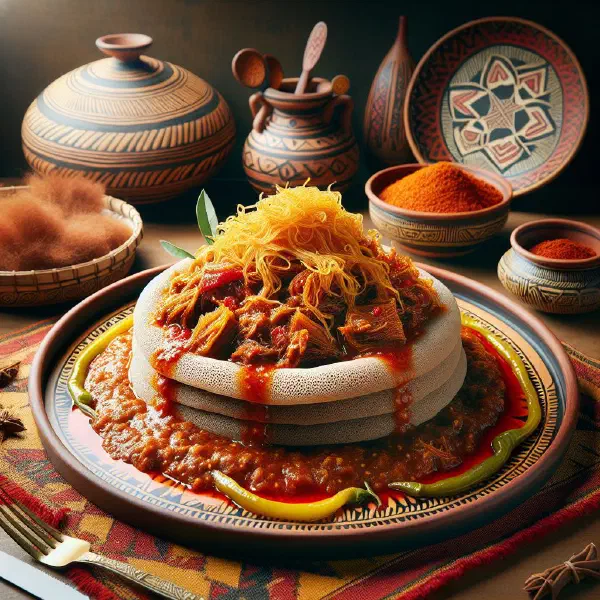
Spread injera across a large tray, spoon the doro wat into the centre, arrange the eggs on top, and set other stews around it. More injera rolled at the side. Everyone eats from the same tray with the right hand, and feeding a piece to someone else, gursha, is a gesture of affection.
A bit of history
Doro wat is the dish of Ethiopian celebration: Christmas, Easter, weddings, and the end of the long fasts. The twelve pieces and the eggs carry Orthodox symbolism. Ethiopia was never colonised, and its cooking developed with less outside interference than almost anywhere on the continent, which is part of why Ethiopian cuisine tastes like nothing else.
More recipe ideas
Summary: Doro Wat
Doro wat is chicken and eggs simmered in a berbere sauce built on onions cooked down for half an hour. Take the onions slowly, use real niter kibbeh, and make it the day before.