National Dish Ethiopia: Mesir Wat (Recipe)
In this article
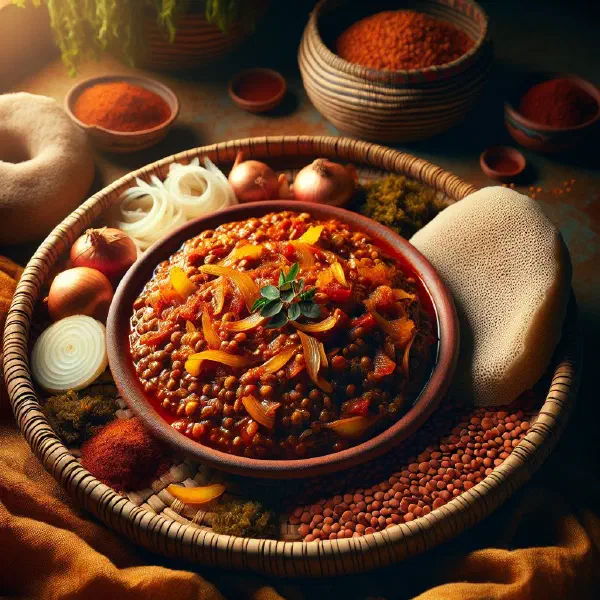
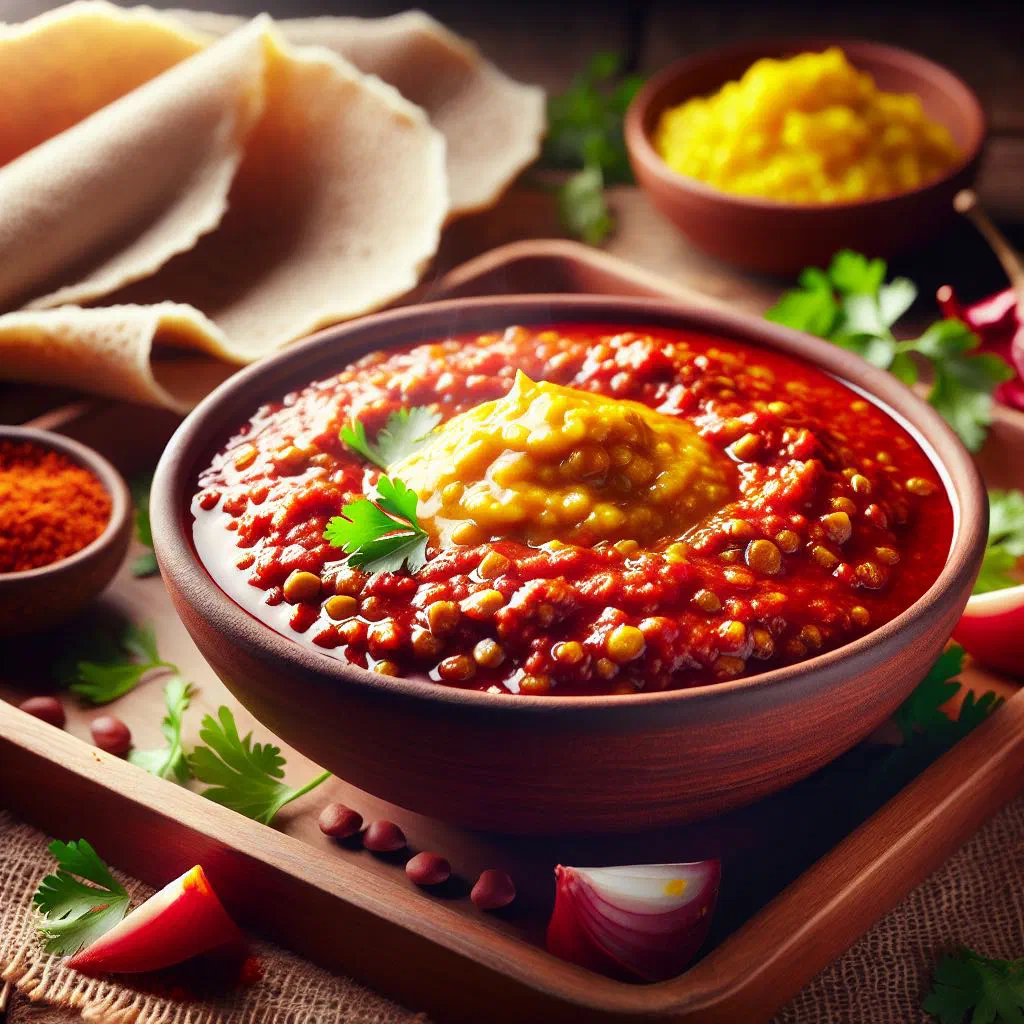
Meet Mesir Wat, the gently fiery red lentil stew that sits at the very heart of Ethiopian home cooking. Simmered with sweet onions, garlic and the country’s signature berbere spice blend, it turns a handful of humble lentils into something deeply aromatic and comforting. Scooped up with soft, tangy injera, it is warming, nourishing and completely plant-based, a bowlful of Ethiopia to bring to your own table.
About Mesir Wat
Mesir Wat is a traditional Ethiopian dish celebrated for its aromatic warmth and its generous use of red lentils. This wonderful lentil stew is built around a special spice mixture known as berbere, which gives the dish its unmistakable character. Onions and garlic add depth and an intense aroma, while slow simmering brings everything together into a rich, satisfying whole. Mesir Wat is most often served with injera, the traditional Ethiopian sourdough flatbread, and is a true treat for anyone who loves boldly spiced cooking.
Ingredients (serves 1–2)
- 200 g red lentils
- 2 onions
- 3 garlic cloves
- 2 tbsp berbere spice blend
- 1 tin of tomatoes (400 g)
- 500 ml vegetable stock
- 2 tbsp vegetable oil
- Salt and pepper, to taste
Shopping for the ingredients
To prepare Mesir Wat well, it pays to choose the right ingredients. Look for good-quality red lentils that cook quickly and keep a lovely colour. Berbere is a distinctive spice blend and can be found in Asian or African grocers or ordered online, much like the seasonings behind a good Shiro Wat. Fresh onions and garlic are equally important for flavour, while a tin of tomatoes offers a handy shortcut that makes the whole dish easier to put together.
Preparing the dish
The preparation for Mesir Wat is quick and straightforward. Start by finely chopping the onions and garlic so they cook evenly and release their sweetness. It is also a good idea to rinse the red lentils beforehand to wash away any dust or residue. Chopping these ingredients and rinsing the lentils in advance smooths out the cooking process and helps the dish cook through evenly.
Step-by-step instructions
- Heat the vegetable oil in a large pot over medium heat.
- Add the chopped onions and fry for around 5–7 minutes, until soft and golden.
- Stir in the chopped garlic and the berbere, and cook the mixture for a further 2 minutes.
- Add the drained red lentils and the tin of tomatoes, and stir everything together well.
- Pour in the vegetable stock and bring it all to the boil.
- Reduce the heat and let the stew simmer for 30–35 minutes, until the lentils are soft.
- Season with salt and pepper and serve hot.
Gluten-free / lactose-free version
The recipe for Mesir Wat is naturally gluten-free and lactose-free, since it contains no dairy and no gluten-based ingredients. This makes it ideal for anyone with food intolerances or a gluten sensitivity. Just take care to choose a stock that is itself gluten-free, and double-check that any spices or sauces you use contain no hidden sources of gluten. With that small step, the dish stays suitable for everyone at the table.
Tips for vegans and vegetarians
Mesir Wat is an excellent option for vegans and vegetarians, as it contains no animal products at all. The dish is nourishing and delivers plenty of valuable nutrients from the lentils and spices. For an extra layer of flavour you can add vegetables such as carrots or spinach. A side salad of fresh herbs also pairs beautifully with the stew and boosts its nutritional value even further.
More tips and tricks
If you want to make Mesir Wat for a larger crowd, you can simply double the ingredients. Another handy tip is to cook it the day before, as the flavour often deepens and improves overnight. Experiment with different vegetables, or add extra pulses to vary the texture. A pinch of cinnamon can also introduce an intriguing note and give the dish a little extra warmth.
Adapting the recipe to your taste
Adapting Mesir Wat is easy and rewarding. If you prefer it milder, reduce the amount of berbere or fold in gentler spices such as cumin and coriander. For more heat, add fresh chilli or extra pepper to take the dish to a new level. You can also swap the lentils for other pulses such as chickpeas or black beans to try out different versions of the stew.
Ingredient substitutions
If you are missing certain ingredients, or simply prefer alternatives, there are plenty of options. Instead of red lentils you could use yellow lentils, though the cooking time may be a little shorter. For the berbere you can mix your own blend from paprika, cayenne pepper and seasonings such as garlic powder and onion powder. The vegetable stock can also be replaced with a simple water-based broth if you do not have any to hand.
Drink pairing ideas
A range of drinks pairs nicely with Mesir Wat and complements its spicy notes. A traditional Ethiopian choice is Tej, a honey-sweet wine that sits beautifully against the dish’s warm spices. Alternatively, a mild tea or herbal infusion helps to harmonise the flavours. A freshly squeezed citrus juice also makes a refreshing companion and rounds out the meal nicely.
Serving and presentation ideas
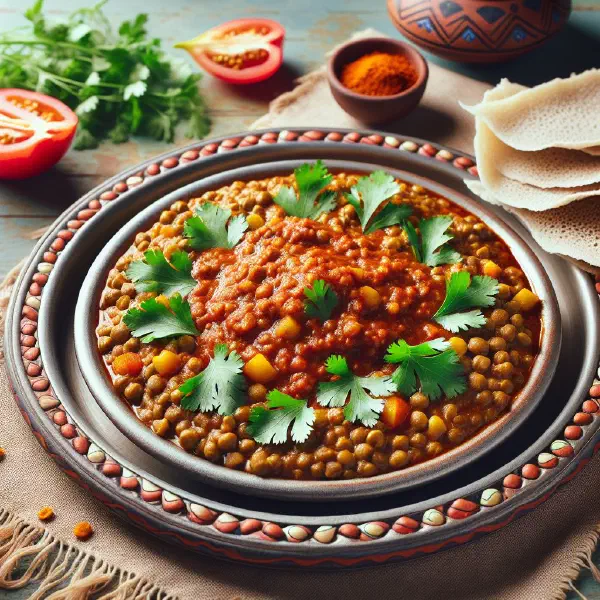
Thoughtful presentation can lift the whole Mesir Wat experience. Serve the stew in a large, shallow dish so the colours and textures show at their best. Garnish the lentils with fresh herbs such as coriander or parsley for a bright, fresh accent. Arrange the injera creatively around the dish and offer a few extra sides such as a salad or some pickled vegetables for balance.
A bit of history
Mesir Wat has deep roots in Ethiopian cooking and is often served at special occasions and festivals. The use of lentils and spices reaches back to old traditions that remain very much alive in Ethiopian culture today. Pairing lentils with injera also reflects a broader appreciation for simple yet nourishing meals across the country. This makes Mesir Wat more than a hearty plateful but also part of the social and cultural identity of Ethiopian cuisine.
More recipe ideas
Summary: Mesir Wat
In short, Mesir Wat is a unique and delicious dish of Ethiopian cooking that appeals to both the palate and the body. The combination of red lentils, berbere and other fresh ingredients makes it a firm favourite for vegans, vegetarians and anyone who loves boldly spiced food. It is simple to prepare and easy to adjust to your own liking, which makes it a great choice for any occasion. Let its intense aromas work their magic and enjoy a little piece of Ethiopia on your table.