National Dish Ethiopia: Teff Bread (Recipe)
In this article
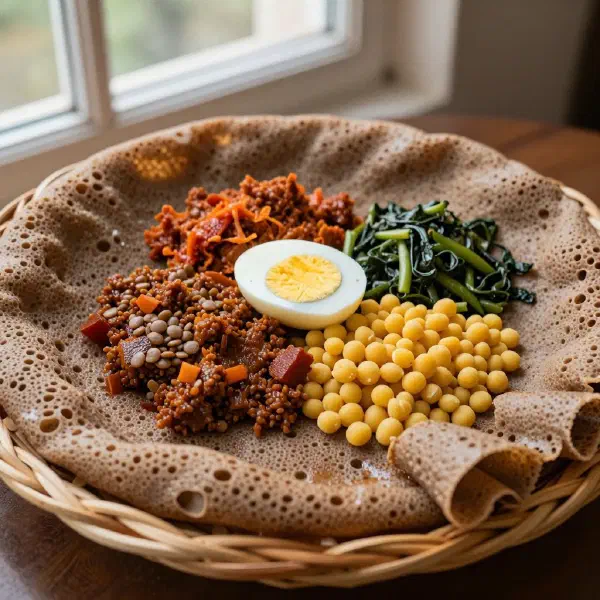
Meet Teff Bread, better known as injera, the soft, spongy flatbread that sits at the very heart of the Ethiopian table. Made from tiny, nutrient-rich teff grain and left to ferment, it develops an unmistakable honeycomb texture and a gently sour tang all its own. Naturally gluten-free and endlessly versatile, it doubles as plate, cutlery and side dish, ready to scoop up rich stews and vegetable dishes. Bring a taste of Addis Ababa to your own kitchen.
About Teff Bread
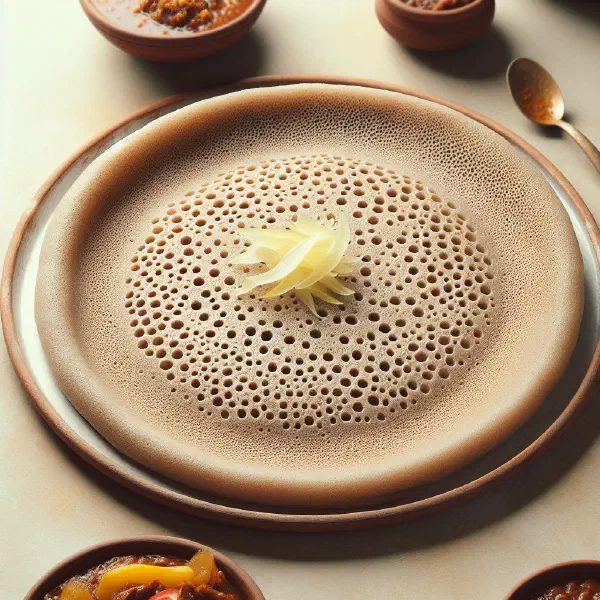
Teff Bread, or injera, is a traditional Ethiopian flatbread made from the highly nutritious teff grain. This gluten-free bread has an intriguing, airy texture and a unique, slightly sour flavour that develops as the batter ferments. It is most often served as an accompaniment to a variety of stews and dishes, and it plays a central role in Ethiopian food culture. Many people prize injera for its taste and for its wholesome, healthy qualities.
Ingredients (serves 1–2)
- 200 g teff flour
- 300 ml water
- 1 tsp salt
- 1 tsp baking powder (optional)
Shopping for the ingredients
To make injera you will need teff flour, which is available in most health-food shops and specialist international grocers. Alternatively, you can order teff flour easily online. Make sure the flour is fresh to guarantee the best flavour. The other ingredients, salt and water, are usually already in the house, which makes this recipe simple and straightforward to put together.
Preparing the dish
To achieve the perfect batter for your injera, begin by mixing the teff flour with water. It is important to stir the batter thoroughly to avoid any lumps. Then leave it to ferment for around 24 hours in a warm spot. This is what gives injera its characteristic flavour and helps develop the beneficial bacteria that are good for digestion.
Step-by-step instructions
- In a bowl, combine the teff flour with the water and salt.
- Stir the batter well, then cover it.
- Leave to rest for 24 hours so it can ferment.
- Heat a pan and pour in a ladleful of the batter.
- Spread the batter evenly and cook over medium heat.
- Wait until bubbles form and the injera sets.
- Carefully lift out the injera and arrange it on a plate.
Gluten-free / lactose-free version
The good news is that injera is already naturally gluten-free, since it is made from teff flour. It is equally suitable for anyone eating lactose-free, as the ingredients contain no dairy products at all. Just make sure any other ingredients you use are also lactose-free, so the finished dish fits a lactose-free diet. This makes injera wonderfully versatile and an ideal choice for a wide range of eating plans.
Tips for vegans and vegetarians
Injera is perfect for vegans and vegetarians, as it contains no animal products whatsoever. You can easily pair it with a range of vegan stews and vegetable dishes to build a tasty, nourishing meal. Try it with lentil, chickpea or spinach dishes, which harmonise beautifully with the bread’s gentle sourness, a spiced chickpea Shiro or a warming Misir Wat both work a treat. Injera is not only nourishing but genuinely healthy, which makes it a firm favourite among anyone following a plant-based diet.
More tips and tricks
An important tip when making injera is to preheat the pan well, so the bread cooks through evenly. If you find the injera is coming out too thick or too thin, simply adjust the amount of water next time round. It also helps to lightly grease the pan to stop the batter sticking. Experiment with the size of your ladle to reach the thickness you like, and be patient, the first round might not be perfect, but practice makes perfect.
Adapting the recipe to your taste
The injera recipe is easily adapted to personal preference. If you fancy varying the flavour, you can add spices such as turmeric or paprika to give the batter a special note. Some people also stir fresh herbs into the mix to work in extra aromas. Experiment with different ingredients and discover what tastes best to you.
Ingredient substitutions
Although teff grain is the main component of injera, you can also experiment with other gluten-free flours if teff is not available. Flours such as amaranth or quinoa can offer an interesting variation, even if the flavour changes a little. Do keep an eye on the liquid, though, as different flours absorb water at different rates. Feel free to test various combinations to discover new and exciting flavours.
Drink pairing ideas
To round off your injera meal, you can choose a suitable drink. Traditionally, injera is happily served with Ethiopian tea or dry wines. A light, sparkling drink can also pair well, complementing the bread’s sourness. Alternatively, fresh juices or aromatic herbal teas are a wonderful choice that harmonises nicely with the spiced flavours of the stews.
Serving and presentation ideas
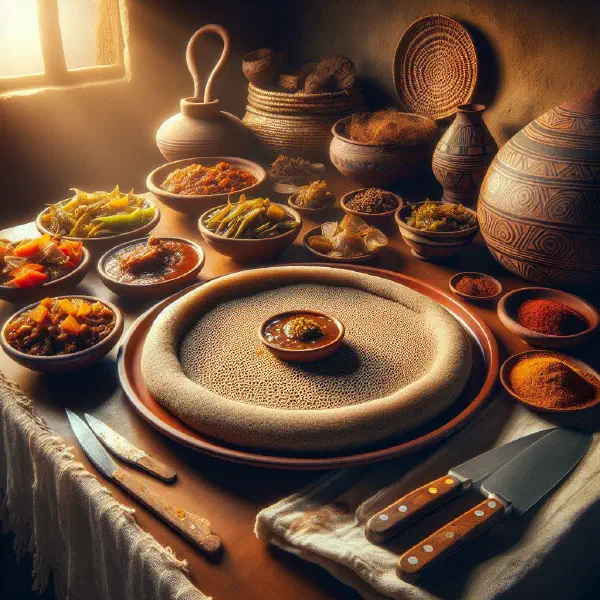
Presentation can be decisive for the injera experience. Serve the injera on a large, flat platter and arrange the stews in small bowls on top, so everyone has the chance to combine flavours for themselves. Colourful sides with contrasting textures make the meal even more appealing. You can also use edible flowers and fresh herbs as a garnish to make the arrangement more attractive still.
A bit of history
Injera has a long history that reaches back into antiquity. Teff grain is thought to have been cultivated in Ethiopia for more than 3,000 years. Injera is not merely a vehicle for food; it also plays a cultural role in the Ethiopian way of life. Sharing injera with others is a form of hospitality and togetherness that runs deep in Ethiopian culture and helps strengthen family and social bonds, a spirit you will find throughout Ethiopian cuisine, from a fiery Doro Wat to a plate of sautéed Tibs.
More recipe ideas
- Shiro — a spiced chickpea stew
- Doro Wat — a traditional chicken stew
- Misir Wat — a fiery lentil stew
- Tibs — sautéed vegetables and meat
- Injera — the classic Ethiopian flatbread
Summary: Teff Bread
Injera is an indispensable part of Ethiopian cuisine, with a unique flavour and countless health benefits. Its simple preparation and the use of wholesome ingredients make it a marvellous addition to any diet, whether for vegans, vegetarians or those eating gluten-free. Try making injera in your own kitchen and discover the exotic aromas of Ethiopia.