National Dish Fiji: Roasted Coconut and Cassava Cake (Recipe)

In this article
Say hello to Roasted Coconut and Cassava Cake, a sweet, fragrant treat that captures the warmth of Fiji in a single slice. Built around earthy grated cassava and toasty roasted coconut, this simple bake is naturally gluten-free and vegan-friendly, so almost everyone can join in. Often shared at celebrations, it carries the islands’ famous spirit of hospitality straight to your kitchen table.
About Roasted Coconut and Cassava Cake
Roasted Coconut and Cassava Cake is a true celebration of flavour that reflects the culture of Fiji beautifully. Cassava, also known as manioc, is a nourishing root that thrives in the tropical climate of the islands. The roasted coconut gives the cake a wonderful taste and a distinctive texture all of its own. This cake is often served at festive occasions and embodies the legendary hospitality of the Fijian people.
Ingredients (serves 1–2)
- 1 cup grated cassava
- 1 cup roasted coconut
- 1/2 cup sugar
- 1/2 cup water
- 1 tsp baking powder
- 1 pinch of salt
- 1 tsp vanilla extract
Shopping for the ingredients
To make Roasted Coconut and Cassava Cake you will need a few special ingredients, most of which are available in Asian grocers or larger supermarkets. Take care to choose good-quality roasted coconut, as it guarantees the full, rounded flavour of the cake. The cassava can be bought fresh or frozen, though fresh is always the better choice. Make sure you also have enough sugar and vanilla extract to hand to keep the cake sweet and aromatic.
Preparing the dish
Preparation for this cake is straightforward and takes only a few steps. Begin by grating the cassava if you are using it fresh. Consider dampening the cassava a little before use to boost the moisture in the finished cake. It also helps to have all the other ingredients measured out and ready, so the process runs smoothly. A well-organised work surface makes the whole job considerably easier.
Step-by-step instructions
- Preheat the oven to 180 degrees Celsius.
- In a bowl, mix together the grated cassava, the roasted coconut, sugar, baking powder and salt.
- Add the water and vanilla extract and stir everything until you have a smooth, even batter.
- Lightly grease a baking tin and pour in the batter.
- Bake the cake for about 30–40 minutes, or until the surface is golden brown.
- The cake should feel firm in the centre; test this with a cocktail stick.
- Let the cake cool before serving.
Gluten-free / lactose-free version
Roasted Coconut and Cassava Cake is by its very nature gluten-free and lactose-free. The main ingredients, cassava and coconut, contain no gluten and no dairy whatsoever. This makes the cake a great choice for guests with food intolerances. Even so, do take care to check any other ingredients you use for possible sources of gluten or lactose, just to be safe.
Tips for vegans and vegetarians
Vegans and vegetarians can enjoy Roasted Coconut and Cassava Cake to the full, as the ingredients are entirely plant-based. That said, when choosing your sugar you may want to make sure no animal products were used in its processing. Instead of vanilla extract, other natural flavourings can be used to discover new tastes. Plant-based sweeteners such as agave syrup also make a lovely alternative for the sweetness.
More tips and tricks
To intensify the flavour of the cake, you can add extra ingredients such as cinnamon or nutmeg. These spices harmonise beautifully with the sweet aroma of the coconut. It is best to add them sparingly so they never overpower the cake. The cake also works wonderfully the next day, as the flavour becomes deeper and more pronounced over time.
Adapting the recipe to your taste
The recipe for Roasted Coconut and Cassava Cake is flexible and easily adjusted to personal preference. The amount of sugar, for example, can be increased or reduced to taste. Adding tropical fruit as a filling or topping could also bring out additional flavours. Be brave and try different variations to create your own perfect cake, much as you might with a Cassava And Coconut Cake.
Ingredient substitutions
If you cannot find roasted coconut, you can use desiccated coconut instead, which is sold in most shops. You can also swap the cassava for sweet potato, depending on what is available, to achieve a different taste and texture. For healthier versions, alternative sweeteners such as stevia or honey work well. Be creative and find the perfect mix for you, the same spirit that shines through a Tapioca Cake.
Drink pairing ideas
To round off the experience of this cake, you can serve refreshing drinks alongside it. A tropical smoothie made with pineapple and coconut water complements the cake superbly, much like a Coconut And Mango Smoothie. Alternatively you could serve a lightly sweetened tea that underlines the cake’s flavours. Plain coconut water or a simple lemonade also makes a perfect refresher.
Serving and presentation ideas
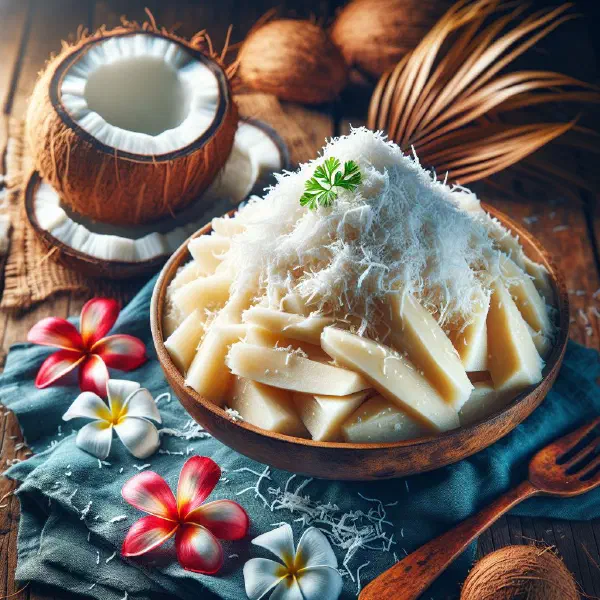
The presentation of Roasted Coconut and Cassava Cake should make the dish even more inviting. You can garnish the cake with fresh exotic fruits or dust it with a light layer of icing sugar. Using edible flowers as decoration can also lend the cake a festive touch.
A bit of history
The use of cassava and coconut runs deep in Fijian cuisine and reflects the agriculture of the region. Cassava has been a staple for centuries and remains an important source of food for many islanders. Coconut, on the other hand, is a versatile product used in a great many dishes. The Roasted Coconut and Cassava Cake has grown into a much-loved dessert that plays a part in many households.
More recipe ideas
Summary: Roasted Coconut and Cassava Cake
Roasted Coconut and Cassava Cake is a truly delicious experience that appeals to the palate and creates a connection to Fijian culture. Its simple yet flavourful ingredients make it an ideal dessert for any occasion. Whether for festive gatherings or simply as an everyday treat, this cake is always a good choice. Let the flavours of Fiji enchant you and savour every single bite.