National Dish Fiji: Taro and Coconut Stew (Recipe)
In this article
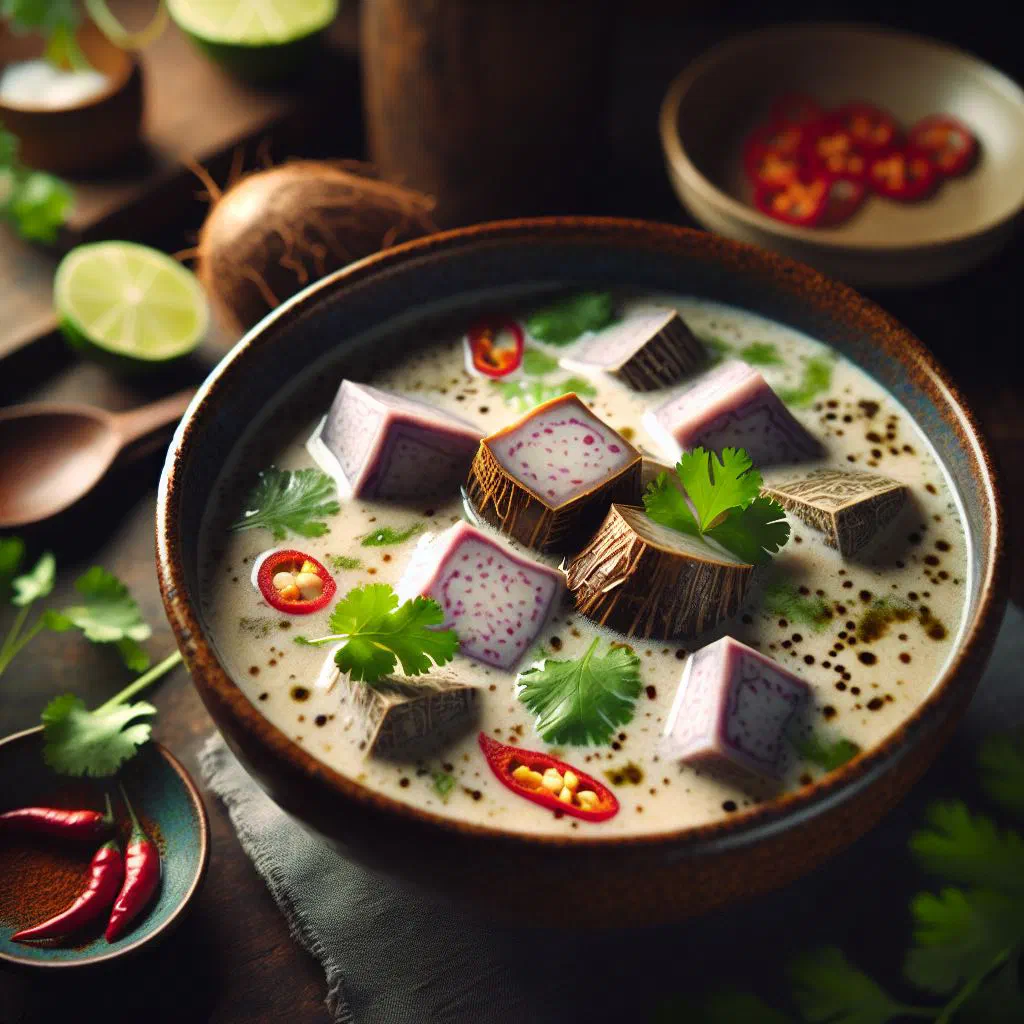
Get a taste of the South Pacific with Taro and Coconut Stew, a traditional Fijian dish celebrated for its silky texture and gentle tropical warmth. Earthy taro root simmers slowly in rich coconut milk until it turns tender and creamy, sweetened by nothing more than the coconut itself. This stew brings a little island paradise straight to your table.
About Taro and Coconut Stew
Taro and Coconut Stew is a traditional dish from Fiji, known above all for its creamy texture and its rich, rounded flavours. Taro, a starchy root vegetable, is a staple of Polynesian cooking and lends the dish its hearty, satisfying body. Combined with the natural sweetness of coconut milk, it creates a harmonious balance that is both comforting and nourishing. Perfect for an easy family dinner or for special occasions alike, this stew promises a genuine taste of the tropics, much like a warming bowl of Bele Soup.
Ingredients (serves 1–2)
- 200 g taro
- 400 ml coconut milk
- 1 onion, diced
- 2 garlic cloves, chopped
- 1 small chilli, deseeded and chopped (optional)
- 1 tsp fresh ginger, grated
- 1 tbsp vegetable oil
- Salt and pepper, to taste
- Fresh herbs (such as coriander or parsley), to garnish
Shopping for the ingredients
When shopping for the ingredients for taro and coconut stew, it pays to choose fresh, good-quality components. Taro is often found in Asian grocery shops or specialist food stores. Look for roots that are firm and free from dark spots or soft patches. Coconut milk can be bought tinned or fresh, with fresh products tending to deliver an even more intense flavour. The same care over ingredients makes all the difference in any dish of Fijian cuisine.
Preparing the dish
Before you start cooking the taro and coconut stew, it helps to get all the ingredients prepared in advance. The taro needs to be peeled and cut into small cubes so that it cooks through evenly. The onion and garlic should also be diced and chopped, allowing them to release their aromas to the full.
Step-by-step instructions
- Heat the vegetable oil in a pan and add the diced onion. Fry over medium heat until translucent.
- Add the chopped garlic, the ginger and the chilli, and fry briefly to release the aromas.
- Stir in the diced taro and mix everything together well.
- Pour over the coconut milk and bring the mixture to the boil.
- Reduce the heat and let the stew simmer for around 20–25 minutes, until the taro is soft.
- Season with salt and pepper to taste, and garnish with fresh herbs just before serving.
Gluten-free / lactose-free version
One of the great things about taro and coconut stew is that it is naturally gluten-free and lactose-free. As all of the main ingredients are free from gluten, the dish is ideal for anyone with a gluten intolerance. Using coconut milk in place of dairy milk or cream also makes it an excellent choice for those who are lactose intolerant.
Tips for vegans and vegetarians
Taro and coconut stew is already naturally vegan and vegetarian, as it contains no animal products at all. This makes it a superb choice for anyone who prefers plant-based eating. To boost the nutritional content, you can add extra vegetables such as spinach or broccoli. Stirring in pulses like chickpeas is another easy way to make the stew even more filling and substantial.
More tips and tricks
To make the stew even more aromatic, you can add a range of spices and herbs. Cumin and turmeric give the dish an exotic note and a warm depth of colour. If you like things hot, simply adjust the amount of chilli to suit. Remember to taste the stew regularly as it cooks, so you can fine-tune the seasoning and find the perfect balance.
Adapting the recipe to your taste
Taro and coconut stew is wonderfully easy to adapt to personal preference. You can increase the amount of coconut milk if you would like a creamier result, or swap the taro for other root vegetables. For more adventurous cooks, adding tropical fruits such as mango or pineapple brings an extra layer of flavour. Let your creativity run free and try out new combinations, just as you might with a bright bowl of Vegetable Curry.
Ingredient substitutions
If taro is not available, you can use alternative root vegetables such as yam or potatoes. These swaps have a slightly different flavour but can still provide the base for the stew. With the coconut milk, you might also switch to an almond-based drink for a milder, lighter creaminess. When changing ingredients, it is worth keeping an eye on the cooking times, as they can vary from one vegetable to the next.
Drink pairing ideas
To round off the experience of taro and coconut stew, a number of drinks make ideal companions. A fresh coconut water or a tropical smoothie works beautifully alongside the dish. A lightly chilled white wine or a pineapple cocktail also harmonises perfectly with its flavours. Choose drinks that bring out the tropical notes and complement the meal, such as a refreshing Coconut Milk Drink.
Serving and presentation ideas
The way you present taro and coconut stew can lift the whole dining experience. Serve it in colourful bowls that echo its tropical character. A garnish of freshly chopped herbs or toasted coconut flakes adds an extra flourish. A thoughtful presentation appeals to the eye and makes serving the dish a pleasure in itself.
A bit of history
Taro and coconut stew has its roots in the traditional cooking of Fiji, a cuisine defined by an abundance of fresh, local ingredients. Taro is a staple food across many Pacific cultures and has been cultivated for centuries. The use of coconut is just as typical of the region, with the nut appearing in countless dishes in many different forms. This pairing reflects Fiji’s culinary identity and creates a unique flavour experience that is known well beyond the islands.
More recipe ideas
- Coconut Eggplant Curry
- Fijian Roti And Dahl
- Grilled Fish With Coconut Sauce
- Pumpkin And Chickpea Stew
- Roasted Garlic And Taro Mash
Summary: Taro and Coconut Stew
Taro and coconut stew is a delicious, nourishing way to enjoy the flavours of Fiji. With its simple ingredients and straightforward preparation, this dish is ideal for any occasion. It offers a real high point of flavour and endless scope to experiment with different variations. Enjoy a little slice of paradise right in your own kitchen.