National Dish France: Daube de Sanglier (Recipe)
In this article
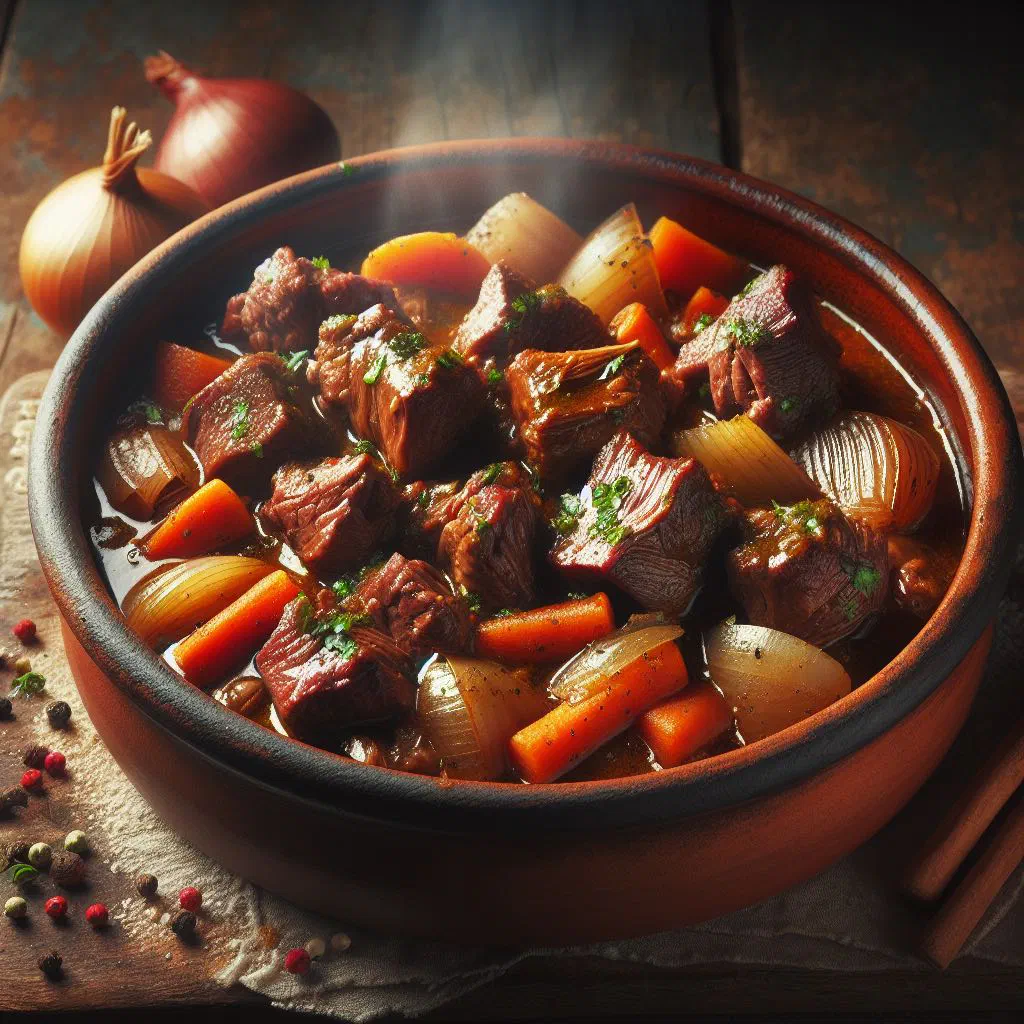
Meet Daube de Sanglier, a soul-warming wild boar stew that captures the rustic heart of southern France. Tender game meat is slowly braised in red wine with fragrant herbs until it falls apart at the touch of a fork. Born in the kitchens of Provence, this dish rewards a little patience with deep, layered flavour. It is the perfect centrepiece for a special occasion or a cosy evening shared with friends and family.
About Daube de Sanglier
Daube de Sanglier is a traditional French dish built around a tender stew of wild boar. The long, gentle cooking time is what makes the meat so meltingly soft and full of flavour. In Provence, the dish is often finished with fresh herbs and spices that bind the aromas together in perfect harmony. It is ideally suited to festive gatherings or relaxed evenings spent at the table with the people you love.
Ingredients (serves 1–2)
- 500 g wild boar meat (such as shoulder or leg)
- 1 bottle red wine (ideally Côtes du Rhône)
- 2 onions
- 2 carrots
- 3 garlic cloves
- 2 bay leaves
- Thyme and rosemary (to taste)
- Salt and pepper (to taste)
- Olive oil
- Optional: diced bacon for extra flavour
Shopping for the ingredients
When shopping for Daube de Sanglier, it pays to choose fresh, high-quality produce. Look for wild boar meat from a trusted butcher or a specialist game supplier. Fresh, regional vegetables and herbs are well worth seeking out too, as they have a real influence on the final flavour of the dish. Do not forget to pick a good red wine that can also be poured alongside the meal as a pairing.
Preparing the dish
Preparing Daube de Sanglier begins with marinating the wild boar. Cut the meat into cubes and combine it in a bowl with red wine, garlic, onions and herbs. Ideally, leave the meat to marinate overnight so the flavours can develop as fully as possible. The next day you can move on to the cooking itself, keeping a close eye on the right temperature and a long, steady simmer.
Step-by-step instructions
- Lift the marinated wild boar out of the marinade and drain it well.
- Heat the olive oil in a large pot and brown the meat in batches until golden on all sides.
- Add the onions, carrots and garlic and sauté briefly.
- Deglaze with the marinade and bring to the boil over medium heat.
- Add the bay leaves, thyme and rosemary, then lower the heat.
- Cover and let the stew simmer gently for around 2 to 3 hours, until the meat is tender.
- Season with salt and pepper and serve piping hot.
Gluten-free / lactose-free version
Daube de Sanglier is naturally a dish that calls for no gluten-containing ingredients. To make sure it stays gluten-free, simply check that everything you use, particularly the spices and the red wine, is free from gluten. Take care, too, that no gluten-rich side dishes end up on the plate. For anyone who is lactose-sensitive the dish can be enjoyed as is, since it contains no milk or cream at all.
Tips for vegans and vegetarians
Although Daube de Sanglier traditionally relies on meat, the recipe adapts easily for vegans and vegetarians. In place of wild boar you can use ingredients such as portobello mushrooms or jackfruit, which offer a similar texture. You might also build the dish on a rich vegetable stock rather than leaning on the wine alone. To deepen the flavour, experiment with different spices and herb blends until it sings.
More tips and tricks
For even greater depth of flavour, lift the meat out of the pan after browning and caramelise the onions and carrots in the rendered fat before continuing. This adds an extra layer of richness to the stew. If you prefer more sauce, simply pour in a little more red wine or stock. Remember to stir the stew now and then as it cooks, taking care that it never catches and burns.
Adapting the recipe to your taste
Daube de Sanglier leaves plenty of room for personal touches. You can add different vegetables, such as potatoes or parsnips, to make the dish more substantial. Swapping in a different red wine will shift the flavour too, so feel free to play with your favourites. Experiment with various herbs and spices to shape the stew exactly to your liking. There is no single right answer.
Ingredient substitutions
If wild boar is hard to find, the recipe also works beautifully with beef or even pork, each bringing its own character to the pot, much like the hearty richness of a Ragout de Boeuf. When choosing the wine, a robust table red that pairs well with meat will do the job nicely. For a lighter option, simply reach for leaner cuts of meat without losing the comforting spirit of the dish.
Drink pairing ideas
A full-bodied red wine, such as a Côtes du Rhône or Bordeaux, sits beautifully alongside the hearty flavour of Daube de Sanglier. A robust rosé from Provence can also make for a refreshing companion. For those who prefer something alcohol-free, a well-balanced grape juice or a fruity mocktail rounds out the flavours nicely. Sparkling water with a squeeze of lemon is another refreshing choice.
Serving and presentation ideas
To serve Daube de Sanglier at its best, ladle the stew into deep, rustic bowls. Garnish with fresh herbs such as parsley or thyme to add a touch of colour and freshness. A side of fresh bread or creamy mash is the perfect partner, completing the dish both visually and on the palate. A welcoming table set with candles and a little French flair will make the whole experience even more memorable.
A bit of history
Daube de Sanglier has a long history in French cuisine, especially in the region of Provence. It was originally prepared by farmers as a way to coax the tough meat of wild boar into something tender. Over time it grew into a celebratory dish enjoyed on special occasions. Today it is a symbol of French gastronomy and the regional food culture that so prizes the art of slow cooking, much like the rest of French cuisine.
More recipe ideas
Summary: Daube de Sanglier
Daube de Sanglier captivates with its rich aroma and the meltingly tender texture of the wild boar. The marriage of red wine and fragrant herbs makes it an absolute highlight of French cooking. Ideal for festive occasions or unhurried suppers, it brings a slice of French art de vivre straight to the table. Give this rustic classic a try and let its glorious flavours win you over.