National Dish France: Duck Confit (Recipe)
In this article
Few dishes capture the soul of south-western France quite like Duck Confit. Tender duck legs are cooked slowly in their own fat until the meat all but falls from the bone, then crisped to golden perfection just before serving. Born in the kitchens of Gascony as a way to preserve meat through the winter, it has since become a celebrated centrepiece of the French table. Rich, deeply savoury and surprisingly simple to master at home, it is the kind of dish that turns an ordinary evening into a feast.
About Duck Confit
Duck Confit is a traditional French dish prized for its unmistakable flavour and meltingly tender texture. At its heart are duck legs, cooked low and slow in their own fat until they reach a perfect, juicy softness. This technique, known as confit, has its origins in Gascony and remains a cornerstone of French cookery. Duck confit is often served with crispy potatoes or fresh seasonal vegetables, which round out and lift its rich, savoury aromas beautifully.
Ingredients (serves 1–2)
- 2 duck legs
- 500 g duck fat (or olive oil as an alternative)
- 2–3 cloves of garlic
- 1–2 sprigs of fresh thyme
- Salt and pepper, to taste
Shopping for the ingredients
When shopping for the ingredients for duck confit, it is well worth paying attention to the quality of the meat. Look for fresh, high-grade duck legs, ideally from free-range birds. The duck fat is just as important to the final flavour; many butchers stock it fresh or frozen, so it is usually easy to track down. Make sure your herbs are fresh too, as this makes all the difference to the finished taste.
Preparing the dish
Before you begin cooking duck confit, rinse the duck legs thoroughly and pat them dry. Season the legs generously on both sides with salt and pepper to help draw out and concentrate the flavour of the meat. It is best to let the legs rest in the fridge for at least a few hours, preferably overnight, so the seasoning has time to work right through. This curing step is essential for developing the full depth of the dish.
Step-by-step instructions
- Once seasoned, leave the duck legs to cure in the fridge for at least 12 hours.
- In a large pot, gently heat the duck fat until it has fully melted.
- Carefully lower the cured duck legs into the hot fat, making sure they are completely submerged.
- Cook the legs over low heat for 2–3 hours, until the meat is tender and falling from the bone.
- Once cooked, lift the legs out of the fat and let them drain on kitchen paper.
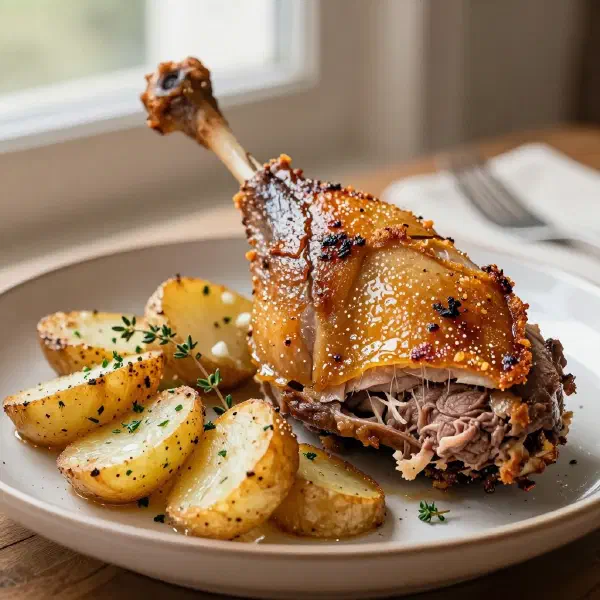
- Serve the legs with crispy potatoes or fresh seasonal vegetables.
Gluten-free / lactose-free version
The wonderful thing about duck confit is that it is naturally gluten-free and lactose-free, since the main ingredients, duck meat and fat, contain none of these allergens. That means anyone with dietary restrictions can enjoy this delicious dish with complete confidence. Just take care that the side dishes are also gluten- and lactose-free if you are catering for those particular intolerances.
Tips for vegans and vegetarians
Although duck confit is a meat dish, there are creative ways to put together a vegan or vegetarian version. In place of duck legs, try jackfruit or aubergine, cooked gently with plenty of seasoning and vegetable oil. To keep the texture and depth of flavour, lean on robust spices, herbs and a well-judged marinade. Experiment with different ingredients to develop your own distinctive, tasty alternative.
More tips and tricks
For perfect duck confit, keeping a close eye on the temperature during cooking is key. Heat that runs too high can turn the meat tough, while a gentler, low temperature allows the flavours to deepen. Storing any leftovers submerged in the duck fat keeps them beautifully moist as they sit. The leftover meat is also wonderful shredded into sandwiches or salads, making the dish even more versatile.
Adapting the recipe to your taste
Depending on your own preferences, you can easily adjust the herbs and spices in your duck confit. A pinch of smoked paprika or a little rosemary, for instance, can lend a distinctive twist. The accompaniments can vary too; try serving it with root vegetables or a light, crisp salad. Be bold and experiment with the ingredients until you have created your own perfect version, much like the slow-braised richness of a Daube de Sanglier.
Ingredient substitutions
If you do not have duck fat to hand, you can use olive oil or coconut fat instead to cook the legs. These alternatives have a different character, but they can still produce a delicious result. You might also vary the seasonings, adding fresh ginger or mustard seeds, for example, to give the dish a particular note. Play around with different flavour combinations to discover what suits you best, a spirit of experimentation that also runs through a hearty Civet de Lapin.
Drink pairing ideas
Duck confit calls for a generous red wine to complement its rich aromas. A Côtes du Rhône or a Pinot Noir make excellent partners, standing up to the deep, savoury flavour of the duck. Look for wines with a full-bodied character that can balance the richness of the fat. If you prefer something brighter, a crisp white wine can also make for an interesting choice.
Serving and presentation ideas
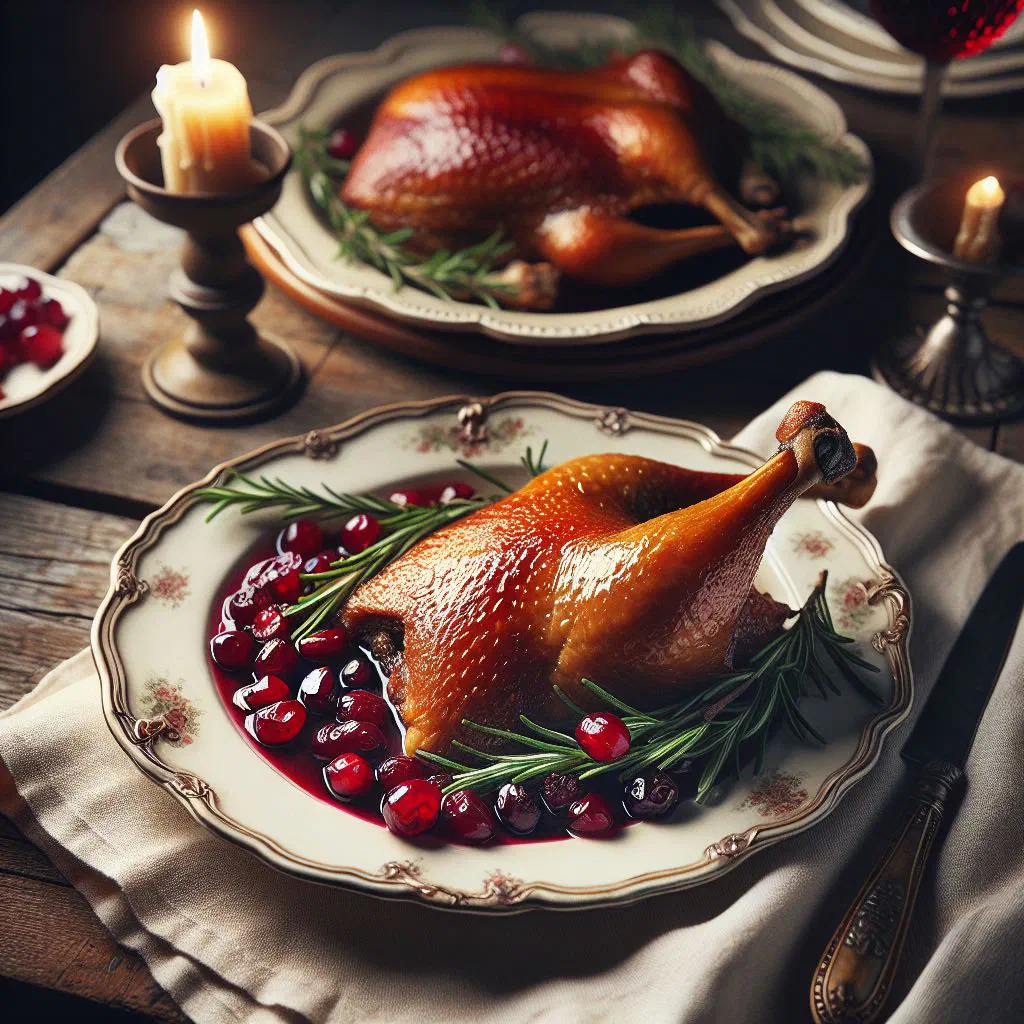
Presentation can add a great deal to the whole duck confit experience. Serve the legs on a handsome wooden board, or plated elegantly on a flat dish alongside a colourful side. Fresh herbs such as thyme or parsley bring not only colour but extra flavour. Remember to accompany the dish with a small serving dish for the fat, which is ideal to keep for later use.
A bit of history
Duck confit has a long history in French cooking. Originally developed as a way to preserve meat through the winter months, it has since become a genuine gourmet dish. The tradition of confit is especially strong in Gascony, where it played an important role in keeping food through the year. Even today, duck confit remains a true symbol of French gastronomy and is enjoyed the world over, a fine example of French cuisine at its most generous, sitting comfortably beside classics such as Canard à l’Orange.
More recipe ideas
Summary: Duck Confit
All in all, duck confit is a superb showcase of French cookery, offering tender, intensely flavoured duck meat alongside a host of possible accompaniments. The combination of slow cooking and good-quality fat makes this dish an absolute must for anyone who loves haute cuisine. With a thoughtful presentation and the right pairing, it slots beautifully into your next dinner party. Will you manage to impress your guests with this culinary delicacy?