National Dish France: Escargot (Recipe)
In this article
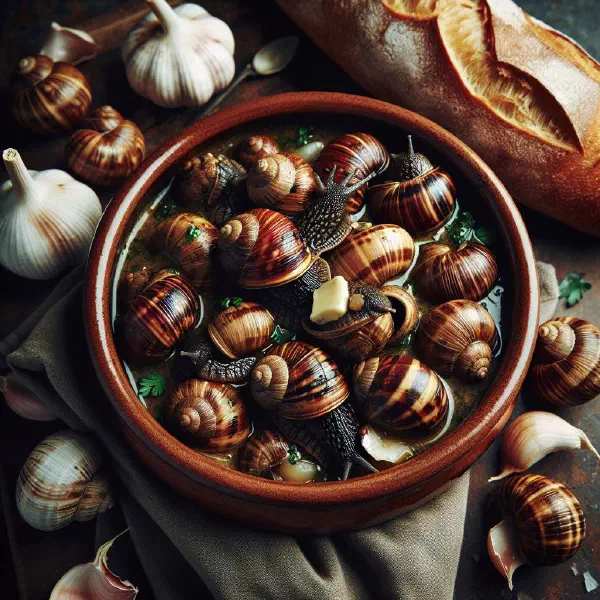
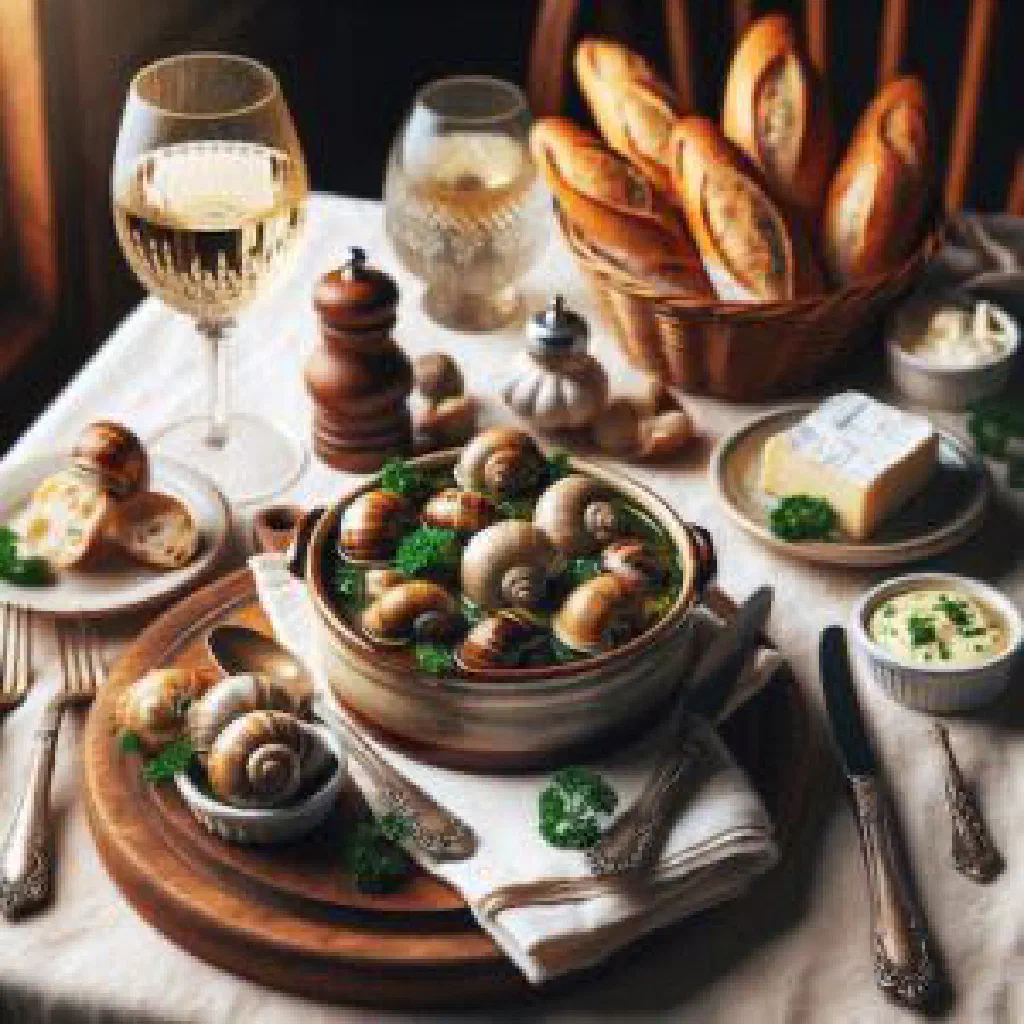
Discover Escargot, one of France’s most celebrated delicacies. These edible snails, gently baked in a rich garlic butter scented with parsley and shallots, are a hallmark of refined French dining. Often served as an elegant starter, they reward you with a wonderfully tender bite and a deep, savoury flavour. With a crusty baguette to mop up every last drop of butter, you can bring a taste of a fine Parisian bistro straight to your own table. Bon appétit.
About Escargot
Escargot, the culinary term for edible snails, is a classic expression of French gastronomy. Frequently served as a starter in upmarket restaurants, it embodies a long and treasured tradition within French cooking. Escargots are prized above all for their unique texture and rich flavour, which is heightened by a preparation built around garlic butter, fresh herbs and sometimes a splash of white wine. Their standing as one of France’s signature dishes speaks to the cherished place they hold in French culture and cuisine.
Ingredients (serves 1–2)
- 12–24 snails (depending on size)
- 100g soft butter
- 2–4 cloves of garlic, finely chopped
- A handful of fresh parsley, finely chopped
- Salt and freshly ground black pepper
- A pinch of nutmeg
- 1 tablespoon shallots, finely chopped
- 50ml dry white wine (optional)
- Baguette, to serve
Shopping for the ingredients
When buying snails, quality really matters. It is best to source them fresh, or already pre-cooked, from a trusted delicatessen or a specialist butcher. Fresh herbs and good-quality butter make a real difference to the finished flavour of the dish. For the garlic, look for firm bulbs with plump, unblemished cloves. As with so many dishes in French cuisine, a few well-chosen ingredients are the foundation of a memorable result.
Preparing the dish
If you are using fresh snails, they must first be cleaned thoroughly and then cooked. Pre-cooked snails, on the other hand, simply need preparing according to the instructions on the packet. The butter can be mixed ahead of time with the garlic, herbs and seasonings, then chilled so that the flavours have a chance to develop and mingle.
Step-by-step instructions
- Preheat the oven to 200°C.
- In a bowl, blend the soft butter with the chopped garlic, parsley, shallots, salt, pepper and nutmeg to make a smooth herb butter.
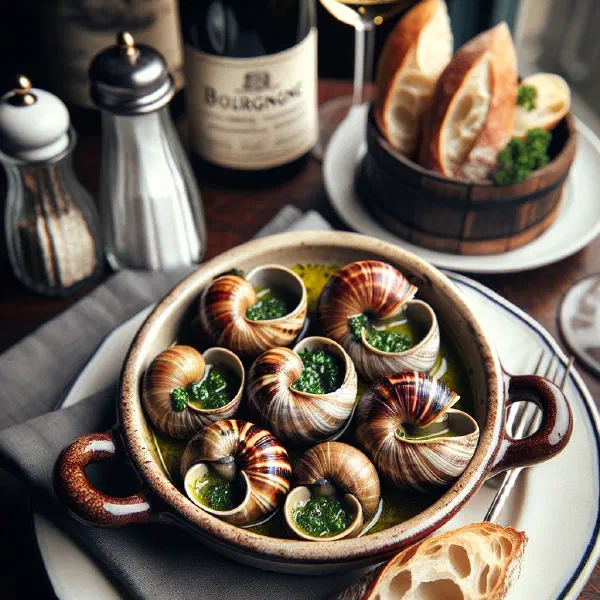
- Spoon a little of the herb butter into each snail shell or snail dish, set the snails inside, then cover them with the remaining butter.
- If you like, pour a splash of white wine into the dishes.
- Bake the filled shells in the preheated oven for about 10–12 minutes, until the butter is bubbling and lightly golden.
- Serve with a fresh baguette, perfect for mopping up the delicious garlic butter.
Gluten-free / lactose-free version
Escargot is naturally close to gluten-free, as the dish itself contains no flour. Simply swap the baguette for a widely available gluten-free bread so the meal suits anyone with a gluten intolerance. For a lactose-free version, replace the butter with a good plant-based alternative; this keeps the garlic-and-herb richness intact while making the dish gentler on sensitive stomachs. That way every guest can enjoy this French classic without compromise.
Tips for vegans and vegetarians
While traditional escargot is not suitable for a plant-based diet, the soul of the dish, that fragrant garlic and herb butter, adapts beautifully. Use a vegan butter alternative and serve the herb butter over baked mushrooms, which echo the tender texture of snails remarkably well. Take care to avoid hidden animal products in any pre-prepared ingredients. Fresh parsley, garlic and shallots remain the keys to an authentic, satisfying flavour.
More tips and tricks
Experiment with different herbs such as thyme or rosemary to create your own variations on the classic butter. Any leftover herb butter keeps well in the fridge and is wonderful for finishing other dishes. Try it over grilled fish, steak or vegetables. For the richest result, let the butter come up to room temperature before mixing so the herbs and garlic distribute evenly throughout.
Adapting the recipe to your taste
If there are ingredients you would rather leave out, or intolerances to consider, the recipe is easy to tailor to your wishes. The shallots, for example, can be omitted entirely or replaced with a vegetable of your choice. You might also dial the garlic up or down, or add a little extra parsley, to make the herb butter exactly to your liking.
Ingredient substitutions
If you would prefer not to use any alcohol, simply leave out the white wine, the dish loses none of its character without it. Should fresh shallots be hard to find, a touch of finely chopped onion makes a fine stand-in, much as it does in a hearty Ragout de Boeuf. Swapping standard butter for a salted variety, in the spirit of Caramel au Beurre Salé, is another easy way to deepen the flavour.
Drink pairing ideas
A cool glass of dry white wine such as a Chablis or Sancerre pairs beautifully with escargots and brings out their flavours wonderfully. The crisp, mineral notes of these wines cut through the richness of the garlic butter, refreshing the palate between bites. For a non-alcoholic option, sparkling water with a squeeze of lemon offers a similar lift.
Serving and presentation ideas
Serve the escargots in dedicated snail plates or small individual dishes for that authentic touch. For a hint of elegance, scatter a few fresh herbs as a garnish alongside the snails. The baguette, too, can be arranged artfully on the plate, with a small bowl of extra garlic butter set to one side. Presented like this, escargot makes a striking and inviting start to any meal.
A bit of history
The tradition of eating snails in France reaches all the way back to ancient Rome, and over the centuries it has grown into a genuine classic of French cooking. Snails became especially popular during the 18th and 19th centuries, when they earned a fixed place on the menus of fine Parisian restaurants. From those refined dining rooms, escargot went on to become one of the most recognisable symbols of French cuisine around the world.
More recipe ideas
Summary: Escargot
Escargot is an exquisite French starter that impresses with a wealth of flavour drawn from herb butter and garlic. It is a treat for the senses and a cultural symbol of French cuisine, carrying centuries of tradition in every shell. With this recipe you can bring a piece of that heritage into your own home and treat yourself and your guests to a truly special culinary experience. Give it a try, and savour every buttery bite.