National Dish France: Paris-Brest (Recipe)
In this article
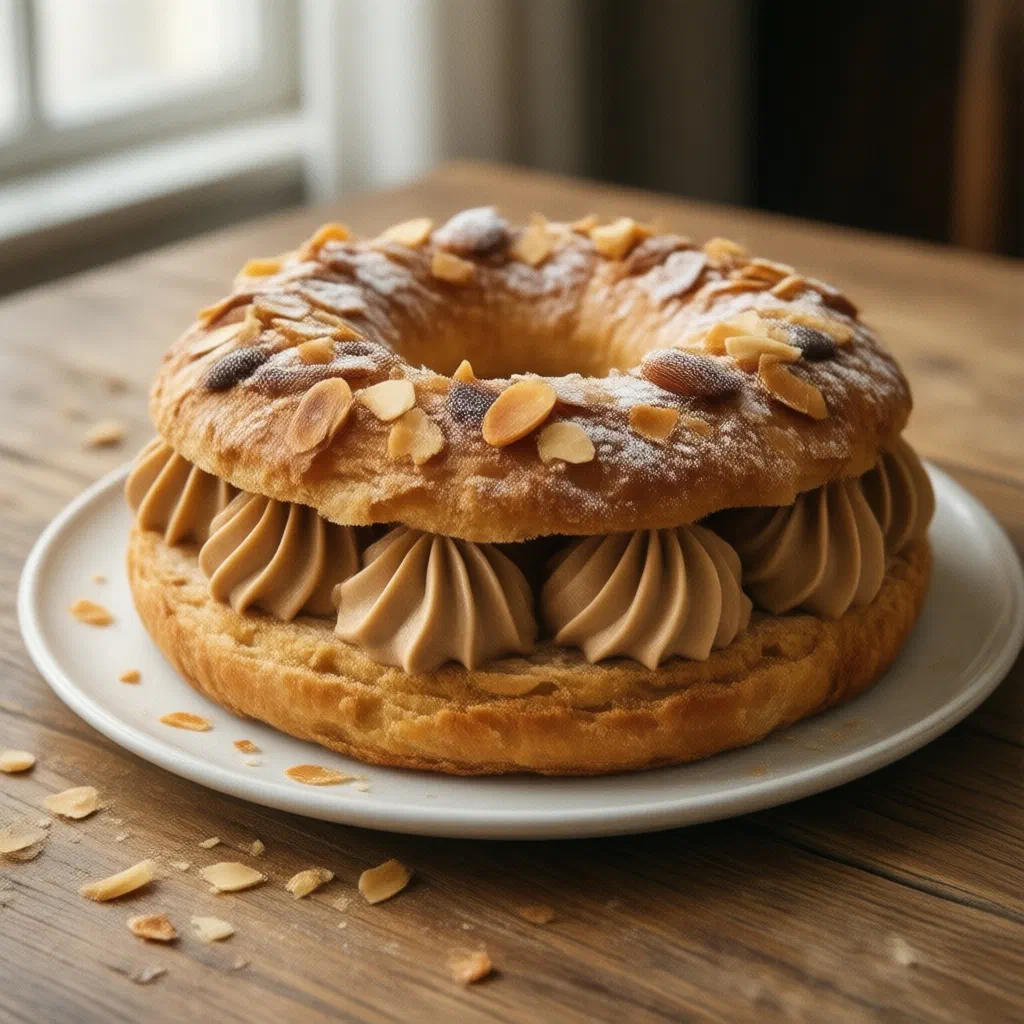
Treat yourself to the Paris-Brest, one of the great showpieces of French patisserie. This elegant ring of crisp choux pastry is filled with a silky praline cream that brings out the toasty warmth of roasted hazelnuts. Created in 1910 to celebrate the famous cycling race of the same name, it has been pleasing pudding lovers ever since. As much a feast for the eyes as for the palate, it is the perfect centrepiece for a special occasion, or simply a glorious sweet indulgence to enjoy whenever the mood takes you.
About Paris-Brest
The Paris-Brest is a true masterpiece of French patisserie, in a class of its own. Made from delicate choux pastry, it is filled with a praline cream that shows off the flavour of roasted hazelnuts to perfection. This traditional recipe was first created in 1910 to mark the famous cycle race of the same name, and it has been a much-loved dessert ever since. The Paris-Brest is not only a treat for the palate but a treat for the eyes too, equally at home at a grand celebration or as a quiet little indulgence between meals.
Ingredients (serves 1–2)
- 125 g water
- 125 g milk
- 100 g butter
- 250 g flour
- 4 eggs
- 200 g ground hazelnuts
- 200 g sugar
- 400 ml cream
- A pinch of salt
Shopping for the ingredients
When shopping for the ingredients for your Paris-Brest, it is well worth paying attention to the quality of what you buy. Fresh eggs and good-quality butter are crucial to the flavour and texture of the choux pastry. Visit a local supplier where you can to get the freshest ingredients possible. Your choice of hazelnuts can also make a big difference to the finished result, roasted hazelnuts add an extra depth of flavour to the praline cream.
Preparing the dish
Before you begin making the Paris-Brest, gather all your ingredients and measure out the quantities you need. Make sure the butter is at room temperature so it blends in smoothly and evenly. The choux pastry is one of the main components of this dessert and takes a little practice to bring to the perfect consistency. With everything well prepared in advance, the whole process will run far more smoothly.
Step-by-step instructions
- Bring the water, milk, butter and a pinch of salt to the boil in a pan.
- Tip in all the flour at once and beat vigorously until the dough comes away from the sides of the pan.
- Transfer the dough to a bowl and beat in the eggs one at a time until you have a smooth, glossy mixture.
- Spoon the choux pastry into a piping bag fitted with a large nozzle and pipe a single large ring onto a baking tray.
- Bake in a preheated oven at 200 °C for about 30–35 minutes, until golden brown.
- Meanwhile, whip the cream until stiff and fold in the ground hazelnuts and the sugar.
- Slice the cooled choux ring in half horizontally and spread the praline cream generously over the bottom half.
- Replace the top half and dust with icing sugar to taste.
Gluten-free / lactose-free version
For a gluten-free version of the Paris-Brest, you can use a gluten-free flour. Choose a blend that works well for choux pastry. To make the recipe lactose-free, swap the butter for a lactose-free margarine and replace the milk with a plant-based alternative such as almond or soya milk. These adjustments are straightforward and let you enjoy this delicious dessert without a second thought.
Tips for vegans and vegetarians
Vegans can adapt the recipe by replacing the eggs with a flax egg (1 tablespoon of ground flaxseed and 2.5 tablespoons of water per egg). Be sure to use a plant-based cream for the filling to achieve a lovely, creamy consistency. There are now plenty of alternatives on the market that are perfectly suited to making desserts. With these simple swaps, vegans can enjoy the appeals to of the Paris-Brest too. Just as the Macarons on any French dessert table can be reworked to suit every diet.
More tips and tricks
One important tip when making the Paris-Brest is not to overwork the choux pastry. Too much beating can cause the dough to lose its perfect lightness. You should also take care not to open the oven during baking, as this can stop the pastry rising properly. Another handy trick is to cut a small slit in the top of the choux ring so the steam can escape. This stops the pastry from collapsing.
Adapting the recipe to your taste
To ring the changes, you can use almonds or walnuts in place of the hazelnuts. These alternatives lend the filling a distinctive flavour and pair beautifully with the lightly sweet choux pastry. You can also enhance the filling with different flavourings, such as vanilla or chocolate chips. Touches like these make sure your Paris-Brest tastes a little different, and special, every time.
Ingredient substitutions
To vary the recipe, you can use almonds or walnuts instead of hazelnuts. These alternatives give the filling a unique character and sit happily alongside the gently sweet pastry. Beyond that, you might fold vanilla or chocolate pieces through the cream, in the same spirit as the salted caramel that fills a classic Caramel au Beurre Salé. Substitutions like these help you adapt the recipe to what you have to hand or to your own taste.
Drink pairing ideas
To round off the pleasure of the Paris-Brest, several drink pairings work beautifully. A robust espresso harmonises wonderfully with the sweet pastry and brings out the flavours of the praline cream. Alternatively, a glass of French Champagne adds a festive flourish. For an alcohol-free option, a freshly squeezed orange juice balances the sweetness of the dessert to perfection.
Serving and presentation ideas
For an appealing presentation of your Paris-Brest, it is best to serve the pastry on a beautiful cake stand. Dusted with icing sugar and garnished with fresh berries or mint, the dessert looks especially decorative. A careful arrangement of extra pralines or chocolate pieces around the cake can add an attractive finishing touch too, much as a tray of Mignardises lifts the end of a meal. Presentation plays an important part in the enjoyment and builds the anticipation for this delicious dessert.
A bit of history
The history of the Paris-Brest stretches back to 1910, when the pastry chef Louis Durand created it to mark the cycle race of the same name. He was keen to develop a dish shaped like a wheel, symbolising the movement of the cyclists. Over the years the Paris-Brest has grown into a much-loved dessert within French cuisine and is treasured around the world. The link between the sporting event and this delicious pastry has helped turn it into a symbol of French indulgence.
More recipe ideas
Summary: Paris-Brest
The Paris-Brest is a timeless French dessert made of delicious choux pastry and exquisite praline cream. With its elegant shape and unmistakable flavour, it is a wonderful addition to any tea table. Whether for festive occasions or as a sweet little snack between meals, the Paris-Brest is always an excellent choice. Insights gained in the making of it and creative variations turn this dessert into an experience for every gourmet and sweet-toothed enthusiast alike.