National Dish France: Pissaladière (Recipe)
In this article
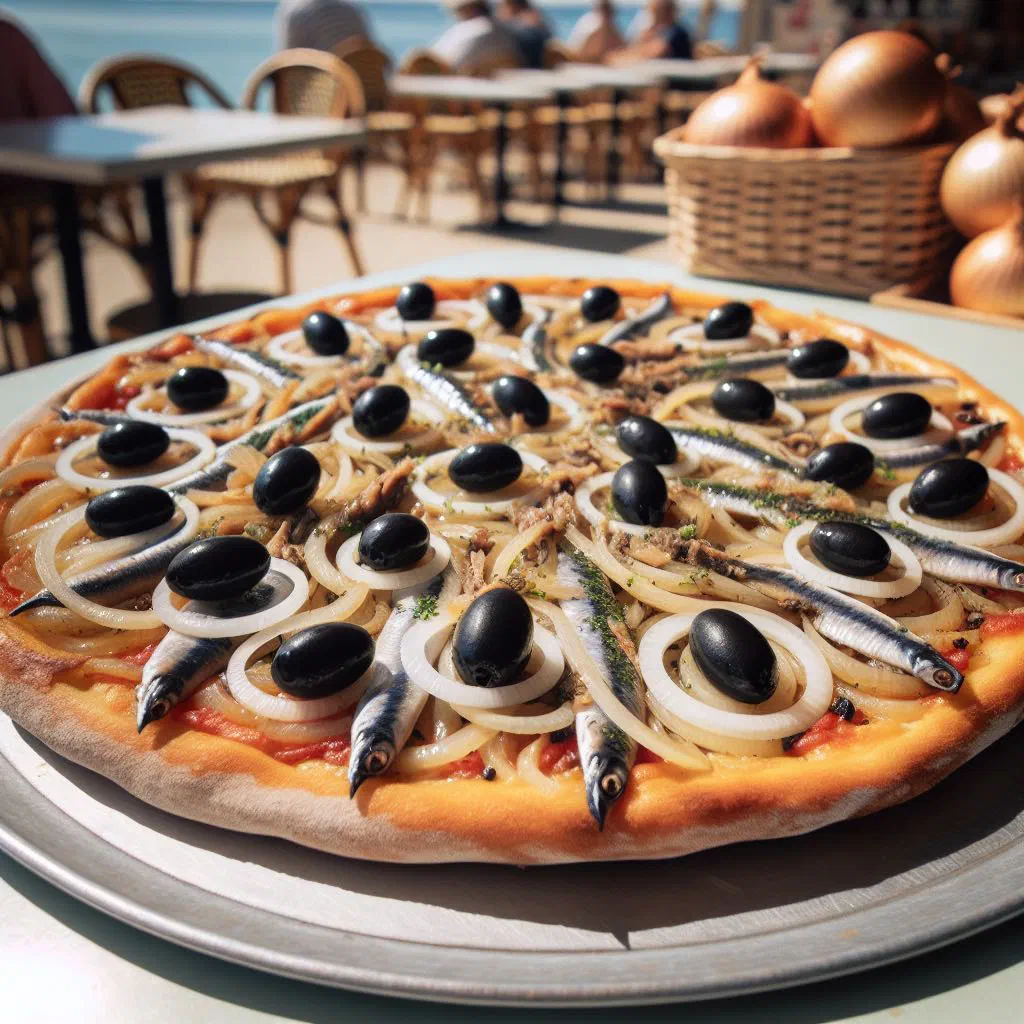
Say hello to Pissaladière, a savoury onion tart that captures the sun-soaked spirit of southern France. Hailing from the streets of Nice and the wider Provence, it layers a crisp base with sweet, slow-cooked onions, briny olives and a scattering of capers. Equal parts rustic and elegant, it makes a wonderful nibble with an aperitif or a relaxed main course. Bring a taste of the Côte d’Azur to your own kitchen with this Mediterranean classic.
About Pissaladière
The Pissaladière is a deliciously savoury speciality of French cuisine, with its roots firmly in the region of Provence. Often described as a French cousin of the pizza, it is generously topped with a handful of well-chosen ingredients, among them onions, black olives and capers. What sets it apart is the deep, mellow sweetness of the caramelised onions, which turn a simple tart into something truly special. It is most often served as an appetiser or snack, yet it works just as happily as a light main course.
Ingredients (serves 1–2)
- 250g pizza dough or puff pastry
- 3 large onions
- 3 tablespoons olive oil
- 100g black olives (pitted)
- 1–2 tablespoons capers
- 1–2 teaspoons Provençal herbs (such as thyme and rosemary)
- Salt and pepper, to taste
Shopping for the ingredients
To conjure up a proper Pissaladière, it pays to track down the right ingredients. Most of what you need is available in an ordinary supermarket, but for the very best flavours it is worth seeking out fresh, good-quality produce from a local market. Choose ripe onions, as these deliver the wonderful sweetness that develops during cooking. When it comes to the black olives, reaching for Mediterranean varieties helps preserve the authenticity of the dish. This same respect for simple, sunny ingredients runs right through French cuisine.
Preparing the dish
Before you begin assembling the Pissaladière, it helps to get everything ready. Peel the onions and slice them into thin rings so they caramelise evenly. Pit the olives and halve them if you like, so they spread neatly across the tart. The capers should be given a quick rinse to wash away excess salt and sharpen their flavour.
Step-by-step instructions
- Heat the olive oil in a large pan and add the onion rings.
- Let the onions caramelise gently over low heat for about 20–30 minutes, until golden and soft.
- Meanwhile, roll out the pizza dough or puff pastry onto a baking tray and shape a raised edge.
- Preheat the oven to 200°C.
- Spread the caramelised onions evenly over the dough.
- Scatter over the olives, capers and herbs, then season with salt and pepper.
- Bake in the preheated oven for about 25–30 minutes, until the edge is golden brown.
- Remove the Pissaladière from the oven and let it cool a little before serving.
Gluten-free / lactose-free version
For anyone who needs to avoid gluten or lactose, the Pissaladière adapts beautifully. There are plenty of gluten-free pizza dough alternatives that give equally delicious results. Since the classic topping contains no dairy, the dish is naturally suited to those who are lactose-free; if you do choose to add cheese, simply reach for a lactose-free option or leave it out entirely.
Tips for vegans and vegetarians
The Pissaladière is not just for committed meat-eaters. It is a fantastic choice for vegans and vegetarians alike. Because the recipe contains no animal products by nature, vegans can enjoy it without any changes at all. To deepen the flavour, try adding extra vegetables such as peppers or aubergines. A splash of balsamic vinegar can also lend an intriguing twist. The same generous, veg-forward spirit shines in a Tourte de Blettes.
More tips and tricks
A few small tricks help you nail the perfect Pissaladière. Take care to caramelise the onions over low heat so they soften without catching and release their full sweetness. A good olive oil lifts the whole dish, so it is worth investing in a quality bottle. Blind-baking the base for a few minutes also helps keep the bottom crisp rather than soggy, much as you would for a Chèvre et Miel Tarte.
Adapting the recipe to your taste
The Pissaladière lends itself wonderfully to personal tweaks. Experiment with different herbs or add other vegetables to ring the changes. Depending on your mood you can adjust the ratio of onions to olives, dialling up one flavour or another. You might also try different types of pastry to discover new textures, from a light puff to a sturdier shortcrust.
Ingredient substitutions
If you do not have every ingredient for the Pissaladière to hand, there is no need to worry. Instead of black olives, for example, you can use green olives, which bring their own tasty contrast. For the herbs, fresh alternatives work well, or reach for dried ones if you cannot find anything fresher. Various cheeses can also be added for a creamier finish, should you fancy it, a touch that nods to the cheesy comfort of a Croque-Madame.
Drink pairing ideas
A range of drinks pairs beautifully with a delicious Pissaladière. A light, dry white wine from Provence, or a crisp local rosé, complements the flavours perfectly. For a non-alcoholic option, a sparkling mineral water with lemon or a fruity iced tea makes a refreshing match. These drinks harmonise wonderfully with the Mediterranean flavours and round the meal off nicely.
Serving and presentation ideas
Presentation can make a real difference to the Pissaladière experience. Serve it straight from the oven on a rustic wooden board and slice it into neat pieces in front of your guests. A few sprigs of fresh herbs scattered over the top give the tart an appealing finish. You might also offer a selection of dips or olives on the side, giving everyone a little more to nibble on.
A bit of history
The Pissaladière looks back on a long history stretching to the 18th century. It was traditionally made in and around Nice, with roots in the local fishing and curing traditions. The name comes from pissalat, a fish paste once used to season the tart. Today it is often prepared without fish, yet it has held on to its unmistakable character as a hearty, full-flavoured dish, a fine example of the rustic side of French cuisine.
More recipe ideas
Summary: Pissaladière
The Pissaladière offers a wonderful chance to taste the flavours of Provence, and it is very easy to make. With a short list of ingredients and a handful of simple steps, you can create a savoury tart that impresses on any occasion. The scope for adjustments and variations makes this recipe especially versatile. An appetiser or a main course, the Pissaladière is always a hit.