National Dish France: Tarte Flambée (Recipe)
In this article
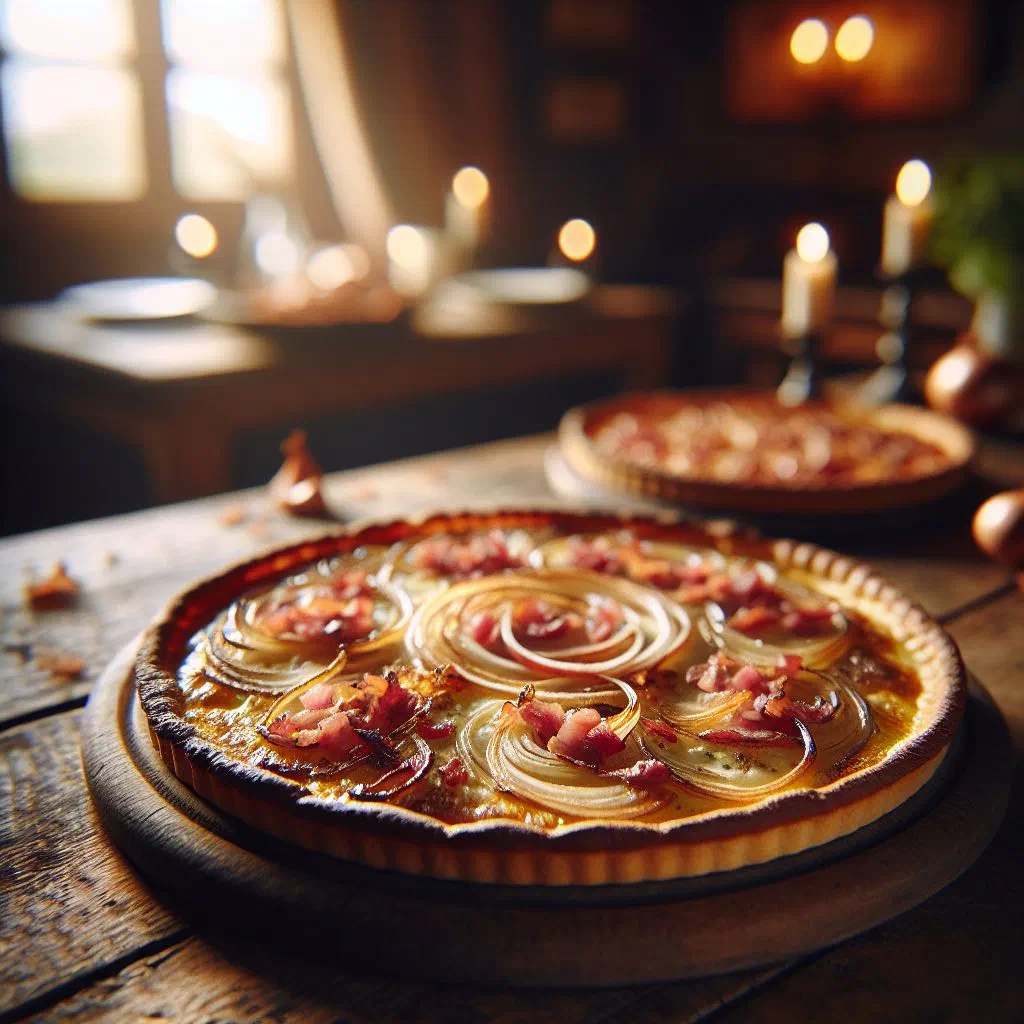
Few dishes capture the rustic charm of Alsace quite like Tarte Flambée. With its paper-thin, blistered base topped with creamy crème fraîche, sweet onions and smoky bacon, this French classic is built for sharing. Crisp at the edges and wonderfully aromatic, it is the kind of food that brings people around the table for a relaxed, sociable evening. Born as humble farmhouse fare, it has earned its place far beyond the borders of France.
About Tarte Flambée
The crispy Tarte Flambée, also known as Flammkuchen, is a traditional dish from the Alsace region of France. It is most often topped with crème fraîche, onions and bacon, which give it a savoury, full-flavoured character. Originally conceived as peasant food, this speciality has since carved out a place in international cooking through countless variations. The preparation is refreshingly simple, which makes Tarte Flambée a perfect choice for convivial evenings with friends or family.
Ingredients (serves 1–2)
- 200 g plain flour
- 100 ml water
- 2 tablespoons olive oil
- 200 g crème fraîche
- 1 onion
- 100 g diced bacon
- Salt and pepper, to taste
- Fresh herbs (e.g. chives), to garnish
Shopping for the ingredients
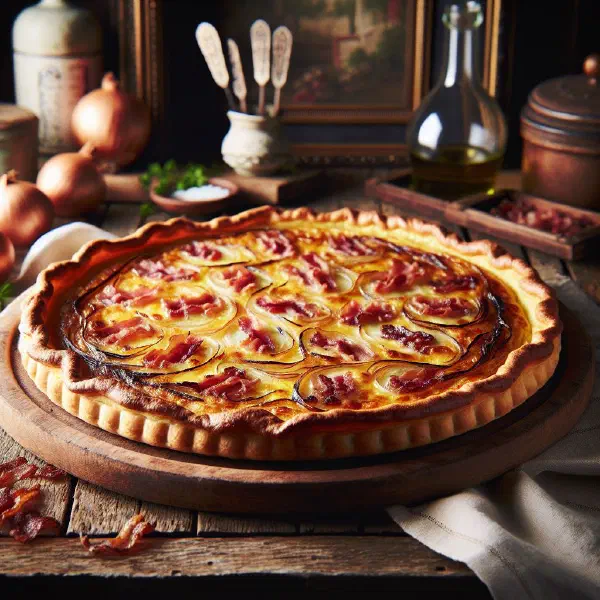
To make the crispy Tarte Flambée, you will want fresh, good-quality ingredients. The crème fraîche and the onions in particular are crucial to the flavour. Make sure the flour is fresh so the dough comes together with the right consistency. The diced bacon should also be of good quality, so its savoury, smoky taste really comes through. Much like the bacon-rich Quiche Lorraine, the success of this dish rests on a handful of simple, well-chosen ingredients.
Preparing the dish
Begin by making the dough: combine the flour, water and olive oil until everything is well mixed. The dough should be elastic but not sticky. Let it rest for around 30 minutes so it rolls out more easily later on. While the dough rests, slice the onion into fine rings and have the bacon ready to go.
Step-by-step instructions
- Roll the dough out thinly on a floured surface.
- Spread the crème fraîche evenly over the base.
- Scatter the onion rings and diced bacon evenly on top.
- Season with salt and pepper.
- Bake in a preheated oven at 250°C for 10–15 minutes, until the edges are golden brown.
- Remove from the oven and sprinkle with fresh herbs.
- Serve warm and enjoy.
Gluten-free / lactose-free version
Making the crispy Tarte Flambée gluten-free is easy. Simply use a gluten-free flour. Alternatively, you can try an almond-flour base, which works very well. For a lactose-free version, replace the crème fraîche with lactose-free quark or a soya-based alternative. The flavour holds up beautifully either way, and the tarte becomes suitable for a wider range of guests.
Tips for vegans and vegetarians
To prepare a vegan Tarte Flambée, swap the crème fraîche for a plant-based alternative such as soya or cashew cream. Instead of bacon, use smoked tofu cubes or vegetables such as peppers to recreate a similar savoury note. Finish the dish with fresh herbs for extra flavour. These adjustments make the dish enjoyable for both vegans and vegetarians, without losing the character of a traditional Tarte Flambée.
More tips and tricks
A crispy base is the secret to a successful Tarte Flambée. Make sure the oven is properly preheated, and use a pizza tray or baking sheet for the best results. Pre-baking the dough for a few minutes can also help you achieve the perfect texture. Experiment with the toppings to find your own favourite combination, much like you would when building a Chèvre et Miel Tarte.
Adapting the recipe to your taste
The crispy Tarte Flambée lends itself wonderfully to personal tweaks. Like it spicier? Add a little chilli powder or some fresh chillies. If you are a cheese lover, scatter a layer of grated cheese such as Gruyère or mozzarella over the top. The possibilities are endless, letting you create a dish that suits your taste exactly.
Ingredient substitutions
If you are not keen on onions, you can use leeks instead for a milder flavour. For a sweeter note, caramelised onions make a delicious alternative. The bacon can be swapped for smoked paprika, which lends a similar savoury, smoky depth. Use these substitutions to vary and reinterpret your Tarte Flambée, the same spirit of improvisation that shines in a hearty Baeckeoffe.
Drink pairing ideas
A crispy Tarte Flambée pairs beautifully with light white wines such as a Riesling or Gewürztraminer. These wines harmonise wonderfully with the savoury components of the tarte. For beer lovers, a pale lager or a light wheat beer complements the flavours nicely. If you would prefer something alcohol-free, a well-chilled apple or grape juice makes a refreshing alternative.
Serving and presentation ideas
Presentation plays a real part in serving your crispy Tarte Flambée. Cut the tarte into even pieces and arrange them on an attractive wooden board. Fresh herbs are not only for garnish. They also bring colour and freshness to the plate. Round things off with a small green salad or a creamy dip in a separate bowl for a more inviting spread, perhaps alongside a crisp Salade d’Endives aux Noix.
A bit of history
The origins of the crispy Tarte Flambée reach back to the 14th century and are closely tied to Alsatian cuisine. In the past, farmers made the dish to test the heat of the wood-fired oven before baking their bread. The combination of simple, fresh ingredients turned Tarte Flambée into a much-loved staple in rural areas. Today it is a firmly established part of the gastronomic traditions of both France and Germany, and a proud example of French cuisine.
More recipe ideas
Summary: Tarte Flambée
The crispy Tarte Flambée is a simple, delicious dish that suits both special occasions and a cosy evening in. With its classic topping of crème fraîche, onions and bacon, it wins over food lovers of every kind. The recipe is easy to adapt and opens the door to wonderful variations to please any palate. Make this speciality at home and let yourself be surprised by its simplicity and its rich, full-bodied flavour.