National Dish Gabon: Poulet Nyembwe (Recipe)
In this article
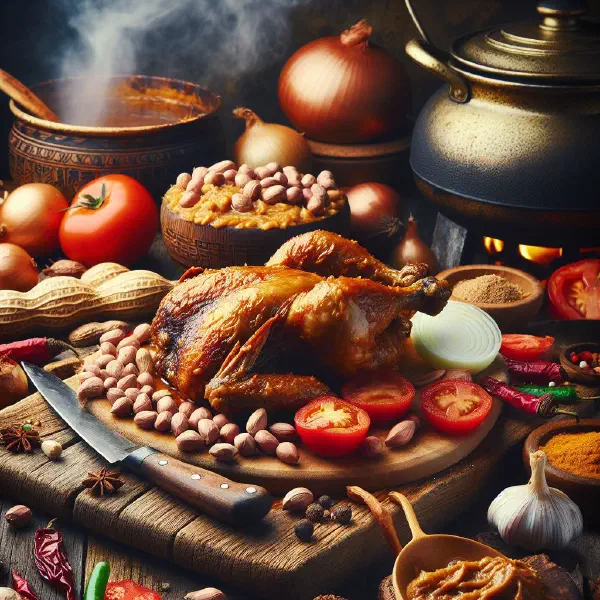
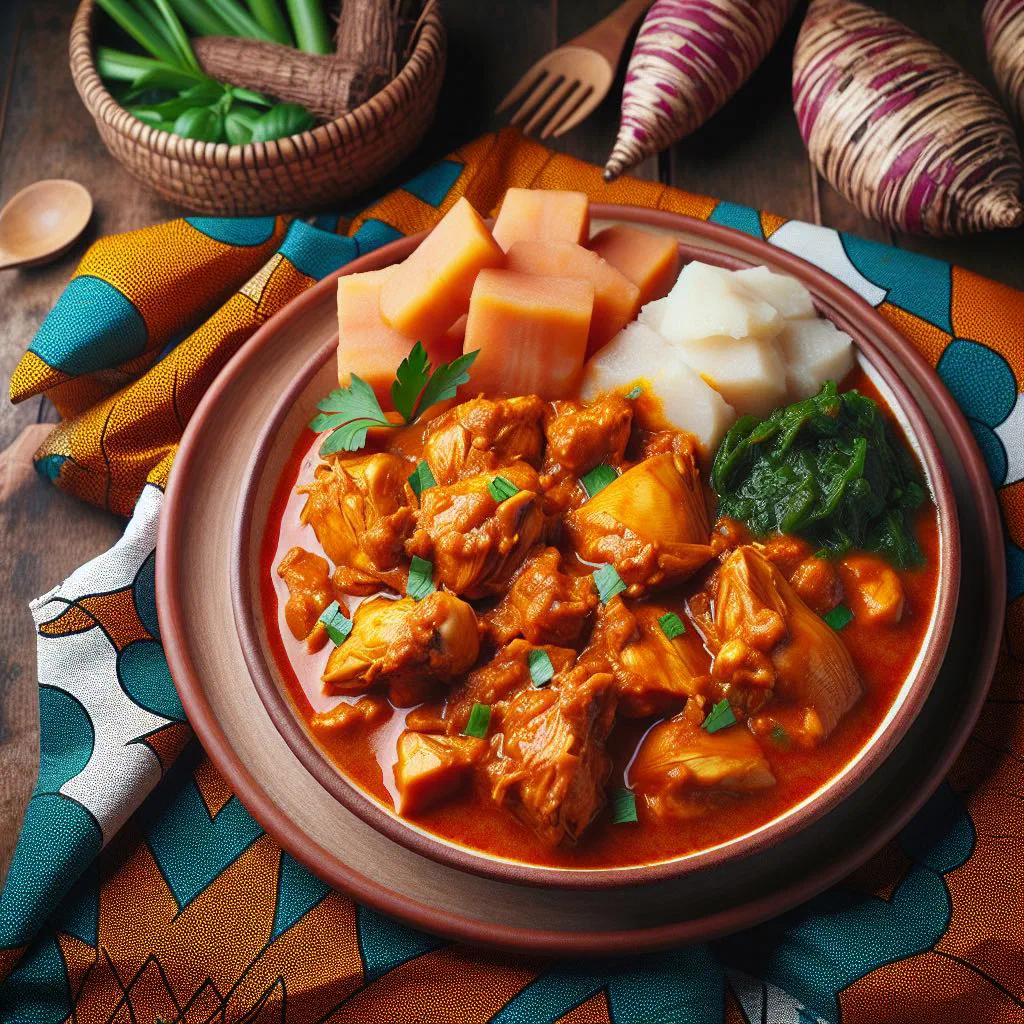
Poulet Nyembwe is chicken cooked in palm nut pulp, which is not the same as palm oil. The pulp comes from boiled palm fruit and gives a thick, orange, faintly sour sauce that tastes of nothing else. Gabon serves it at every important occasion.
About Poulet Nyembwe
Nyembwe is the Myene word for palm nut sauce, and the dish is Gabon’s national one. Chicken is browned and simmered in the pulp with onion, garlic, ginger and chilli until the sauce thickens. It is served with rice, cassava or plantain.
Tinned palm nut concentrate, sold as sauce graine or noix de palme, is what makes this feasible outside Central Africa.
Ingredients (serves 1–2)
- 1 chicken, jointed into portions
- 2 cups palm nut oil (nyembwe oil)
- 1 large onion, finely chopped
- 2 cloves of garlic, crushed
- 1 teaspoon fresh ginger, grated
- 1 Scotch bonnet chilli, deseeded and finely chopped
- 2 tomatoes, puréed
- 2 bay leaves
- Salt and pepper to taste
Shopping for the ingredients
Tinned palm nut pulp is sold in African grocers under names including Ghana Best and Trofai. It is a thick orange purée, not an oil, and one tin does a chicken. Do not substitute red palm oil, which is a different product and will give a greasy dish rather than a thick one.
Preparing the dish
Joint the chicken into eight pieces so it cooks evenly. If using tinned pulp, dilute it with a little water to a pouring consistency before it goes in. Deseed the scotch bonnet unless you want the full heat.
Step-by-step instructions
- Heat a little oil in a large pot and brown the chicken pieces until golden.
- Add the onion, garlic, ginger and chilli, and sweat until the onion turns translucent.
- Stir in the puréed tomato and cook for 5 minutes.
- Add the palm nut pulp, the bay leaves, salt and pepper, and enough water to just cover.
- Simmer over a medium heat for 35–40 minutes until the chicken is done and the sauce has thickened.
- Stir regularly to stop anything catching on the base of the pot.
- Once the chicken is tender and the sauce is fragrant, take the dish off the heat.
Gluten-free / lactose-free version
The dish contains no gluten and no dairy. Served with rice or cassava it is suitable throughout. Check only a stock cube if you add one.
Tips for vegans and vegetarians
The palm nut sauce carries a vegan version well. Use aubergine, mushrooms or smoked tofu instead of chicken and add a piece of dried mushroom for depth. Saka saka, pounded cassava leaves, is the region’s established plant-based dish.
More tips and tricks
Stir often. Palm nut sauce is thick and catches on the base of the pot readily, and a scorched batch cannot be rescued. Let it reduce properly: the finished sauce should coat the chicken rather than pool around it. And skim off any excess oil that rises, since a tin of pulp releases a good deal.
Adapting the recipe to your taste
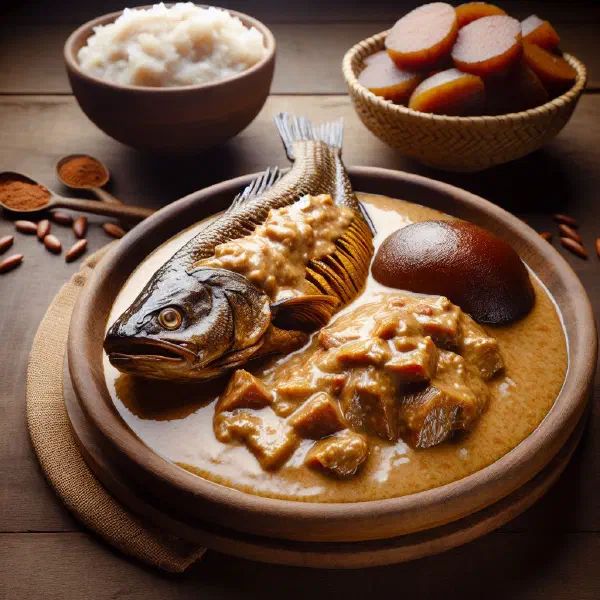
Smoked fish added alongside the chicken is common and deepens the sauce considerably. Okra thickens it further. Pili pili sauce on the side lets everyone set their own heat.
Ingredient substitutions
Fresh palm nuts, boiled and pounded, are the original and are worth doing if you can get them. Groundnut paste makes a different but related dish, closer to mafé. Guinea fowl replaces chicken.
Drink pairing ideas
Palm wine is the traditional partner and shares an origin with the sauce. Ginger juice is the standard soft option. Regab, the Gabonese lager, is what most people drink.
Serving and presentation ideas
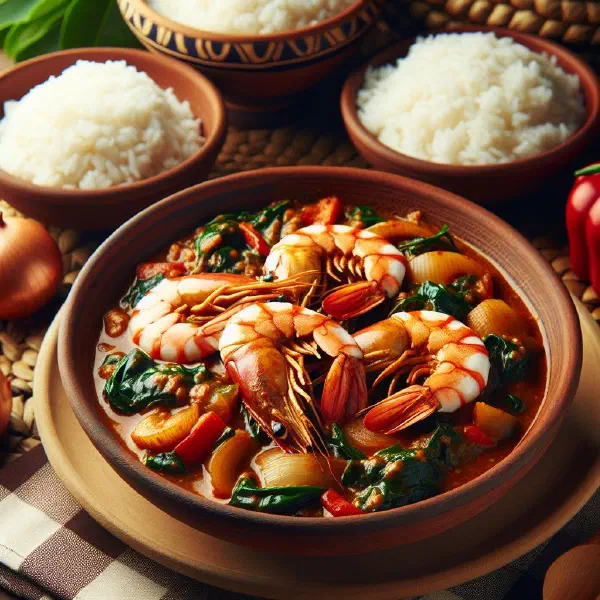
Serve it in a wide bowl with rice, cassava fufu or boiled plantain alongside. The sauce is rich, so the starch takes up most of the plate. Eaten by hand in many households.
A bit of history
The oil palm is native to West and Central Africa and has been used for cooking there for at least five thousand years; palm oil residue has been found in Egyptian tombs. Nyembwe belongs to the Myene-speaking coast of Gabon and has become the national dish. It anchors Gabonese cuisine.
More recipe ideas
Summary: Poulet Nyembwe
Poulet nyembwe is chicken simmered in palm nut pulp with ginger, garlic and chilli. Use real palm nut pulp rather than palm oil, stir often, and reduce it until it coats.