National Dish Gambia: Kanyah (Recipe)
In this article
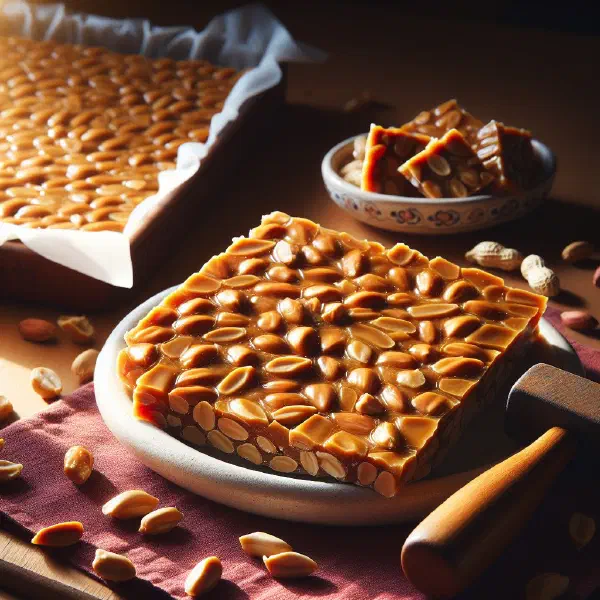
Kanyah is the millet-flour version of the Gambia’s pressed peanut bar, spiced with a pinch of nutmeg. Ground roasted peanuts and toasted millet flour are worked together with sugar until the peanut oil binds them, then pressed hard into bars and wrapped in paper. Every market in the country sells it.
About Kanyah
Kanyah is the popular sweet snack of the Gambia, made from roasted peanuts and millet flour. Pressed into firm bars and traditionally sold wrapped in paper at Gambian markets, kanyah is a treat for the senses and reflects the country’s lively food culture. Made from a handful of simple ingredients and no cooking at all, it carries Gambian tradition directly to the table.
Ingredients (serves 1–2)
- 150 g roasted, unsalted peanuts
- 100 g millet flour
- 60 g sugar
- A pinch of ground nutmeg
- A pinch of salt
- 2 tablespoons water, to bind
Shopping for the ingredients
Millet flour is sold in African and health food shops and gives kanyah its slightly earthy, distinctive taste. It is the older base, predating rice flour in the region. Unsalted roasted peanuts are essential. Grate the nutmeg fresh; the pinch is small and pre-ground nutmeg has little to give.
Preparing the dish
Toast the millet flour in a dry pan until it smells nutty, then let it cool completely. Grind the peanuts to a paste. There is no baking involved, the whole thing is mixing, binding and pressing.
Step-by-step instructions
- Toast the millet flour in a dry pan for 5 minutes, stirring constantly; cool completely.
- Grind the roasted peanuts to a thick, oily paste.
- Combine the paste with the cooled millet flour, sugar, nutmeg and salt.
- Rub together with your fingers until evenly crumbly.
- Add the water a teaspoon at a time until the mixture holds when squeezed.
- Press very firmly into a lined tin.
- Chill for an hour to set.
- Cut into bars and wrap in paper, or serve straight away.
Gluten-free / lactose-free version
Kanyah is naturally gluten-free, millet contains none, and lactose-free. It is one of the more useful snacks for anyone managing both restrictions, and it needs no adaptation at all.
Tips for vegans and vegetarians
The bar is vegan as written: peanuts, millet, sugar and spice. It is also a dense source of protein and slow energy, which is exactly why it has survived as a working snack.
More tips and tricks
Toast the millet flour properly, untoasted flour tastes raw and ruins the bar. Bind with as little water as will hold it together. And press it hard, using the base of a glass if necessary; loosely pressed kanyah crumbles as soon as it is cut.
Adapting the recipe to your taste
Ginger or cinnamon can replace the nutmeg. Honey in place of some of the sugar gives a softer, chewier bar. Desiccated coconut or sesame seeds mixed in add texture.
Ingredient substitutions
Rice flour makes the closely related kanya. Sorghum flour works similarly to millet. Cashews or a peanut-cashew mix can replace some of the peanuts.
Drink pairing ideas
Attaya, the ritual three-round green tea, is the traditional partner. Bissap or ginger juice both suit it. Cold milk turns it into a proper snack for children.
Serving and presentation ideas
Serve kanyah cut into small bars, wrapped in paper as it is sold at the markets, the paper is genuinely part of how it is eaten, keeping fingers clean and the bar intact. It keeps two weeks in a tin and travels perfectly.
A bit of history
Millet is the older grain of the Sahel, grown long before rice became widespread, and it remains the base of many traditional Gambian foods. Kanyah belongs to the family of pressed groundnut sweets made across Senegambia, sold by women traders and given to travellers. It offers a genuine window onto Gambian cuisine.
More recipe ideas
Summary: Kanyah
Kanyah is ground roasted peanuts mixed with toasted millet flour, sugar and nutmeg, pressed firm and cut into bars. Toast the flour, bind sparingly, press hard, no oven needed.