National Dish Georgia: Kachapuri Adjaruli (Recipe)
In this article
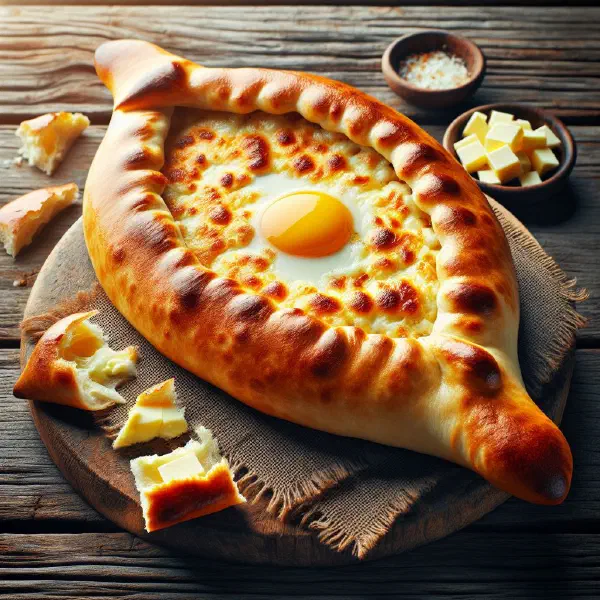
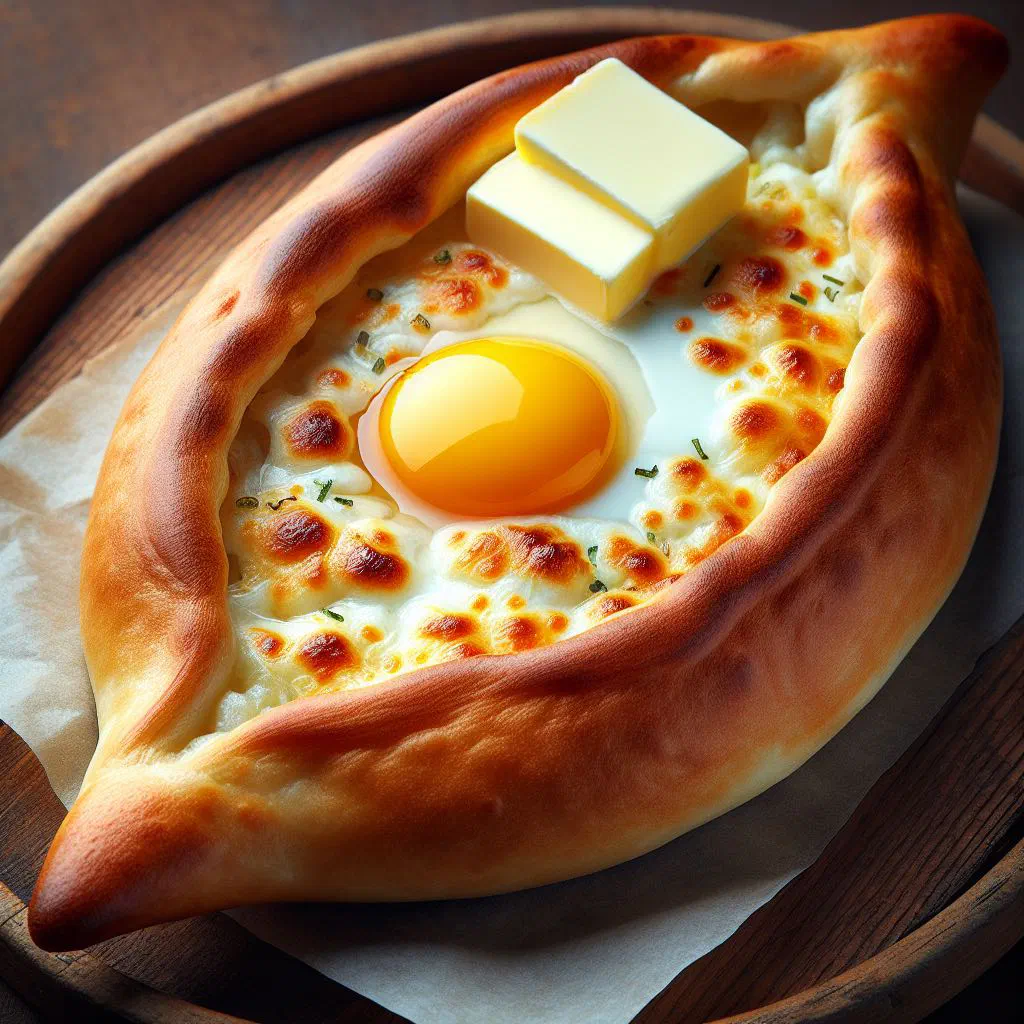
Discover Kachapuri Adjaruli, Georgia’s most photogenic comfort food. A boat of golden yeast dough is loaded with molten cheese, crowned with a glossy egg yolk and finished with a knob of butter that you swirl into the filling at the table. It is breakfast, supper and a shared celebration all at once, and it is far easier to make at home than its dramatic appearance suggests.
About Kachapuri Adjaruli
Kachapuri Adjaruli is more than a simple bake. It is a culinary experience rooted deep in Georgian tradition. This filled bread takes its name from the region of Adjara on the Black Sea coast, where it first became popular. The combination of freshly baked dough, melted cheese and a glistening egg yolk makes it the highlight of any table. Kachapuri Adjaruli appeals to the palate and the eye in equal measure.
Ingredients (serves 1–2)
- 250 g plain flour
- 150 ml water
- 5 g dried yeast
- 1 teaspoon sugar
- 1 teaspoon salt
- 200 g sulguni or feta cheese
- 1 egg
- 1 tablespoon butter
Shopping for the ingredients
The ingredients for Kachapuri Adjaruli are easy to track down in most supermarkets or at an Eastern European delicatessen. When choosing your cheese, look out for genuine Georgian sulguni, as it is what gives the dish its authentic, gently tangy character, the same cheese celebrated on its own as Sulguni. If sulguni is unavailable, a mixture of feta and mozzarella makes a very good stand-in. Buy the freshest eggs you can find, since the yolk sits centre stage.
Preparing the dish
Start by combining the flour and the yeast in a large bowl. Add the water, sugar and salt, then knead the dough until it is smooth and elastic. Leave it to prove in a warm spot for about an hour, until it has doubled in size. Meanwhile, crumble or grate the cheese so it is ready to go the moment the dough is shaped.
Step-by-step instructions
- Once the dough has risen, divide it in two and shape each piece into a flat round.
- Gently stretch each round into an oval that tapers to a point at both ends.
- Fill the centre with the crumbled cheese and roll the long edges inwards to form a boat.
- Bake the kachapuri at 220 °C for roughly 15–20 minutes, until the dough is deep golden.
- Just before serving, crack the egg into the centre and top with a knob of butter.
Gluten-free / lactose-free version
For a gluten-free Kachapuri Adjaruli, use a good gluten-free bread flour blend, widely sold in health-food shops. Choose a lactose-free cheese as well to make the dish suitable for anyone who is lactose intolerant. Plant-based cheese alternatives that melt properly also work nicely here. That way everyone at the table can enjoy this classic without compromise.
Tips for vegans and vegetarians
To make Kachapuri Adjaruli vegan, replace the egg with a mixture of chia seeds and water, which sets neatly in the hot cheese. For the filling, reach for a nut- or soya-based vegan cheese, seasoning it with garlic or fresh herbs to bring it closer to the original flavour. Vegetarians can keep the traditional ingredients exactly as they are, simply checking that the cheese is made with a non-animal rennet.
More tips and tricks
The choice of cheese decides everything here, so consider blending two or three varieties for depth. Baking on a preheated pizza stone gives a noticeably crisper base and a better rise. Be creative with the filling too: a handful of spinach or some roasted vegetables adds colour and turns the bread into a fuller meal. Serve it straight from the oven, while the cheese is still molten.
Adapting the recipe to your taste
Kachapuri Adjaruli adapts easily to personal preference. Experiment with different cheese varieties, or add a little smoked cheese for a deeper, savoury note. The size can vary too, from small snack-sized boats to a large centrepiece bread. To make the dish more substantial, work in extra fillings such as grilled meat or beans, much as you would for a Lobiani.
Ingredient substitutions
If some ingredients prove hard to find, there are plenty of alternatives worth trying. Instead of ordinary wheat flour you can use oat flour or rice flour for a different texture and a nuttier flavour. For the filling, ricotta stands in well for sulguni, especially when combined with a firmer cheese for stretch, the same flexible approach that works for Kachapuri Megruli or Khachapuri Imeruli.
Drink pairing ideas
Kachapuri Adjaruli pairs beautifully with drinks that cut through its richness. A classic Georgian wine or a bracing Georgian mineral water are excellent companions. If you would rather avoid alcohol, a fruity lemonade or a fragrant herbal tea does the job just as well. These choices lift the flavours of the bread and round out the meal.
Serving and presentation ideas
Presentation makes a real difference with Kachapuri Adjaruli. Serve it on a rustic wooden board to underline its traditional character, and scatter a little fresh parsley or coriander over the top for colour. Do not forget to let the butter melt into the centre before it reaches the table. That glossy pool is half the appeal. Stirring the yolk and butter through the cheese in front of your guests turns serving into a small piece of theatre.
A bit of history
Kachapuri has its roots in Georgian culture, long known for its generous, sociable cooking. The dish is above all a speciality of the Adjara region, where it is served in homes and restaurants alike. There are many regional versions, but the Adjaruli variant is instantly recognisable by its boat shape, said to recall the fishing vessels of the Black Sea coast. As Georgian cuisine has travelled the world, kachapuri has found admirers well beyond the Caucasus.
More recipe ideas
Summary: Kachapuri Adjaruli
Kachapuri Adjaruli is a memorable dish that impresses as much visually as it does on the palate. The interplay of crisp bread, molten cheese and a fresh egg makes for a genuinely distinctive experience. With a little care in the baking and the serving, this Georgian classic is entirely achievable in a home kitchen. Let the culinary richness of Georgia inspire you and enjoy a truly memorable meal.