National Dish Germany: Almond Stollen (Recipe)
In this article
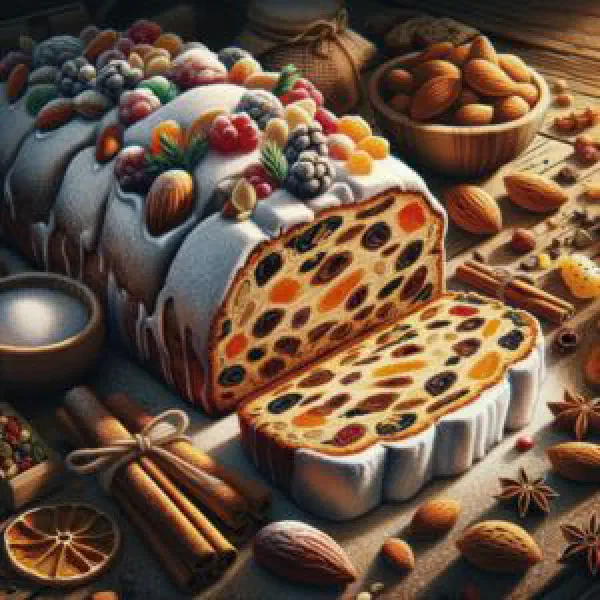
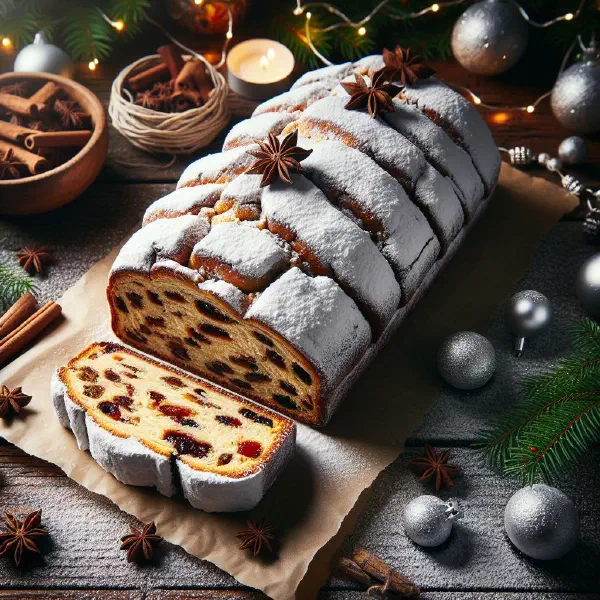
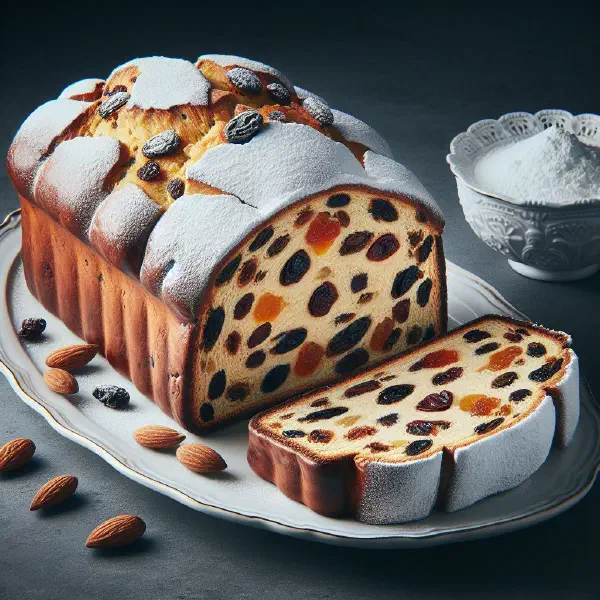
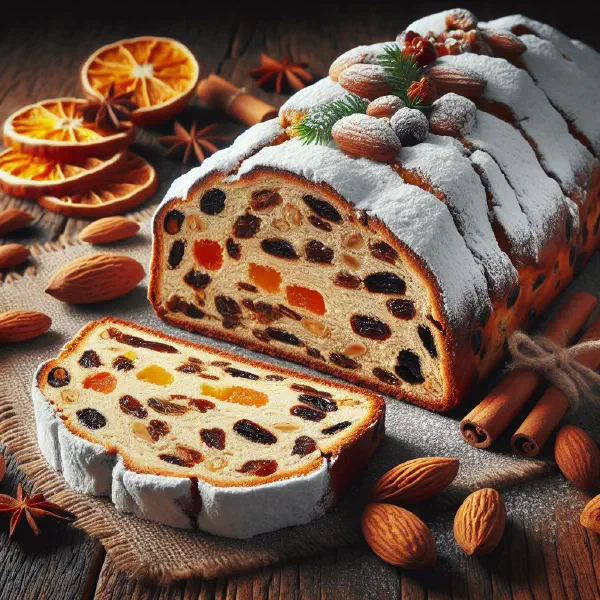
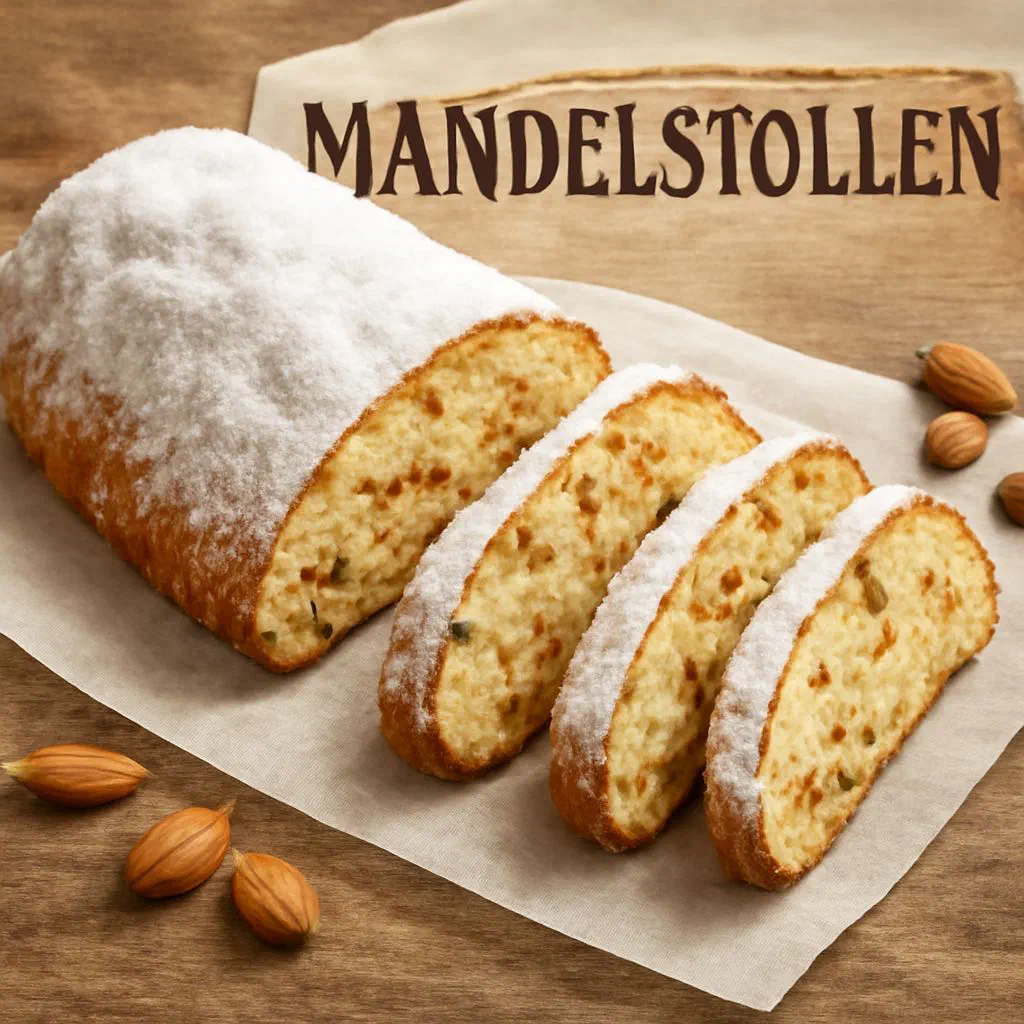
There is something deeply comforting about a freshly baked almond stollen, its buttery crumb scented with vanilla and ground nuts and finished with a snowy dusting of icing sugar. This is a traditional East German (DDR) recipe, honest, dependable home baking that needs no exotic extras to taste wonderful. Scaled down for one or two people, it is the kind of loaf you can bake on a whim, and it only grows more fragrant as it rests. Bring a little old-fashioned German baking warmth into your own kitchen.
About Almond Stollen
Almond stollen is one of those classic bakes that many people associate with the colder months, family visits and the homely smell of butter and spices. It is defined by the marriage of a gentle almond note, a tender dough and a fine, restrained sweetness that never feels cloying. Unlike some modern versions, this is a down-to-earth, reliable stollen that gets by perfectly well without any unusual ingredients. Store it properly and it actually improves, as the butter, sugar and spices have time to settle and meld together.
Ingredients (serves 1–2)
- 150 g plain flour (type 405 or 550)
- 60 ml milk
- 35 g sugar
- 1/2 cube fresh yeast (about 21 g) or 1 sachet dried yeast (about 7 g)
- 60 g butter (plus a little for brushing)
- 1 pinch of salt
- 1/2 tsp vanilla sugar or a little vanilla
- 50 g ground almonds
- 30 g chopped almonds (optional, for extra bite)
- 40 g raisins (optional, classic but not essential)
- 1–2 tbsp icing sugar for rolling/dusting
- A little lemon zest (optional, for a fresh note)
The quantities are deliberately kept small so you can bake the stollen on the spur of the moment without ending up eating it for days. The blend of ground almonds and butter gives a moist crumb that will not dry out. If you use raisins, they bring extra sweetness and a pleasant texture, though they are optional should you prefer it purely almondy. Choose good-quality butter, as it shapes the flavour particularly strongly.
Shopping for the ingredients
When shopping, it pays to look out for fresh yeast if you favour the classic taste, as it often lends an especially rounded aroma. You can buy almonds ready-ground or as whole nuts to grind yourself, which can give the bake a fresher, nuttier note. For a harmonious stollen a fine, not-too-coarse sugar also helps, so the dough sweetens evenly. If you are using raisins, pick soft ones or soak them briefly so they do not dry out inside the loaf.
Preparing the dish
Before you start, it helps to bring all the ingredients to room temperature, especially the milk and butter, so the dough comes together better. Line a baking tray with greaseproof paper and remember to preheat the oven in good time, so you can bake the dough straight after proving without delay. If you are using raisins, soak them for 10–15 minutes in warm water or milk and drain them well afterwards so they stay plump and juicy. Have a small bowl of icing sugar ready, too, so you can dust or roll the stollen the moment it comes out of the oven.
Step-by-step instructions
- Warm the milk until lukewarm, stir in 1 tsp sugar and crumble in the yeast (or stir in dried yeast). Leave to stand for 10 minutes until bubbles form.
- Mix the flour, remaining sugar, salt, vanilla and ground almonds together in a bowl.
- Add the yeast milk and the soft butter and knead for 6–8 minutes into a smooth dough.
- Optionally knead in the raisins and chopped almonds briefly until evenly distributed.
- Cover the dough and leave to prove for 45–60 minutes, until visibly risen.
- Shape into a small stollen: roll out into an oval, fold one side towards the middle, lay the other over the top and press down lightly.
- Bake at 180 °C (conventional heat) for about 20–25 minutes, until golden (depending on your oven).
- Brush with a little butter straight after baking and roll in icing sugar or dust generously.
The most important stage is the proving, as this is where the aroma and structure develop so the stollen does not turn out dense. When kneading, work the dough until it is smooth and stretches well, since this improves the crumb. Brushing it with butter immediately after baking helps the icing sugar stick and forms a protective, fragrant coating. Then let the stollen rest for at least 20 minutes so it does not crumble when sliced.
Gluten-free / lactose-free version
For a gluten-free version you can replace the wheat flour with a gluten-free flour blend for yeast doughs, ideally one with a binding agent such as psyllium husk or xanthan (if not already included). As gluten-free dough is often less elastic, it helps to keep the dough a little softer and give it plenty of resting time so it does not turn out dry. It works lactose-free with lactose-free milk or a neutral plant milk, plus lactose-free butter or a suitable alternative for brushing. Take care that the stollen does not bake too dark, as gluten-free doughs can dry out more quickly.
Tips for vegans and vegetarians
The recipe is vegetarian as it stands, but it also turns out very well vegan with a few tweaks. Replace the milk with oat or soya drink and use a vegan baking margarine with a high fat content instead of butter, so the stollen stays moist. For brushing after baking, vegan margarine works just as well to bind the icing sugar and create that typical coating. Also check that your vanilla sugar or flavouring is genuinely labelled vegan if you shop very strictly.
More tips and tricks
If you want a particularly aromatic almond stollen, briefly toast some of the chopped almonds in a dry pan until fragrant, then fold them in afterwards. For extra moistness you can brush the stollen twice with a thin layer of butter after baking, dusting with icing sugar each time, to build a more stable sugar layer. Storage matters too: wrapped in greaseproof paper and then in foil, it stays fresh for several days and often gets even better as the flavours settle. Slice it with a bread knife so the surface is not crushed and the crumb stays clean.
Adapting the recipe to your taste
You can easily control the sweetness by reducing the sugar slightly or using part brown sugar, which brings a caramel note. If you like it more citrusy, add lemon zest or a few drops of lemon juice, keeping an eye on the dough consistency as you do. For a more festive version, finely chopped dried fruit also works well, though a brief soak is then advisable so the stollen does not dry out. To play up the almonds, increase the proportion of ground almonds slightly and reduce the flour a touch in return, so the dough does not become too firm.
Ingredient substitutions
If you cannot get hold of fresh yeast, dried yeast is a reliable alternative and keeps well. Instead of raisins you can use chopped soft apricots or cranberries, the latter being a little more tart and pairing nicely with almonds, much like the dried fruit in a Stuttgart Fruit Bread. If you have no ground almonds to hand, blanched almonds can be ground in a blender, ideally in short pulses so you do not end up with almond paste. At a pinch you can replace icing sugar with very finely milled sugar, but the classic look and mouthfeel usually come out best with proper icing sugar.
Drink pairing ideas
Warm drinks go particularly well with almond stollen, as they nicely highlight the buttery, nutty notes. A black tea or a mild herbal tea balances the sweetness without masking the flavour. If you prefer coffee, a filter coffee or a cappuccino works very well, since roasted aromas and almonds are a classic match. For special occasions a spiced drink such as cinnamon cocoa also fits, as long as it is not too sweet, so the stollen stays centre stage.
Serving and presentation ideas
Cut the stollen into even slices and dust it once more with icing sugar just before serving, so it looks fresh and appetising. On a wooden board or a simple plate, the golden crust and pale sugar coating come into their own. For a festive touch you can lay a few whole almonds or lightly toasted flaked almonds alongside, without overloading the plate. If you have guests, it looks inviting to put out small portions of butter or a mild jam, even though the stollen is usually best on its own.
A bit of history
Stollen has been known in Germany for centuries and was adapted across many regions according to which ingredients were available. In the DDR (East Germany), recipes were often designed to be practical and everyday, using ingredients that were easy to come by or to substitute without sacrificing the typical character. Almonds stood for a festive element that made the bake feel special, even when baking frugally overall. It is precisely this blend of simplicity and indulgence that explains why such versions are still happily recreated today, a hallmark of homely German cuisine.
More recipe ideas
- Butter Stollen
- Dresden Christmas Stollen
- Dresden Stollen
- Frankfurt Marzipan Balls
- Silesian Streusel Cake
Summary: Almond Stollen
Almond stollen is a compact, aromatic bake that delivers a very classic taste from just a few ingredients. With good butter, almonds and a proper proving time you get a moist crumb and a pleasant sweetness that never feels heavy. With small adjustments you can easily make it gluten-free, lactose-free or vegan without losing its character. Sugar it well and store it properly wrapped, and after a day or two it often tastes more rounded still, a simple, dependable slice of German home baking worth coming back to.