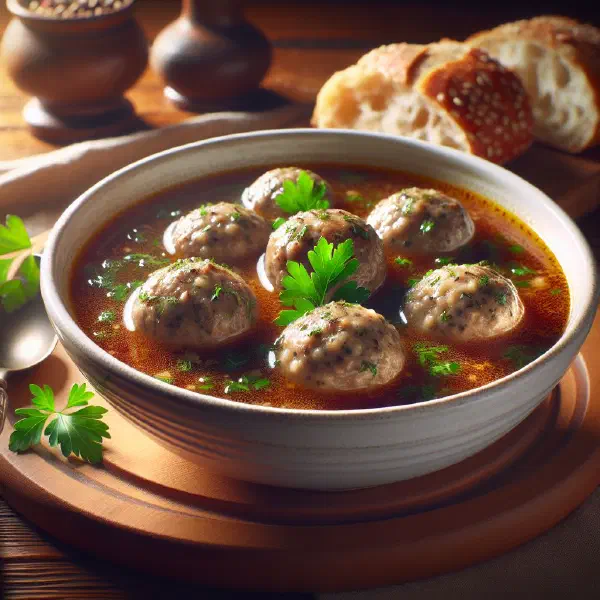
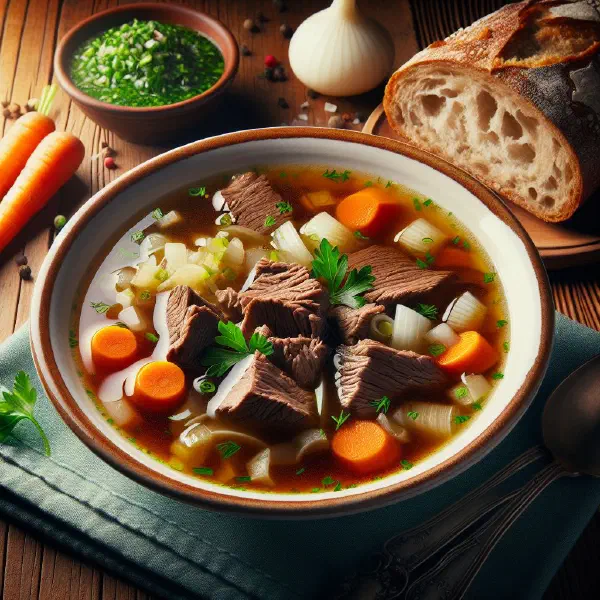
National Dish Germany: Beef Soup with Marrow Dumplings (Recipe)
In this article
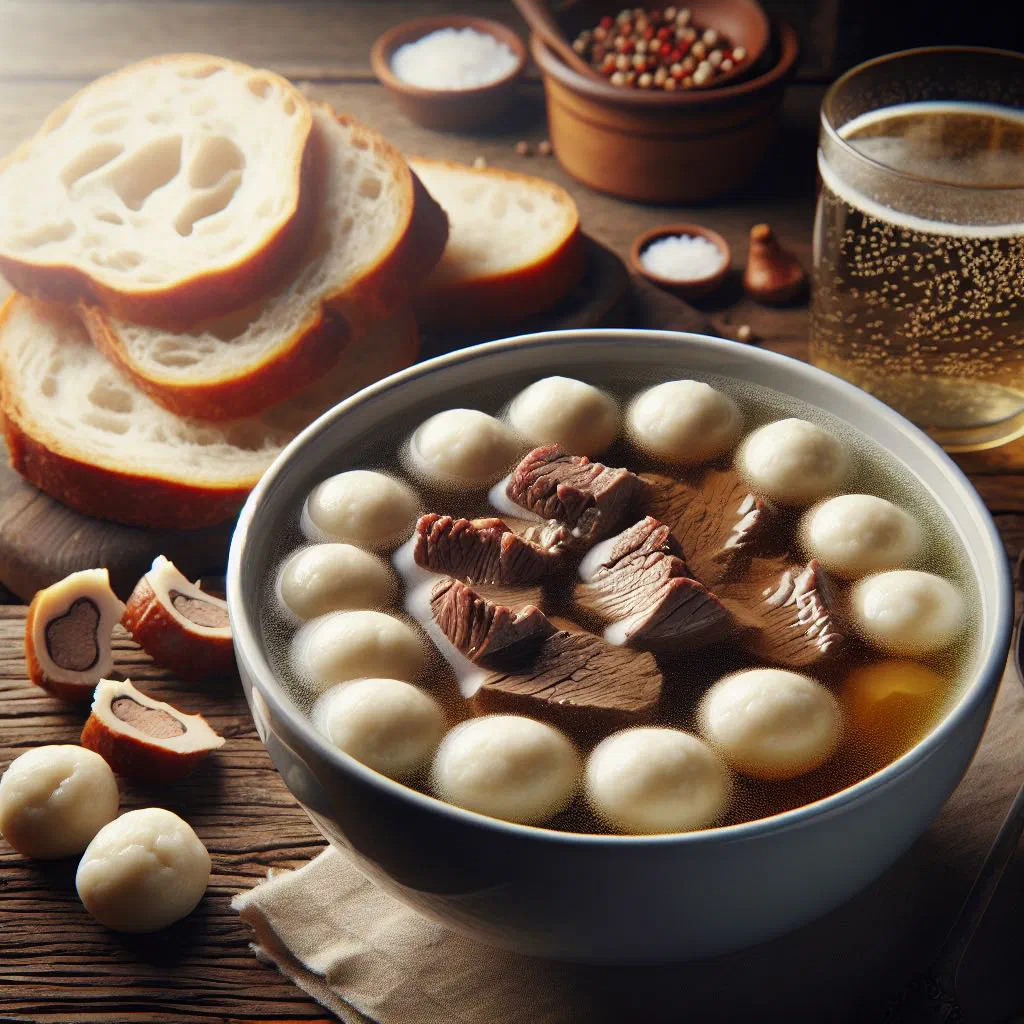
Few dishes say winter comfort quite like a steaming bowl of Beef Soup with Marrow Dumplings. This German classic brings together tender simmered beef and a clear, fragrant broth, finished with light, savoury dumplings made from beef marrow. It is the kind of recipe that families have passed down for generations, warming, nourishing and quietly impressive. On a cold day, there is little more satisfying than a deep bowl of this golden soup.
About Beef Soup with Marrow Dumplings
Beef Soup with Marrow Dumplings is a classic national dish of Germany, celebrated for its hearty, aromatic character. The pairing of tender beef with delicate marrow dumplings turns a humble broth into a real delicacy. On cold days it offers a comforting sense of warmth and well-being, and thanks to its long tradition it remains a much-loved family dish that links one generation to the next. Like many a German pot roast, it rewards slow, patient cooking.
Ingredients (serves 1–2)
- 300 g beef (preferably stewing or soup beef)
- 1 litre water
- 2 carrots
- 1 celery stalk
- 1 onion
- 1 bay leaf
- 2–3 peppercorns
- Salt to taste
- 150 g beef marrow
- 1 egg
- 2–3 tablespoons breadcrumbs
- Fresh parsley, to garnish
Shopping for the ingredients
For a truly delicious beef soup with marrow dumplings, it pays to choose fresh, good-quality ingredients. The beef is especially important, and ideally it should come from a butcher you trust. Look for meat that is nicely marbled, as this gives the broth its proper depth of flavour. The vegetables, too, should be as fresh as possible so their aromas come through at their best.
Preparing the dish
Preparation begins with the vegetables. Cut the carrots and celery into small pieces, and leave the onion in quarters so it releases more of its aroma into the broth. To make the marrow dumplings, mix the beef marrow in a bowl with the egg and breadcrumbs. Season the mixture well to give the dumplings the finishing touch they need before they go into the pot.
Step-by-step instructions
- Place the beef in a large pot and cover with 1 litre of water.
- Add the vegetables (carrots, celery, onion) along with the bay leaf and peppercorns.
- Bring the soup to the boil, then reduce the heat and let the meat simmer gently for about 1.5 to 2 hours.
- Meanwhile, prepare the marrow dumplings and shape the mixture into small balls.
- Once the meat is tender, lift it out of the soup, cut it into pieces and return it to the pot.
- Carefully add the marrow dumplings to the soup and cook for a further 10–15 minutes.
- Season the soup with salt and garnish with fresh parsley.
Gluten-free / lactose-free version
This recipe is easy to adapt into a gluten-free and lactose-free version. Use gluten-free breadcrumbs, or ground nuts, as the binding agent for the dumplings. A lactose-free egg alternative can also be used where needed. These small changes mean that anyone with a food intolerance can still enjoy this comforting soup without missing out.
Tips for vegans and vegetarians
To enjoy this soup in a vegan or vegetarian version, swap the beef broth for a good vegetable stock and replace the marrow dumplings with plant-based alternatives, such as ones made from chickpeas or tofu. It also helps to use plenty of chopped vegetables as a base so the soup stays hearty and filling. With the right herbs and spices you can build deep flavour without any animal products, much as you would in a Swabian Lentil Stew.
More tips and tricks
A few tips can take the flavour of your beef soup even further. Browning the meat before it goes into the pot, for example, adds welcome roasted notes. Slow simmering also produces a more intense, rounded broth. A splash of wine or vinegar can lend an interesting depth, and it is always worth tasting the soup as it cooks and adjusting the seasoning as you go.
Adapting the recipe to your taste
You can easily tailor this beef soup to your own preferences by adding different vegetables. Try parsnips or leeks for extra aroma, or use herbs such as thyme or rosemary to give the soup a personal touch. Fancy a little heat? A pinch of chilli or some fresh ginger may be exactly what you need to give the soup that certain something.
Ingredient substitutions
If some ingredients in this beef soup are not to your taste or not available, there are plenty of alternatives. The beef can be replaced with chicken, for instance, for a lighter soup. Vegetarian options include seitan or meat-free sausages. With the broth, decide whether to make it from scratch or use a shop-bought version, and choose the one that best suits your dietary needs.
Drink pairing ideas
A range of drinks pairs well with a hearty beef soup. A light red wine, such as a Pinot Noir, generally goes very nicely with savoury dishes. If you would rather stay alcohol-free, a homemade lemonade or sparkling water with lemon makes a refreshing choice. Herbal teas are another soothing partner for this flavourful soup, and they help with digestion afterwards too.
Serving and presentation ideas
Presentation matters if you want the soup to look as good as it tastes. Serve it in deep, attractive bowls and garnish with fresh parsley or chives. Fresh bread rolls or a slice of rustic bread make an ideal accompaniment, a pretzel is lovely too. A small drizzle of good olive oil works as a final flourish, lending the soup a fine, glossy sheen.
A bit of history
Beef soup has a long history in German cooking and has been prepared for centuries. It began as a simple dish, born of thrift, a clever way to make good use of leftover cuts of meat. Today it is a delicacy found in countless variations. Many German households have their own family recipes, handed down from one generation to the next, and the soup often takes pride of place at festive occasions, a cornerstone of German cuisine.
More recipe ideas
- Pomeranian Potato Soup
- Swabian Lentils with Spätzle
- Pea Stew with Bacon
- Green Bean Stew
- Rhenish Bean Soup
Summary: Beef Soup with Marrow Dumplings
Beef Soup with Marrow Dumplings is a true heart of German cooking, winning everyone over with its full, rounded flavour and its comforting warmth. Perfect for cold days, it brings both heat and contentment to the table. Thanks to its many possibilities for adaptation, anyone can create their own version to suit their tastes. Give this delicious soup a try and savour the tradition it carries with it.