National Dish Germany: Cabbage Goulash (Recipe)
In this article
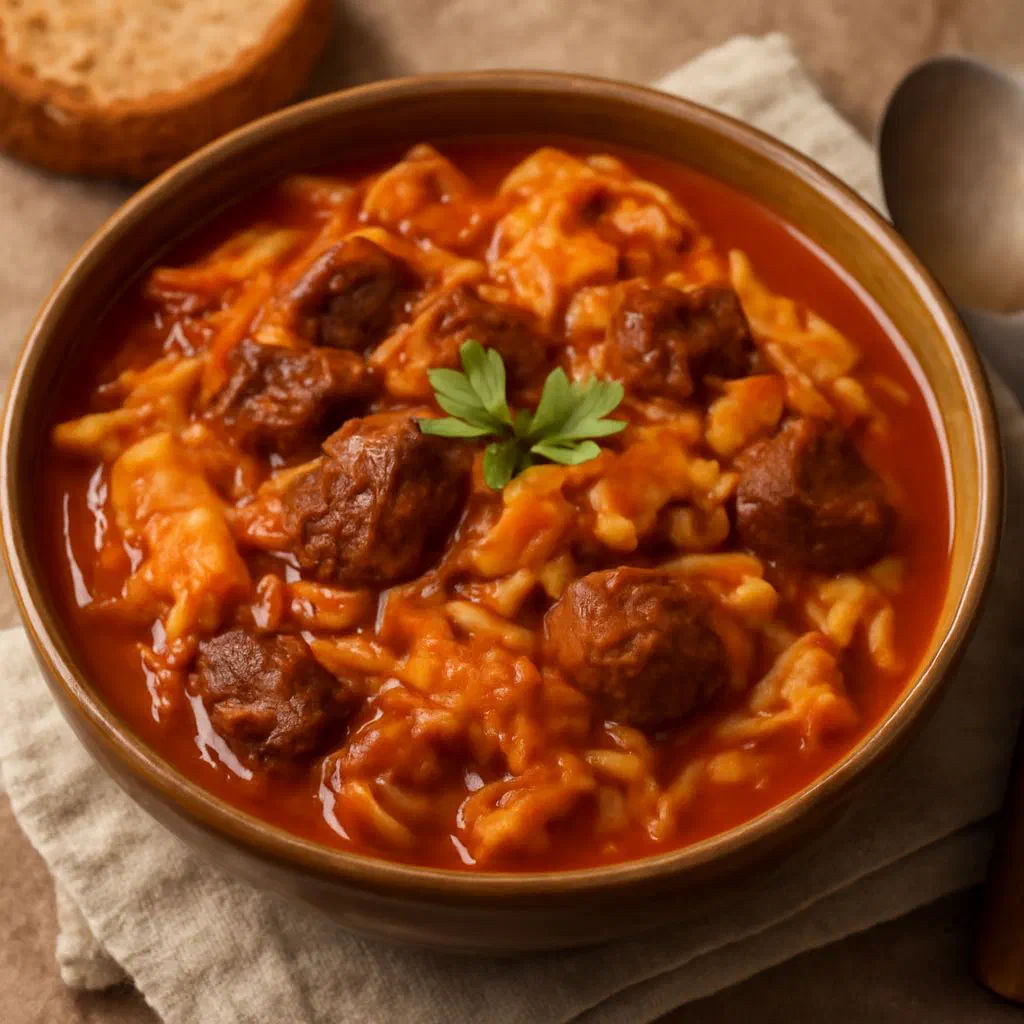
Tuck into Cabbage Goulash, a wonderfully hearty classic of East German home cooking that turns a handful of humble ingredients into a deeply satisfying meal. Soft, slow-braised white cabbage mingles with onions and a warmly spiced, paprika-rich sauce for the kind of cosy, filling supper that tastes even better reheated the next day. Budget-friendly, forgiving and full of flavour, it brings a true taste of old-fashioned DDR kitchens straight to your table.
About Cabbage Goulash
Cabbage Goulash is, for many, the very heart of hearty German home cooking, and it is especially well remembered from DDR kitchens because it is filling, inexpensive and reliably successful with only a few ingredients. The combination of white cabbage, onions and a savoury sauce makes a dish that tastes wonderful both on an ordinary weeknight and reheated the following day. Its signature is the paprika-forward seasoning that gives the whole thing its goulash-like character, without beef being strictly necessary. Anyone after an authentic result goes for a lightly thickened consistency and lets the cabbage braise long enough to turn soft and let the flavours come together.
Ingredients (serves 1–2)
- 300–400 g white cabbage (finely shredded)
- 150–200 g pork (e.g. shoulder) or smoked sausage, diced
- 1 onion, diced
- 1 tablespoon clarified butter or a neutral oil
- 1–2 tablespoons tomato purée
- 1–2 teaspoons paprika (sweet), plus an optional pinch of hot paprika
- 400–500 ml stock (vegetable or meat)
- 1 teaspoon caraway (whole or ground), optional
- 1 bay leaf, optional
- Salt and pepper
- Optional, to thicken: 1 teaspoon cornflour or 1 tablespoon plain flour (slaked in a little water)
Shopping for the ingredients
When shopping, it is well worth looking for fresh, firm white cabbage, because the crisper the cabbage the more aromatic the result will be after braising. For the meat element, pork shoulder or neck is ideal, as it stays juicy during slow cooking and gives up plenty of flavour. If you prefer a quick, everyday version, you can use smoked sausage instead of meat, adding it only towards the end so it does not dry out. Tomato purée, paprika and stock form the flavour base, and here good quality pays off, since it makes the sauce rounder and less watery.
Preparing the dish
For an even cooking time the white cabbage should be finely and uniformly shredded, so that it turns soft later without any pieces staying hard. The onion is diced and can be supplemented with a little garlic if you like, even though that is not strictly classic. If you are using meat, pat it dry and cut it into bite-sized cubes so it develops a good colour when browned. Have your stock, spices and tomato purée ready to hand, because the braising moves along quickly and the seasoning base should go into the pot without any last-minute rush.
Step-by-step instructions
- Heat the fat and sauté the diced onion until translucent and lightly golden.
- Add the meat and brown it all over at a good heat so it develops a deep, roasted flavour.
- Stir in the tomato purée and let it cook for 1–2 minutes, then briefly stir through the paprika (taking care not to let it burn).
- Add the white cabbage, mix well and sweat for 2–3 minutes until it begins to collapse.
- Pour in the stock, add the caraway and the optional bay leaf, then bring to the boil.
- Braise over a low to medium heat for 30–45 minutes, stirring now and then and topping up with a little stock if needed.
- Season with salt and pepper; if you would like a creamier sauce, thicken lightly with the slaked cornflour or flour and simmer for another 2–3 minutes.
Gluten-free / lactose-free version
For a gluten-free version simply leave out the flour and thicken if necessary with cornflour, stirred smooth in a little cold water. Alternatively, the dish can be cooked entirely without any thickening, because long braising already gives the white cabbage a pleasant, lightly creamy texture. Cabbage Goulash becomes lactose-free when you use a neutral oil in place of butter or clarified butter, or reach for lactose-free clarified butter. Do also check the labels on your stock and any sausage, as hidden milk components or gluten-containing additives can sometimes lurk there.
Tips for vegans and vegetarians
The dish works beautifully vegetarian if you swap the meat for smoked tofu, soya chunks or kidney beans, since these ingredients soak up the robust seasoning so well. For a vegan braised note, a little splash of soy sauce or some smoked paprika helps reinforce that savoury depth. Use a rich vegetable stock and fry the tomato purée carefully, as this is what creates the characteristic, gently tangy sauce. If you want more bite, add mushrooms such as chestnut mushrooms or oyster mushrooms, which bring extra umami as they fry.
More tips and tricks
The single most important secret is time: the longer Cabbage Goulash braises gently, the more the rounded, savoury flavour develops and the softer the cabbage becomes. A hint of caraway makes the dish easier to digest and pairs especially well with cabbage, without dominating the flavour if you use it sparingly. If you like things bolder, finish with a pinch of marjoram or a little hot paprika rather than constantly adding more salt during cooking. Leftovers are a bonus: reheated, Cabbage Goulash often tastes even better as the flavours mature overnight.
Adapting the recipe to your taste
For a particularly hearty version you can increase the amount of meat or start with a little bacon, which creates a robust base as it renders down. If you prefer something lighter, use more cabbage and reduce the meat or sausage, since white cabbage provides volume and substance all on its own. The heat is easy to control: sweet paprika keeps it mild, while a small pinch of chilli or hot paprika makes it spicier without overpowering the dish. The amount of sauce is flexible too, more stock gives a soupier result, less stock keeps it more of a braise. This kind of adaptable comfort food sits right at the heart of German cuisine.
Ingredient substitutions
If no white cabbage is available, the dish also works with savoy cabbage, which turns even more tender and has a finer note. Instead of pork, boned chicken thigh or beef works well, though beef usually needs a longer cooking time to become tender. Tomato purée can be replaced at a pinch with passata, in which case the liquid should be reduced a little more so the sauce does not turn too thin. Caraway is optional, if you do not care for it, you can achieve an alternative, easy-on-the-stomach seasoning with smoked paprika or a pinch of fennel seeds.
Drink pairing ideas
A bitter beer pairs especially well with Cabbage Goulash, as the gentle bitterness and fizz balance out the richness. If you prefer wine, you will do well with a dry white wine such as Riesling or Silvaner, since the acidity accompanies the cabbage flavour harmoniously. For something alcohol-free, apple spritzer or a malt drink rounds off the spicy paprika note nicely. A strong black tea or a caraway-and-fennel tea can also be a sensible choice if you want to make the meal especially easy to digest.
Serving and presentation ideas
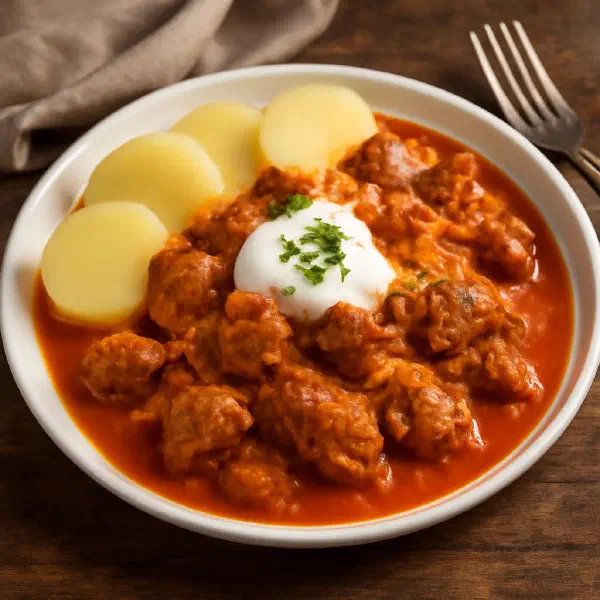
Serve Cabbage Goulash in a pre-warmed bowl so it stays hot for longer and the sauce does not cool too quickly. A small dollop of soured cream or a lactose-free alternative on top adds visual contrast and softens the seasoning where needed. For side dishes, potatoes, boiled potatoes or bread work well; offer them separately so everyone can combine things to their own taste. A little freshly ground pepper and some chopped parsley at the end give a fresh splash of colour without altering the classic character.
A bit of history
Dishes such as Cabbage Goulash are emblematic of a style of cooking that coaxes plenty of flavour out of simple basic ingredients while relying on what is available locally. Cabbage was a dependable storage vegetable in many households, cheap to come by even in the cold season and endlessly versatile to prepare. The goulash-like seasoning with paprika and tomato brought variety to the menu without the need for exotic ingredients. To this day, many people associate Cabbage Goulash with the feeling of home cooking that warms, fills you up and can be cooked ahead for several days with no fuss.
More recipe ideas
Summary: Cabbage Goulash
Cabbage Goulash is a hearty, warming dish that makes big flavour from a few ingredients, white cabbage, onions and a paprika-spiced sauce. With a little patience during braising you get a soft, aromatic consistency that is ideal for reheating and often tastes even better the next day. You can easily adapt it, from meaty to vegetarian to vegan, and shape it entirely to your own taste with small adjustments such as thickening, heat and side dishes. The result is everyday comfort food that is cheap, filling and reliably successful.