National Dish Germany: Dollop Cake (Recipe)
In this article
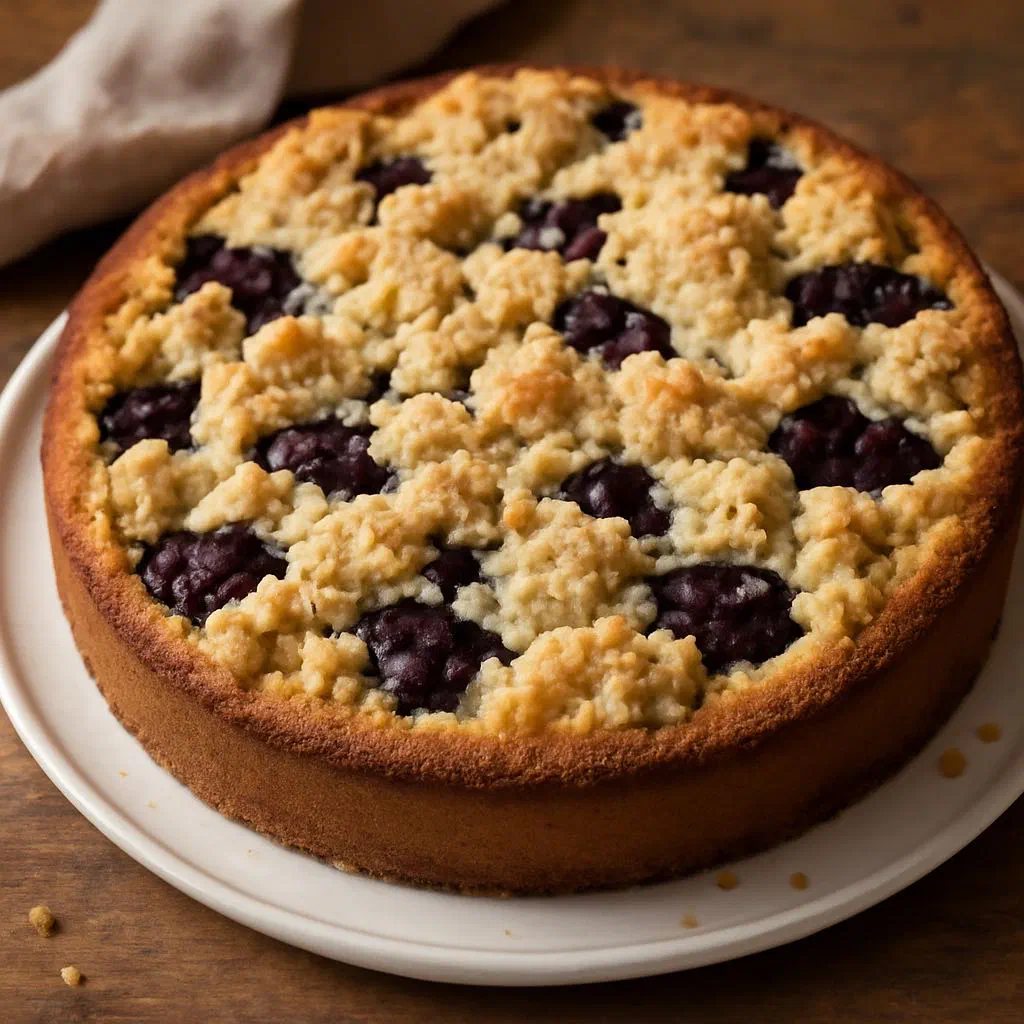
Step back into the kitchens of the former East Germany with Dollop Cake, a wonderfully unfussy yeast-dough bake studded with little spoonfuls of sweetened quark and seasonal fruit. Mildly sweet yet never heavy, it brings together a soft, airy base, a creamy quark topping and juicy plums or cherries in one comforting tray bake. Easy to prepare ahead and lovely with an afternoon coffee, it is exactly the sort of homely classic you make when you want something familiar and reassuring.
About Dollop Cake
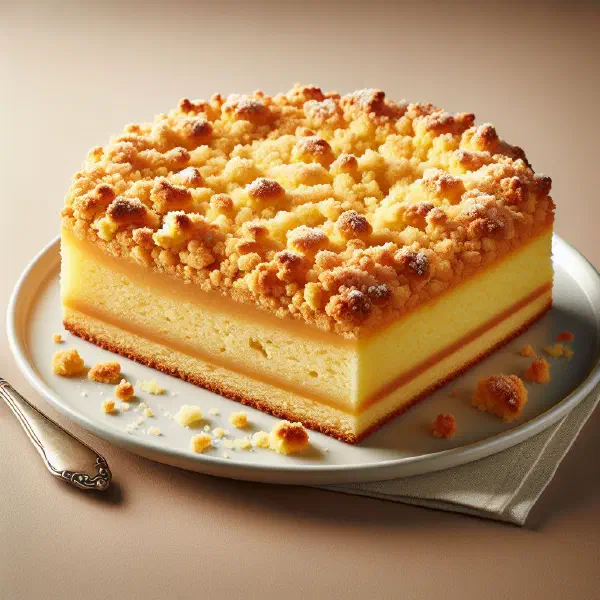
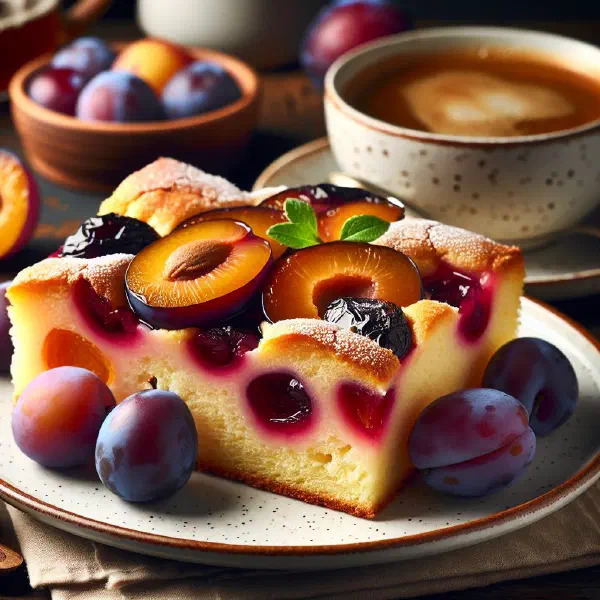
Dollop Cake is a much-loved sheet cake that many people fondly remember as a no-nonsense staple of East German home baking. Its signature feature is the scattering of little quark dollops that sit on a light yeast dough and turn faintly golden in the oven. The cake tastes gently sweet but never feels stodgy, because the dough, quark and fruit balance one another so pleasingly. It is especially popular because it can be prepared ahead with ease and suits both an afternoon coffee and a homemade gift for family and friends. If you enjoy this kind of homely bake, it sits right at the heart of unpretentious German cuisine.
Ingredients (serves 1–2)
- Yeast dough: 100 g plain flour (or spelt flour), 7 g dried yeast (or 10 g fresh yeast), 25 ml milk, 15 g sugar, 20 g butter, 1 pinch of salt
- Quark dollops: 125 g quark (20% fat), 1 egg yolk, 20 g sugar, 1 tsp vanilla sugar, 1 tsp lemon zest (optional)
- Topping: 80–120 g plums (or apple slices / cherries), 1 tsp cornflour (optional, for very juicy fruit)
- Streusel (optional): 30 g flour, 15 g sugar, 15 g butter
- To finish: icing sugar for dusting (optional)
The quantities are kept deliberately small so you can bake this dollop cake even without a large tray, in a small tin, say, or on a compact baking sheet. What matters most is a good balance between the yeast-dough base and the quark mixture, as this is what creates the characteristic dollops. Choose your fruit by the season; plums and cherries are particularly aromatic. If you add streusel, you gain an extra layer of crunch and a pleasant buttery note.
Shopping for the ingredients
When shopping, it pays to look for fresh quark, as it has a big influence on the texture of the dollops. Quark with 20% fat is a good middle ground, staying creamy without turning watery. For the dough, yeast and flour are the decisive ingredients: dried yeast is practical and reliable, while fresh yeast often gives a slightly fuller flavour. With the fruit, the rule is simple, take whatever is ripe and fragrant, because that brings natural sweetness and saves you from adding too much sugar later.
Preparing the dish
Start by bringing all the ingredients to room temperature, as this helps the yeast dough rise and makes the quark mixture smoother. Grease a small baking tin (around 18–20 cm) or a small tray, or line it with baking paper, so the cake comes out cleanly later. If you are using very juicy fruit, it is sensible to let it drain briefly or toss it with a little cornflour so the base does not turn soggy. Allow time for proving, too, because this is what makes the dough light and gives it that typical, faintly airy foundation.
Step-by-step instructions
- Mix the yeast dough: Warm the milk until lukewarm, dissolve the sugar in it and stir in the yeast. Leave for 5 minutes, then add the flour, salt and butter and knead to a smooth dough.
- Prove the dough: Cover and leave to rise in a warm place for 45–60 minutes, until visibly increased in volume.
- Mix the quark: Beat the quark, egg yolk, sugar, vanilla sugar and optional lemon zest until creamy.
- Prepare the tin: Roll out the dough or press it into the tin with your hands, forming a small rim.
- Top it: Scatter over the fruit and spoon the quark mixture on top in small dollops.
- Add streusel (optional): Rub together the flour, sugar and butter and crumble over the cake.
- Bake: Bake at 180°C top/bottom heat (160°C fan) for about 20–28 minutes, until the edges are golden brown.
- Cool: Rest for 10–15 minutes, then dust with icing sugar if you like.
The baking time can vary slightly depending on your tin and the fruit, so keep an eye on the browning at the edges and on the quark dollops. When the surface is golden and the base feels firm, the cake is usually just right. Letting it cool briefly allows the quark mixture to set, giving a cleaner slice. In terms of flavour, dollop cake is often even better served slightly warm.
Gluten-free / lactose-free version
For a gluten-free version you can use a gluten-free flour that is explicitly suitable for yeast dough, as not every blend rises equally well. It often helps to add a small amount of binder (psyllium husk, for example) so the dough is more elastic and does not crumble. The cake also turns out very well lactose-free with lactose-free milk, lactose-free quark and butter alternatives, and the quark mixture shows hardly any difference in flavour. With vanilla sugar and any streusel, take care that every component really is labelled accordingly.
Tips for vegans and vegetarians
Dollop cake is vegetarian as a matter of course, but with a few tweaks it can also be made vegan. Instead of quark, plant-based quark alternatives or drained soya yoghurt work well and provide a similar creaminess. You can replace the egg yolk with a little cornflour (around 1 tsp) or a small amount of apple sauce so the dollops bind better during baking. For the dough, milk and butter are easily swapped for plant-based drink and margarine, with a neutral drink (such as oat) usually working best.
More tips and tricks
If you want a particularly aromatic yeast dough, give it more time and let it rise slowly in a cool place after the first knead, overnight in the fridge, for instance. This improves the structure and makes the dough finer, with no extra effort on baking day. For more stable quark dollops, let the quark drain briefly or stir in a pinch of cornflour if it is very soft. And if you use streusel, the butter and flour really should be worked while cold so they stay crisp during baking.
Adapting the recipe to your taste
You can make the cake a touch sweeter by adding more sugar to the quark mixture, though the sweetness of the fruit is often enough on its own. If you like it fruitier, simply increase the amount of fruit, but do use a little cornflour with very juicy varieties. For a more aromatic note, cinnamon or a pinch of cardamom sits beautifully in the streusel or the dough. And if you want it especially creamy, fold a spoonful of soured cream (or an alternative) into the quark mixture for added richness.
Ingredient substitutions
If you have no yeast in the house, a similar cake can be made with a simple sponge batter, although it loses a little of the characteristic yeasted base. Instead of plums you can use apples, cherries, apricots or berries, bearing in mind that berries often need slightly less baking time, much like the fruit in a fresh Rhubarb Cake. Sugar can be partly replaced with honey or other sweeteners, though the texture and browning may change a little. Butter swaps well for margarine, and for flour, spelt is a mild alternative that lends the base a gently nutty note, just as it would in a Silesian Streusel Cake.
Drink pairing ideas
Dollop cake pairs classically with coffee, as its slight bitterness balances the sweetness of the quark dollops. If you prefer something gentler, black tea or a mild fruit tea picks up the fruity notes nicely. A glass of cold milk or a plant-based drink also harmonises well, especially while the cake is still faintly warm. For special occasions, a sparkling drink such as cloudy apple spritz or a light grape juice can underline the fruity character even further.
Serving and presentation ideas
For a lovely look, cut the cake into neat pieces and dust it with icing sugar only just before serving, so it does not turn damp. A few fresh slices of fruit or a dollop of cream (or a plant-based version) make the plate instantly more inviting. If you have used streusel, a gentle sheen looks especially appetising when the cake is served lukewarm. For guests, it is handy to cut small pieces, as dollop cake can be quite filling thanks to the quark.
A bit of history
Dollop Cake belongs to that family of recipes defined by simple ingredients and a clear logic in the making: a base, a creamy quark component and seasonal fruit. Cakes like this were popular because they were easy to plan around and many of the ingredients were readily found in the household. The signature dolloped look is not only decorative but practical too, as the quark mixture is distributed in portions and stays juicy during baking. To this day the recipe is a fine example of how little effort can yield a cake that wins you over with contrasting textures and familiar flavours.
More recipe ideas
Summary: Dollop Cake
Dollop Cake wins you over as a simple, traditional sheet cake with a light yeasted base, creamy quark dollops and a fruity topping. With just a handful of ingredients you get a cake that is easy to prepare ahead and tastes wonderful both warm and cooled. A few small adjustments make it work gluten-free, lactose-free or in a vegan interpretation, without losing sight of the basic idea. If you are after a down-to-earth classic that turns out reliably and allows plenty of variations, this recipe is a particularly rewarding choice.