National Dish Germany: East German Meat Patties (Recipe)
In this article
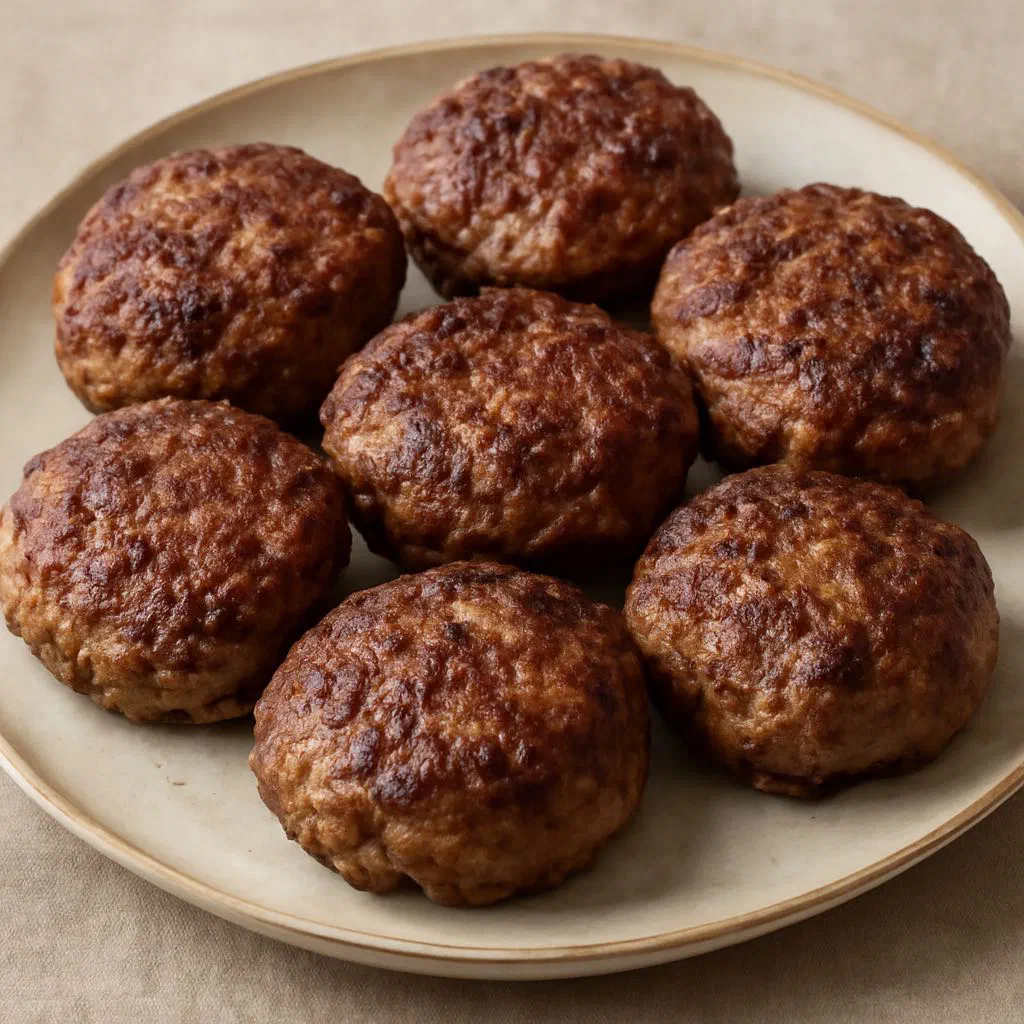
Few dishes capture the down-to-earth charm of everyday German cooking quite like East German meat patties. Born of a kitchen tradition that prized simple ingredients and reliable results, this classic GDR recipe turns mixed mince, onion and a touch of mustard into something genuinely satisfying. The patties are juicy on the inside, beautifully browned on the outside, and just as happy served hot as a main course as they are cold on a slice of bread. A picnic or an easy meal for guests, these are exactly the kind of no-fuss comfort food that never goes out of fashion.
About East German Meat Patties
East German meat patties remain one of the most beloved classics of everyday German cooking, and the GDR recipe stands for a particularly hearty, robustly seasoned version. They are known for their juicy texture, a well-browned crust and a flavour that gets by without any frills. Traditionally they were prepared so that they worked just as well warm as a main course as they did cold as a sandwich filling. It is exactly this versatility that makes them ideal for a fast meal, for a picnic or as an uncomplicated dish to put in front of guests.
Ingredients (serves 1–2)
- 250 g mixed minced meat (or beef/pork to taste)
- 1 small onion, finely diced
- 1 egg
- 1 stale bread roll (or 2–3 tablespoons breadcrumbs)
- approx. 60–80 ml milk or water, for soaking
- 1 teaspoon mustard (medium-hot)
- 1 teaspoon salt
- ½ teaspoon black pepper
- ½ teaspoon sweet paprika (optional, but a very good match)
- 1 pinch marjoram (optional)
- 2–3 tablespoons oil or clarified butter, for frying
The ingredients are deliberately kept simple, because the flavour comes above all from good seasoning and the right texture. The soaked bread roll is especially important, as it keeps the patties juicy and binds the mixture without drying it out. Mustard and onion give the patty its typical, savoury backbone. If you like, you can lean further into the classic character with marjoram or a hint of paprika.
Shopping for the ingredients
When shopping, pay particular attention to the quality of the minced meat, as it is the foundation for both flavour and texture. Freshly ground mince from the butcher, or a chilled pack with a short use-by date, is ideal so that the patties stay juicy. The bread roll can happily be stale, since it soaks up liquid better and makes the mixture more stable. For frying, choose an oil with a higher smoke point or clarified butter, so the crust browns nicely and nothing turns bitter. These are exactly the kind of honest, easy-to-source ingredients that define German cuisine.
Preparing the dish
The most important step is soaking the bread roll, because this is what later creates an even bind. Cut or tear it into small pieces and pour over milk or water until it is soft but not swimming in liquid. While that soaks, finely dice the onion, as small pieces distribute more evenly and give a harmonious mouthfeel. If you have time, let the finished meat mixture rest for 10 minutes afterwards, so the seasoning and the bind can come together properly.
Step-by-step instructions
- Soak the bread roll, then squeeze it out well so the mixture does not become too wet.
- Put the minced meat, bread roll, diced onion, egg, mustard and spices into a bowl.
- Knead everything firmly until you have a smooth, mouldable mixture.
- Shape the mixture into 2–4 patties and flatten them slightly so they cook evenly.
- Heat the oil or clarified butter in a pan and fry the patties over a medium heat.
- Fry for about 4–6 minutes per side until golden brown, then let them finish briefly over a low heat.
- Rest for 2 minutes before serving so the juices redistribute and the patties stay juicy.
The heat is decisive: too hot and the outside is dark while the inside is still raw; too low and the patties turn out rather pale and less aromatic. A medium temperature allows the roasted flavours to develop while still giving the patty time to cook through. If you are unsure, cut one patty open slightly and check that it is evenly cooked inside. The short rest before eating also improves the texture, because the crust stays firm and the centre does not dry out.
Gluten-free / lactose-free version
For a gluten-free version, swap the bread roll for gluten-free breadcrumbs or a gluten-free roll, soaked in exactly the same way. Make sure the mustard and spices contain no unwanted additives either, if you are particularly sensitive. The recipe becomes lactose-free simply by using water instead of milk, or by using lactose-free milk. In terms of flavour, everything stays very close to the original, because the seasoning and the frying fat deliver the main aromas.
Tips for vegans and vegetarians
For a vegetarian version, you can recreate the patties with a mixture of kidney beans or lentils and oats, so that you get a firm, easy-to-shape mixture. Instead of egg, a flax egg (ground flaxseed with water) often works well, binding nicely and keeping the patties stable during frying. For the vegan version, use plant-based milk or water and make sure the mustard contains no honey or animal-derived additives. It is important to let the patties rest a little longer, because plant-based mixtures become much more stable as they swell and cool.
More tips and tricks
If the mixture is too soft, 1–2 tablespoons of breadcrumbs or oats will help improve the bind. If it turns out too firm, add water or milk a splash at a time until the consistency is smooth again. For extra flavour, you can briefly sauté the onion beforehand, which mellows it and brings a gentle sweetness to the patty. It also pays to shape the patties fairly flat, because they then brown more evenly and offer a better balance of crust and juicy interior when you eat them.
Adapting the recipe to your taste
You can adjust the recipe easily without losing its classic character. If you like it spicier, increase the mustard and pepper, or add a pinch of caraway or smoked paprika for more depth. For an even juicier patty, use mince with a slightly higher fat content, or add a small splash of cold water to the mixture, which gives a looser structure during frying. If you want it more rustic, cut some of the onion more coarsely so there is more bite when you eat. The same hearty, savoury approach shines in Saxon Pot Roast too.
Ingredient substitutions
Instead of mixed mince, pure beef mince also works, with a slightly stronger flavour, or pure pork mince, which often turns out especially juicy. The bread roll can be replaced with breadcrumbs if needed, although patties made with soaked bread are usually more tender. Mustard can be swapped for a small amount of Worcestershire sauce or a pinch of garlic if you prefer a different aroma. For the frying fat, clarified butter and neutral oil are the classics, but rapeseed or sunflower oil will also give a good crust.
Drink pairing ideas
Meat patties go well with drinks that accompany the roasted flavours without masking the seasoning. A very classic choice is a light beer or a mild pilsner, because the gentle bitterness harmonises nicely with the crust. If you would rather not drink alcohol, apple spritzer or a tart herbal tea served cold are both good options, as each is pleasantly refreshing. A simple sparkling water with lemon also works wonderfully, especially when the patties are served with potato salad or bread.
Serving and presentation ideas
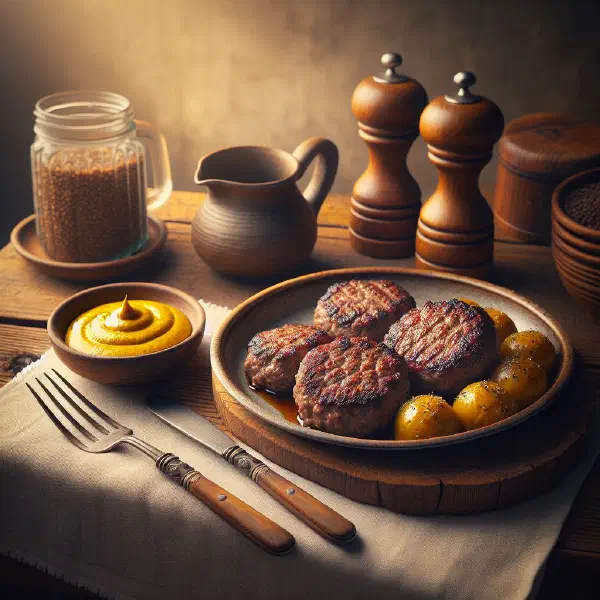
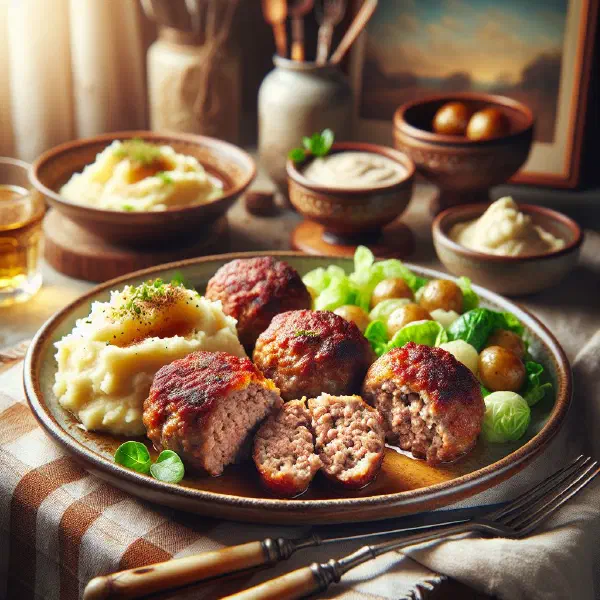
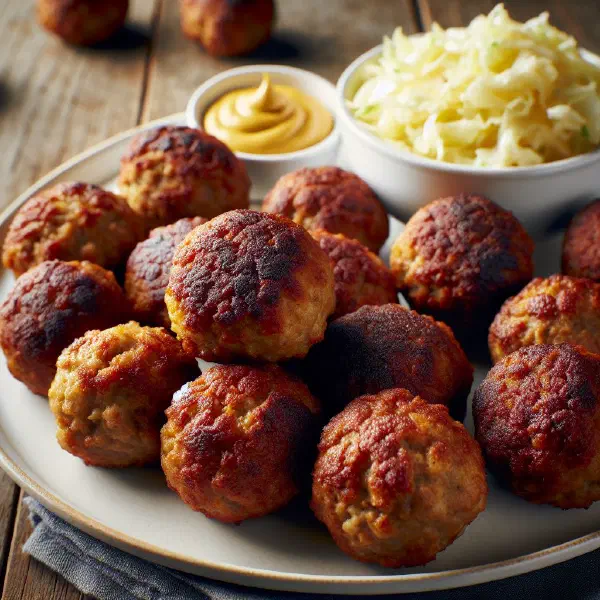
Visually, the patties look best when they have an even golden-brown crust and are not swimming in fat. Serve them with a dollop of mustard, a few slices of gherkin or a small salad, so that colour and freshness come together on the plate. If you are serving them as a snack platter, a rustic bread with a little butter and finely sliced onion or chives goes very well alongside. For guests, you can shape smaller patties and present them as canapés with gherkin or horseradish, which makes them instantly party-ready, much like a tray of Bavarian Meatloaf slices.
A bit of history
Meat patties have long been known across Germany and appear regionally as Frikadellen or Fleischpflanzerl, though the basic idea always stays much the same. In the GDR, the focus was on practical everyday recipes that delivered a filling result with few ingredients and were easy to prepare in advance. This is precisely why patties were popular in canteens, at home and at celebrations, since they taste good both warm and cold and are simple to transport. The typical seasoning with onion and mustard, along with the soaking of bread, reflects this pragmatic kitchen logic, in which the goal is juiciness, bind and solid roasted flavours.
More recipe ideas
If you like meat patties, it is well worth exploring dishes that also rely on hearty seasoning and simple preparation. Many classics combine beautifully, patties with potato salad, for example, or as part of a cold platter. A robust soup is another excellent match if you are planning a menu with a starter and a main course. Recipes like these are ideal because they usually come together with just a few simple steps, yet still taste very savoury and satisfying.
Summary: East German Meat Patties
East German meat patties win you over with simple ingredients, robust seasoning and a method that works reliably every time. With soaked bread roll, onion and mustard, you create a mixture that develops a crisp crust and a juicy interior during frying. Small adjustments such as a gluten-free bind or lactose-free liquid are easy to make without losing the typical flavour. Meat patties remain a timeless classic that fills you up quickly and always goes down well.