National Dish Germany: Egg Fricassee (Recipe)
In this article
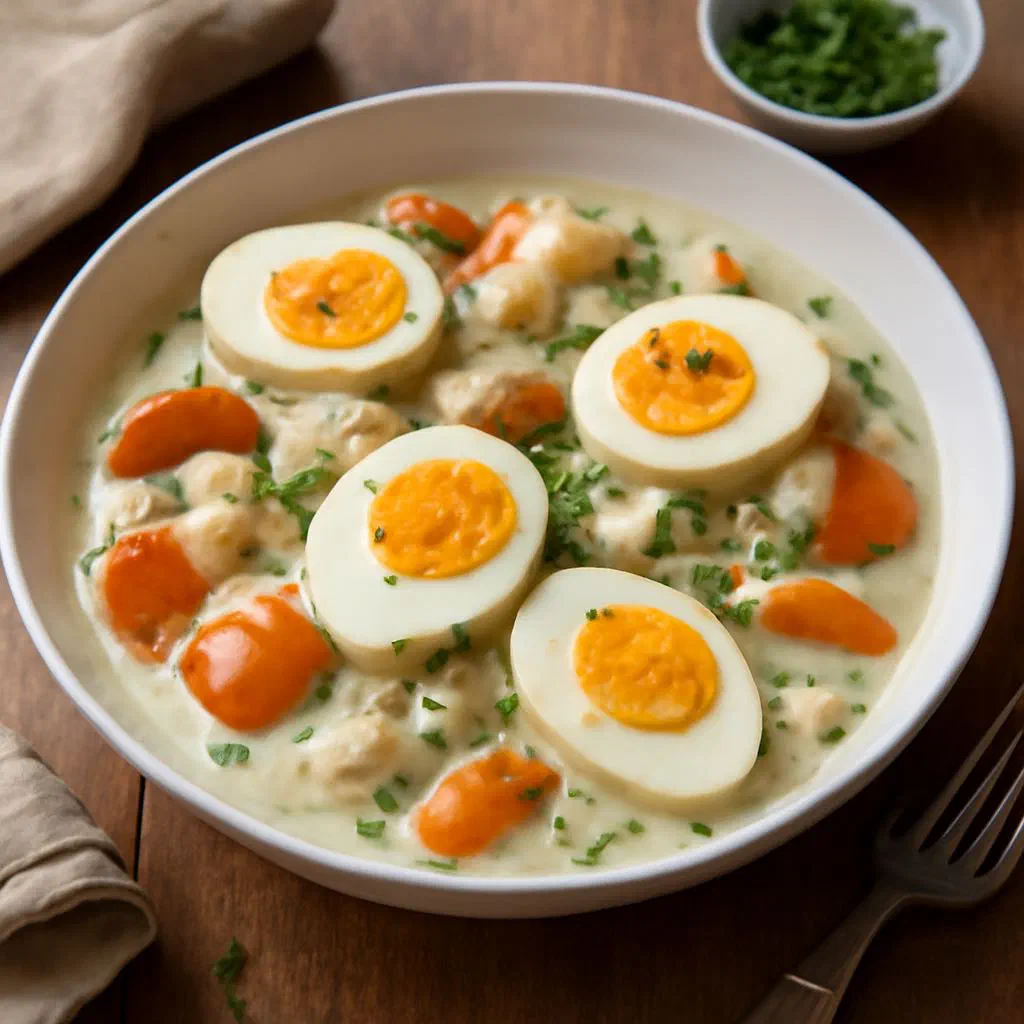
Meet Egg Fricassee, a comforting classic from the East German kitchen that turns a handful of everyday ingredients into something genuinely satisfying. At its heart are hard-boiled eggs folded gently into a pale, velvety sauce, brightened with peas and carrots and finished with a squeeze of lemon. It was a firm favourite in the GDR precisely because it is quick, filling and unfussy, proper home cooking that still feels special when served with potatoes or rice. Here is how to bring this nostalgic dish to your own table.
About Egg Fricassee
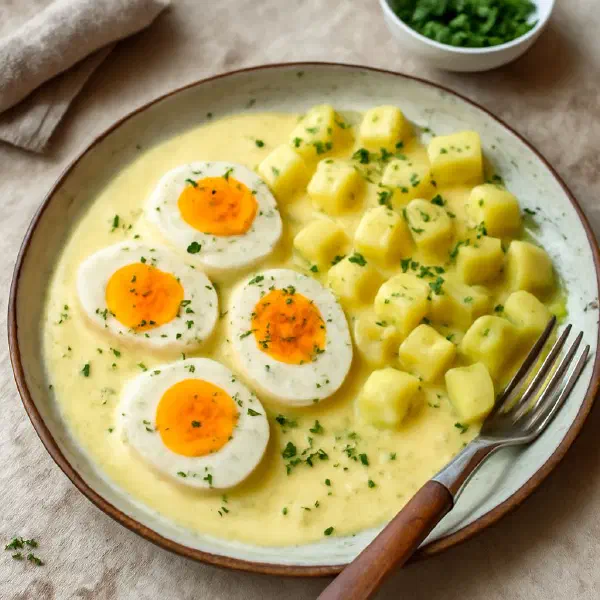
Egg Fricassee is the kind of dish many people associate with hearty home cooking and a pleasantly creamy sauce. In GDR cuisine it was popular because it relies on simple ingredients, fills you up nicely and comes together quickly for an everyday meal. Its defining features are hard-boiled eggs in a pale sauce, often rounded out with peas and carrots for colour and bite. Served in the classic way with potatoes or rice, the dish feels especially balanced and complete, a tidy example of comforting German cuisine.
Ingredients (serves 1–2)
To keep the egg fricassee well balanced, it pays to use fresh eggs and a good base for the sauce. The quantities below are enough for one large portion or two smaller ones. If you like it especially traditional, reach for a mild stock and use tinned or frozen vegetables. Above all, it is the interplay of binding, seasoning and a gentle hint of acidity from lemon or pickle brine that makes the dish sing.
- 3–4 eggs (hard-boiled)
- 150–200 g peas and carrots (frozen or tinned, drained)
- 25 g butter (or margarine)
- 20 g plain flour (wheat flour)
- 250–300 ml vegetable stock or mild meat stock
- 80–120 ml milk or cream (depending on how creamy you like it)
- 1–2 tsp lemon juice (or a splash of pickle brine)
- Salt, pepper, optionally a pinch of sugar
- Optional: a little nutmeg, 1 tsp mustard or chopped parsley
Shopping for the ingredients
When you shop, the quality of the basics often decides the result, particularly the eggs and the stock. Look for eggs with the freshest possible lay date, as they slice more neatly after cooking and taste rounder. Frozen peas and carrots are handy because they stay crisp and usually come without additives. With stock it is worth checking the ingredients list, since a mild, not-too-salty stock gives you far more control when seasoning. Most of these items are easy to find in any regular supermarket.
Preparing the dish
A little groundwork ensures the fricassee turns out neither too thick nor too thin, with the eggs holding their shape. Hard-boil the eggs (around 9–10 minutes), plunge them into cold water and let them rest briefly so they peel more easily. Then cut the eggs into wedges or rough chunks, depending on how rustic you like it. Drain the vegetables well, or briefly thaw them if frozen, so the sauce does not become watery.
Step-by-step instructions
- Hard-boil the eggs, cool under cold water, peel and cut into wedges or chunks.
- Melt the butter in a pan over medium heat and stir in the flour.
- Cook the flour-and-butter mixture for 1–2 minutes, stirring, until it turns lightly creamy — this is your roux.
- Gradually stir in the stock to avoid any lumps, then bring briefly to the boil.
- Stir in the milk or cream and let the sauce simmer gently for 3–5 minutes.
- Add the peas and carrots and warm through for 2–3 minutes.
- Season with lemon juice (or pickle brine), salt, pepper and, if you like, nutmeg or mustard.
- Fold in the eggs carefully and warm through only briefly, without letting them boil hard.
Gluten-free / lactose-free version
For a gluten-free version you can replace the wheat flour with cornflour or a gluten-free flour blend. With cornflour it is best to mix it separately with a little cold stock before adding it to the hot liquid, so it does not clump. To make the dish lactose-free, use lactose-free milk or a plant-based alternative and swap the butter for plant-based margarine. The flavour stays very close to the original, especially if you round off the sauce with lemon and a good stock.
Tips for vegans and vegetarians
Egg fricassee is vegetarian by nature as long as you use a vegetable stock and leave out any bacon or meat. For a vegan interpretation you can replace the eggs with tofu cubes or chickpeas, both of which pair well with a pale sauce. A pinch of kala namak (black salt) lends an egg-like note without any animal products. Add plant-based cream as well and the sauce turns pleasantly creamy while staying light.
More tips and tricks
To keep the sauce from feeling heavy, follow a clear order when seasoning: first salt and pepper, then acidity, and finally a tiny pinch of sugar if needed. If the sauce turns too thick, loosen it with a little stock or milk without diluting the flavour. If it is too thin, stir a small amount of cornflour into cold liquid and add it a splash at a time until the consistency is right. For more aroma, reach for parsley, a small spoon of mustard or a pinch of nutmeg, used sparingly.
Adapting the recipe to your taste
You can easily tweak egg fricassee to suit your taste and your store cupboard. If you like it especially creamy, increase the proportion of milk or cream; for a lighter version, use more stock and less fat. For a bolder profile, choose a stock with a touch more seasoning, though you should then go easy on the added salt. The filling can vary too: more vegetables makes it fresher, while more eggs makes it more filling.
Ingredient substitutions
If you have no peas and carrots to hand, cauliflower florets, asparagus pieces or finely diced kohlrabi all work very well. Instead of butter you can use margarine, which is especially handy for a lactose-free or more budget-friendly version. Milk can be swapped for oat drink or soya drink, with unsweetened varieties suiting best. In a pinch, lemon juice can be replaced with a small splash of mild vinegar, though you should then measure it out particularly carefully. The same swap-friendly spirit shows up in dishes like Eggs in Mustard Sauce.
Drink pairing ideas
A creamy egg fricassee goes best with drinks that refresh the palate and do not weigh the sauce down further. Sparkling water with lemon is a fine match, picking up the gentle acidity of the dish while staying neutral. If you fancy something warming, a mild herbal tea supports the vegetable flavour nicely. A well-chilled apple spritzer works too, its fruity tang offering a pleasant contrast to the creamy texture.
Serving and presentation ideas
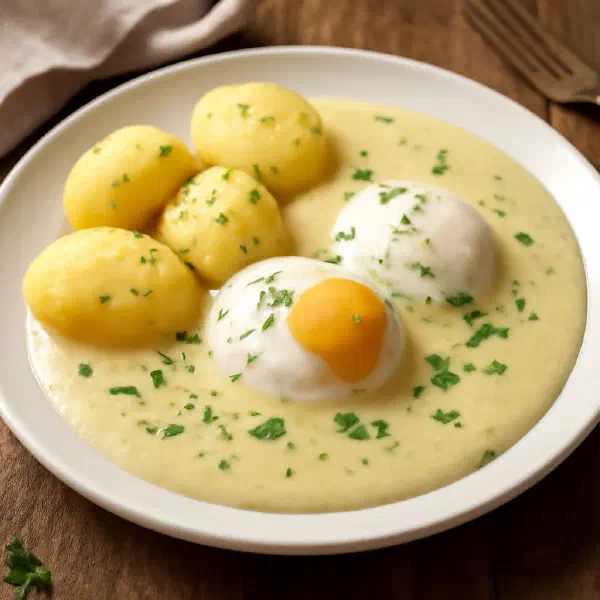
A few small touches make egg fricassee look far more appetising on the plate without any fuss. Arrange the eggs so the yolk faces stay visible, as that adds colour and makes the dish instantly more inviting. A little spoonful of sauce over the eggs and a scattering of chopped parsley give it a fresh, classic look. If you serve potatoes alongside, boiled potatoes in their skins or small salted potatoes look particularly authentic and sit neatly next to the fricassee.
A bit of history
Fricassee as a cooking method has been known for a long time and generally refers to ingredients served in a pale, thickened sauce. In the GDR there was strong demand for dishes that could be made with simple, readily available foods and still produce a filling result. Egg fricassee fits that picture exactly, since eggs are versatile and combine well with vegetables and a basic sauce. Many families adapted the recipe to their own liking, which is why several versions exist to this day, all keeping that characteristic creamy character.
More recipe ideas
Summary: Egg Fricassee
Egg Fricassee is an uncomplicated comfort dish with a pale, creamy sauce that suits everyday cooking perfectly. With just a few ingredients, eggs, vegetables and a well-seasoned sauce base, you get a plate that is ready quickly yet still tastes of classic home cooking. Small adjustments to the stock, milk or thickening make it easy to prepare gluten-free or lactose-free. Served with potatoes or rice, it becomes a rounded meal that is easy to get right and reminds many people of traditional German fare.