National Dish Germany: Egg Salad (GDR Recipe)
In this article
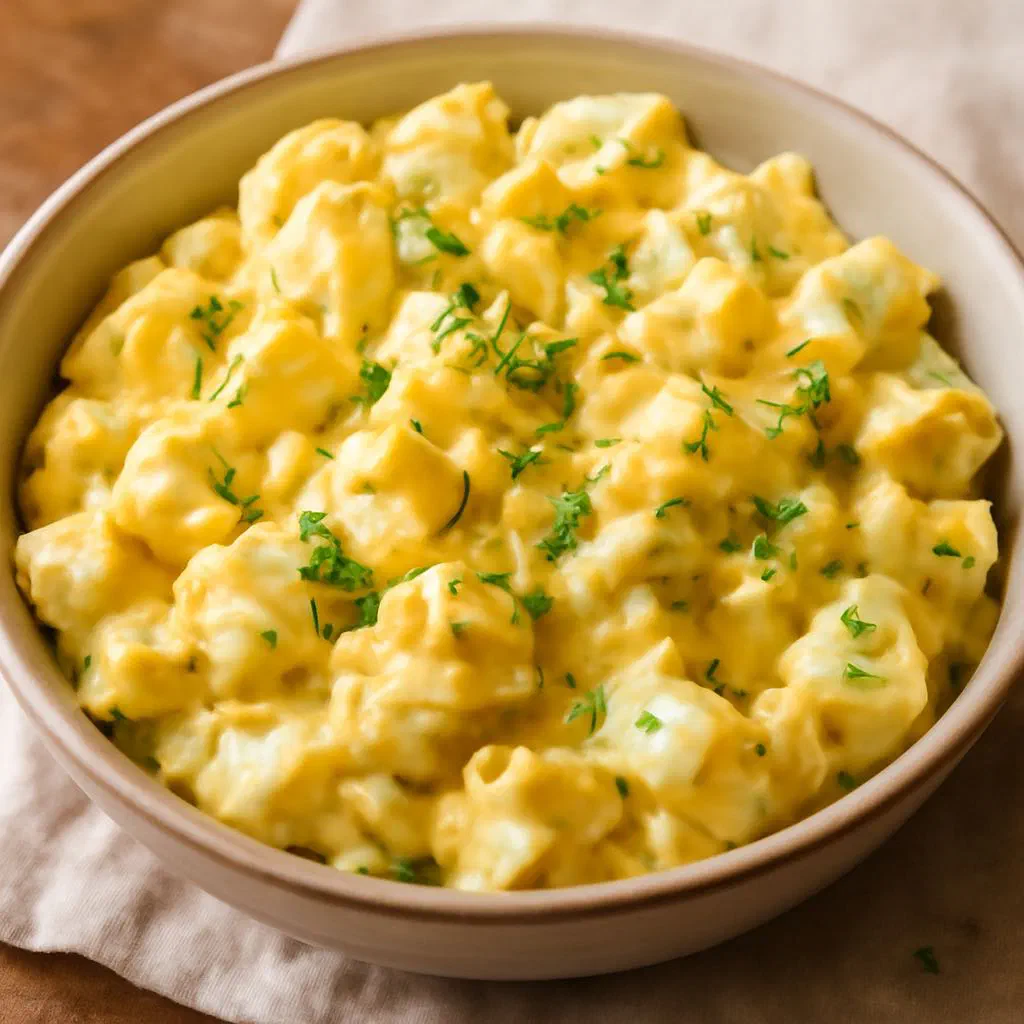
Few dishes capture the spirit of everyday East German home cooking quite like this egg salad. Quick to throw together yet wonderfully satisfying, it brings the comforting taste of proper home-style food to the table with the simplest of ingredients. Creamy, mildly tangy and full of character, it works beautifully as a spread on a slice of dark bread, as a side to fried potatoes, or as a speedy snack between meals. Best of all, it can be made ahead, making it a reliable choice for both busy weekdays and visiting guests.
About Egg Salad
Egg Salad (GDR Recipe) is a classic that comes together in minutes yet still tastes of proper home-style cooking. Its hallmark is the unfussy combination of hard-boiled eggs, a creamy binding and a gently sour note. It is precisely this balance that makes the salad such an ideal bread spread, a side for fried potatoes, or a quick snack on the go. The recipe also prepares extremely well in advance, so it works dependably in everyday life or when entertaining.
Ingredients (serves 1–2)
- 4 eggs (hard-boiled)
- 2–3 tablespoons mayonnaise (or salad cream)
- 1 tablespoon mustard (medium-hot)
- 1–2 tablespoons gherkins (finely diced) + 1 teaspoon gherkin brine
- 1 small onion or 2 spring onions (very finely diced)
- Salt and pepper
- Paprika (optional, sweet)
- Chives or parsley (optional)
These ingredients are deliberately simple and everyday, which captures the character of so many GDR recipes well. The combination of mayonnaise and mustard provides creaminess and savouriness without the need for many spices. Gherkins add a fresh acidity that lends the eggs a sense of lightness. If you prefer things a little milder, use less onion or swap it for spring onions.
Shopping for the ingredients
When shopping, it pays to look for fresh eggs, as they make a noticeable difference to both the flavour and the texture. For the mayonnaise you can choose a classic version or reach for a lighter alternative if you prefer something less rich. With the gherkins, look for a flavour you genuinely enjoy: boldly seasoned gherkins give the salad more character, while milder ones make it rounder. If you are sensitive to heat, a medium-hot mustard is usually the best choice.
Preparing the dish
The most important step is boiling the eggs correctly, so the yolks set firmly and blend in nicely. Place the eggs in cold water, bring it to the boil and then let them cook for around 9–10 minutes, depending on size. Afterwards, plunge them into cold water so the shells come away more easily and the eggs do not continue to cook. While the eggs cool, you can already dice the onions and gherkins very finely so that everything distributes evenly later.
Step-by-step instructions
- Peel the eggs and dice them small with a knife or an egg slicer.
- Finely chop the gherkins and onion so the salad does not turn watery or too sharp.
- In a bowl, stir together the mayonnaise, mustard and gherkin brine until smooth.
- Fold in the eggs, gherkins and onions, then season with salt, pepper and optionally paprika.
- Add chives or parsley to taste and let the salad rest for 10–20 minutes.
Letting it rest is a small but important step, as it allows the savouriness and acidity to combine more fully. If the salad seems too firm after resting, a small spoonful of mayonnaise or a splash of gherkin brine will help. If it is too runny, you can balance it out with an extra egg or a little more diced egg white. For a particularly harmonious result, give it one final taste and season at the end.
Gluten-free / lactose-free version
The salad is often naturally gluten-free, as eggs, gherkins and onions contain no gluten. Difficulties usually arise only with processed products such as mayonnaise or mustard, which can contain traces or additives depending on the brand. For a lactose-free version, choose a mayonnaise without milk components or use a shop-bought lactose-free alternative. Serve the egg salad with gluten-free bread or potatoes, and the whole dish stays reliably easy to tolerate.
Tips for vegans and vegetarians
The recipe is already vegetarian, since it does without meat and provides plenty of protein through the eggs. For a vegan version, replace the eggs with, for example, a mashed chickpea mix or finely diced firm tofu to achieve a similar texture. Instead of mayonnaise you use vegan mayo, and the characteristic savouriness still comes through from mustard, gherkins and onions. The key is to season boldly at the end, so that despite the substitutes the salad keeps its familiar robust flavour.
More tips and tricks
If you like it especially creamy, you can lightly mash some of the eggs with a fork rather than dicing everything neatly. For more freshness, a little lemon juice or finely grated cucumber helps, though you should squeeze out the liquid well in that case. Those who prefer it spicier can add a pinch of smoked paprika or a touch of horseradish without masking the base flavour. For taking on the go, store it in a well-sealed container and keep it chilled, so the salad stays stable and fresh.
Adapting the recipe to your taste
You can easily control the consistency: more mayonnaise makes the salad spreadably soft, while less mayonnaise makes it heartier. For a lighter version, yoghurt or skyr works as a partial substitute, provided you tolerate dairy and enjoy the taste. The acidity can also be varied nicely, for instance with more gherkin brine or a tiny splash of vinegar. If children are eating along, a milder amount of onion and a restrained mustard is recommended.
Ingredient substitutions
If you have no gherkins, other kinds of sour pickles work too, or even finely diced apple for a mild, fruity note. Instead of onion you can use chives or spring onion, which makes the flavour gentler. If no mayonnaise is to hand, you can whisk up a quick cream from soured cream or a plant-based alternative, in which case mustard becomes particularly important for the seasoning. For more bite, you can also work in some very finely diced celery or radish. The same crisp freshness shines in a Bamberg Potato Salad.
Drink pairing ideas
The creamy, savoury character suits drinks that bring freshness and do not overload the palate. Classic choices are sparkling water or a light juice spritzer, such as apple or blackcurrant, which pleasantly accompany the acidity of the gherkins. For a more traditional touch, reach for a light beer or a mild pils, both of which go well with bread and spreads. An unsweetened herbal tea, peppermint for example, can also harmonise surprisingly well by balancing the creaminess.
Serving and presentation ideas
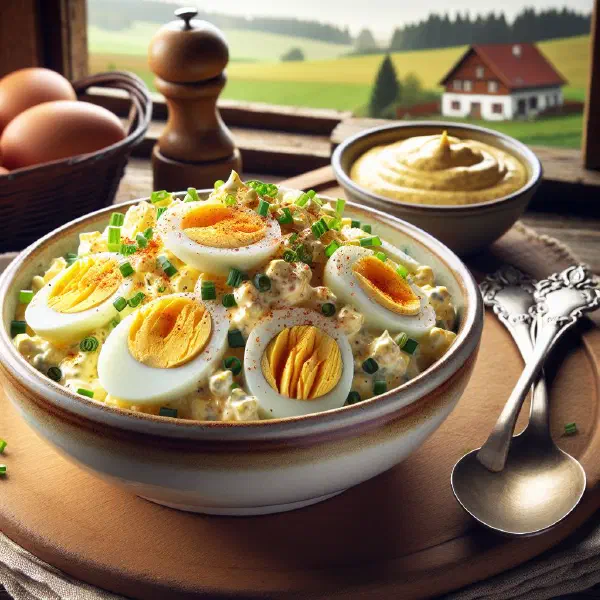
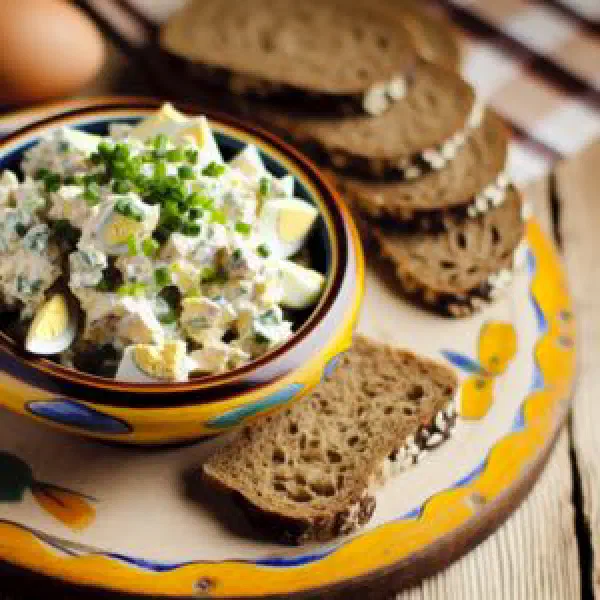
For an appealing look, it is worth scattering the egg salad with fresh herbs and accenting it with a little paprika. It looks especially appetising when you arrange it with a spoon as a small dome and lay cucumber slices or radishes alongside. As a light meal it looks wonderful served on dark bread and garnished with a halved egg. For buffets you can portion the salad into small glasses, keeping it tidy and practical to serve.
A bit of history
Egg salad belongs to those dishes that were valued in many households as a quick way to fill up, since eggs were relatively easy to come by and versatile. In the GDR, down-to-earth recipes that created plenty of flavour from few ingredients were often at the heart of the kitchen. It was also typical to make good use of leftovers, such as boiled eggs from the day before or surplus gherkins. In this way egg salad became not just an everyday dish but a fixture at celebrations, evening suppers and cold platters, much like the hearty Wurzen Bacon Dripping that defined regional German cuisine.
More recipe ideas
- Bamberg Potato Salad
- Hamburg Warm Beef Roll
- Dripping Bread with Onions
- Eggs in Mustard Sauce
- Saxon Potato Soup
Summary: Egg Salad
Egg Salad (GDR Recipe) wins you over with few ingredients, speedy preparation and a pleasantly savoury-creamy flavour. With gherkins, mustard and onion you get a balanced mix of acidity, savouriness and richness that works equally well on bread or as a side. Through small adjustments you can make it lighter, milder or bolder without the basic recipe becoming complicated. Let it rest briefly and taste and season carefully at the end, and you will have a classic that turns out reliably every time.