National Dish Germany: Fruit Punch (Recipe)
In this article
Raise a glass to Fruit Punch, a classic East German party drink that brings people together over a single shared bowl. Fresh or tinned fruit mingles with crisp white wine and a lively splash of sparkling wine to create something fruity, refreshing and endlessly sociable. Easy to throw together and simple to tweak for any occasion, it captures the cheerful, no-fuss spirit of gatherings in the former GDR, and it still works a treat at any modern celebration.
About Fruit Punch
Fruit Punch is a classic, fruity drink that was especially popular at celebrations and family get-togethers. The hallmarks are chopped fruit, an aromatic white wine or sparkling wine and, depending on the occasion, a small measure of spirits to add a little more depth. Many people associate it with conviviality, since a punch is usually mixed in a large bowl and served to everyone together. Because you can choose the fruit freely, the recipe also adapts easily to the season, your budget and your personal taste.
Ingredients (serves 1–2)
- 150–200 g mixed fruit (e.g. strawberries, apple, orange, tinned peach)
- 250 ml white wine (dry or medium-dry)
- 150–250 ml sparkling wine or sparkling mineral water (depending on the strength you want)
- 1–2 tsp sugar or 1 tsp honey (optional, depending on how sweet the fruit is)
- 1–2 tbsp fruit juice (e.g. orange or pineapple) for extra fruitiness
- 1–2 tbsp vodka or brandy (optional, the classic touch for a stronger punch)
- 1–2 ice cubes or a small handful of ice
For 1–2 servings it pays to keep the quantities fairly modest, so the punch stays fresh and lively. The fruit adds flavour and gives the glass a lovely look, which is why colourful fruit works particularly well. If you prefer something lighter, swap part of the sparkling wine for mineral water to get a pleasantly mild version. Make sure the fruit is ripe and aromatic, as it shapes the character of the punch more than you might think.
Shopping for the ingredients
When shopping it makes sense to check what is in season first, since fresh fruit is then at its most aromatic and often cheaper too. To capture the typical character of the punch, both fresh fruit and tinned fruit such as peaches or pineapple work well, the latter were a staple in many households in years gone by. For the wine, choose an uncomplicated white wine that is not too heavy, so the fruit stays in the foreground. If you go for sparkling wine, a dry or medium-dry style is often the most balanced, because the punch already brings sweetness from the fruit and juice.
Preparing the dish
The preparation decides how intense the punch tastes in the end, as the fruit should infuse briefly without going mushy. Wash fresh fruit thoroughly and cut it into bite-sized pieces, so it is easy to fish out of the glass later. Citrus fruit is best segmented or carefully peeled, to avoid bitter notes from the white pith. If you use tinned fruit, you can set aside a little of the fruit syrup as a flavour booster and save on sugar that way.
Step-by-step instructions
- Prepare the fruit, cut it into pieces and put it into a large glass or a small bowl.
- Optionally add sugar and 1–2 tbsp fruit juice, then stir briefly so the fruit releases its aroma.
- Pour in the white wine and leave the mixture to infuse in the fridge for 10–20 minutes.
- Only just before serving, add the sparkling wine (or mineral water) so the punch stays fizzy.
- Optionally stir in vodka or brandy and serve well chilled with ice cubes.
The key is to add the sparkling wine right at the end, otherwise the bubbles escape and the punch turns flat. As the fruit infuses in the wine, the fruit aromas and acidity come together without the fruit losing its structure. If you want more flavour, extend the infusing time a little, but keep an eye on delicate fruit such as strawberries. Serve the punch well chilled, as a low temperature gives a clearer, fresher impression on the palate.
Gluten-free / lactose-free version
A fruit punch is naturally gluten-free and lactose-free in most cases, because it consists mainly of fruit and drinks. Even so, it is worth checking any extras such as flavoured mixers, liqueurs or ready-made juices, as some can contain unexpected ingredients. If you want to be completely safe, use pure wine, pure sparkling wine and 100% fruit juice with no additives. It is also a good idea to read the label on tinned fruit, so no thickeners or flavourings sneak in.
Tips for vegans and vegetarians
Fruit punch is practically always vegetarian, but for a vegan version the wine can be the deciding factor, since some wines are fined using animal-based agents. So reach for wine and sparkling wine labelled vegan if you want to keep the punch fully vegan. Honey can easily be replaced with sugar or agave syrup without changing the flavour much. When choosing the fruit, fresh, ripe pieces are an advantage, as they supply the sweetness and reduce the need for extra sweetening.
More tips and tricks
A simple trick for a more intense flavour is to press some of the fruit lightly so more juice is released, but without crushing everything. If you are preparing the punch for guests, keep the components chilled separately and only combine them just before serving, so the bubbles are preserved. For a balanced flavour, a combination of sweet and tart fruit helps, strawberries with apple or orange, for example. A small squeeze of lemon also often works like a flavour enhancer, because it brings the fruitiness out more clearly. This same trick of balancing tart and sweet appears in a Fruit Soup.
Adapting the recipe to your taste
You can adapt the punch very easily by varying the ratio of wine to sparkling wine and thereby controlling the strength. If you prefer it milder, use more mineral water instead of sparkling wine and reduce or leave out the spirits. For a sweeter version, medium-dry wine, more fruit juice or an extra spoonful of sugar all work well, though the fruit often supplies enough sweetness already. If you favour a drier punch, go for dry wine, less juice and tarter fruit such as grapefruit or green apples.
Ingredient substitutions
If you have no white wine in the house, a light rosé also works and brings a fruity note as well as a pretty colour. Instead of sparkling wine you can use sparkling water or alcohol-free fizz, which is especially handy for a family-friendly version. Tinned peaches are easily swapped for fresh peaches, nectarines or mango, though fresh fruit is usually a little less sweet. As an alternative to vodka, a mild fruit brandy also fits well, supporting the fruit notes without overpowering them, much like the spirited lift in an Egg Liqueur Cake.
Drink pairing ideas
A few small accompaniments suit fruit punch, complementing its fruity character without weighing things down. Mineral water or a carafe of still water with lemon is very harmonious, because it keeps the palate fresh, especially on warm days. If you want to offer something alcohol-free, you can set out a fruit spritzer alongside, ideally with aromas similar to those in the punch, so everything stays in keeping. A light herbal tea, well chilled, can also be a surprisingly fitting alternative when guests are skipping alcohol.
Serving and presentation ideas
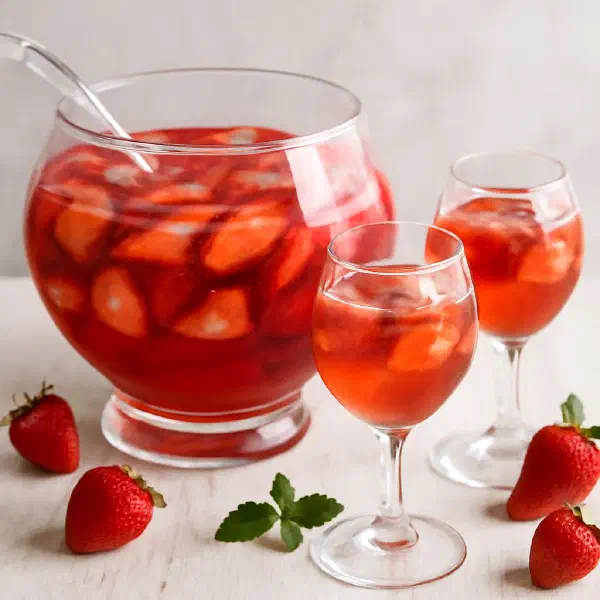
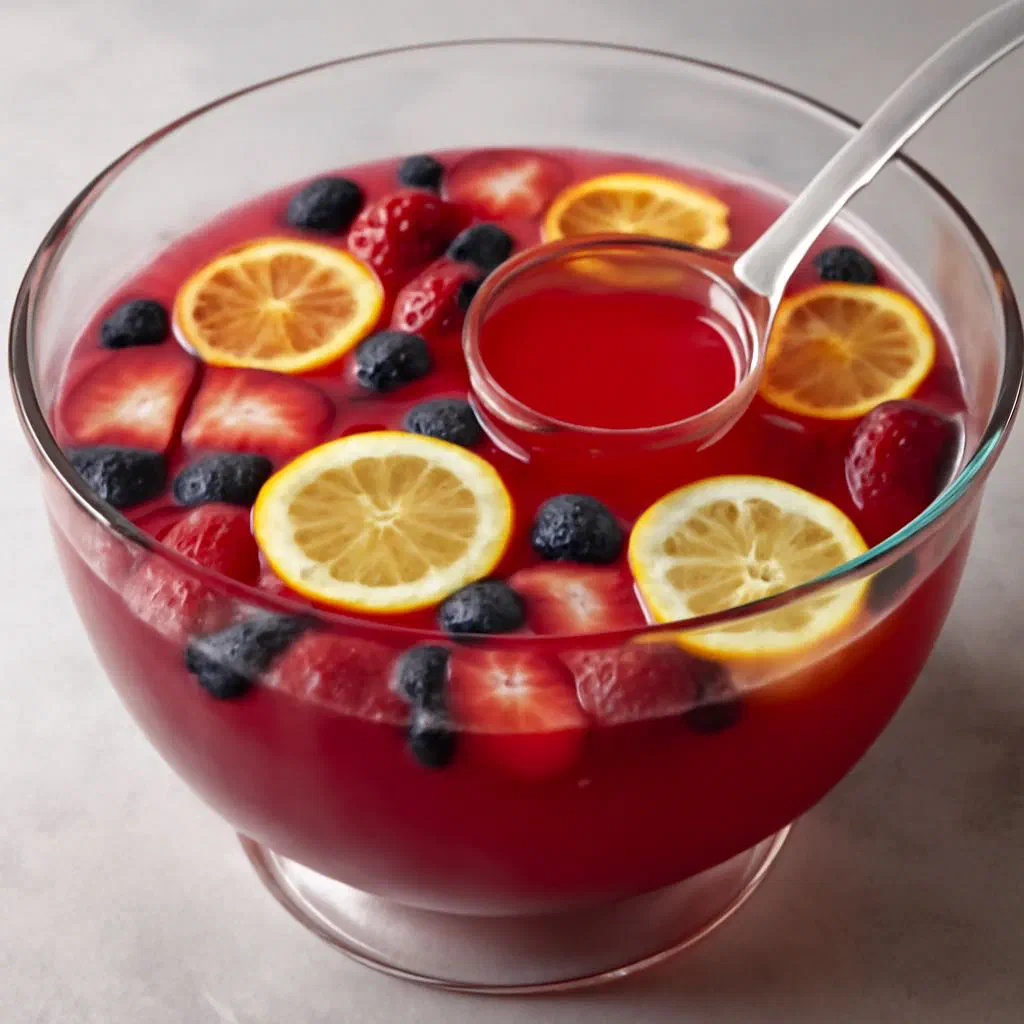
Presentation matters a great deal with fruit punch, because the fruit in the glass is immediately visible and whets the appetite. It is best to use clear glasses or a glass bowl, so the colours of the fruit shine through and the punch looks festive. A few extra fruit slices on the rim of the glass or a little skewer of fruit pieces looks elegant without any extra effort. Ice cubes with frozen berries are also practical, as they chill and decorate at the same time without watering the punch down.
A bit of history
Fruit punch was a popular drink in many households for celebrations, because it could be prepared in advance and served plenty of guests with simple ingredients. In the GDR, the fruit used was often whatever was available, including tinned fruit, apples or citrus, depending on the season and what could be found in the shops. The character was usually uncomplicated: fruity, fizzy and mixed to suit the gathering. It is precisely this flexibility that made punch a classic, one that still turns up gladly at parties and family celebrations today. It sits comfortably among the convivial favourites of German cuisine, much like a warming bowl of Beer Soup.
More recipe ideas
Summary: Fruit Punch
Fruit Punch is an uncomplicated classic that wins you over with fresh or long-life fruit, wine and a fizzy finish from the sparkling wine. With a short infusing time, well-chilled ingredients and the bubbles added late, it stays aromatic and lively. Through simple adjustments you can make it mild, strong, sweeter or drier, and you can also offer alcohol-free alternatives. The result is a drink that suits small gatherings just as well as larger celebrations, where a shared bowl of punch instantly gets the mood going.