National Dish Germany: Goulash (Recipe)
In this article
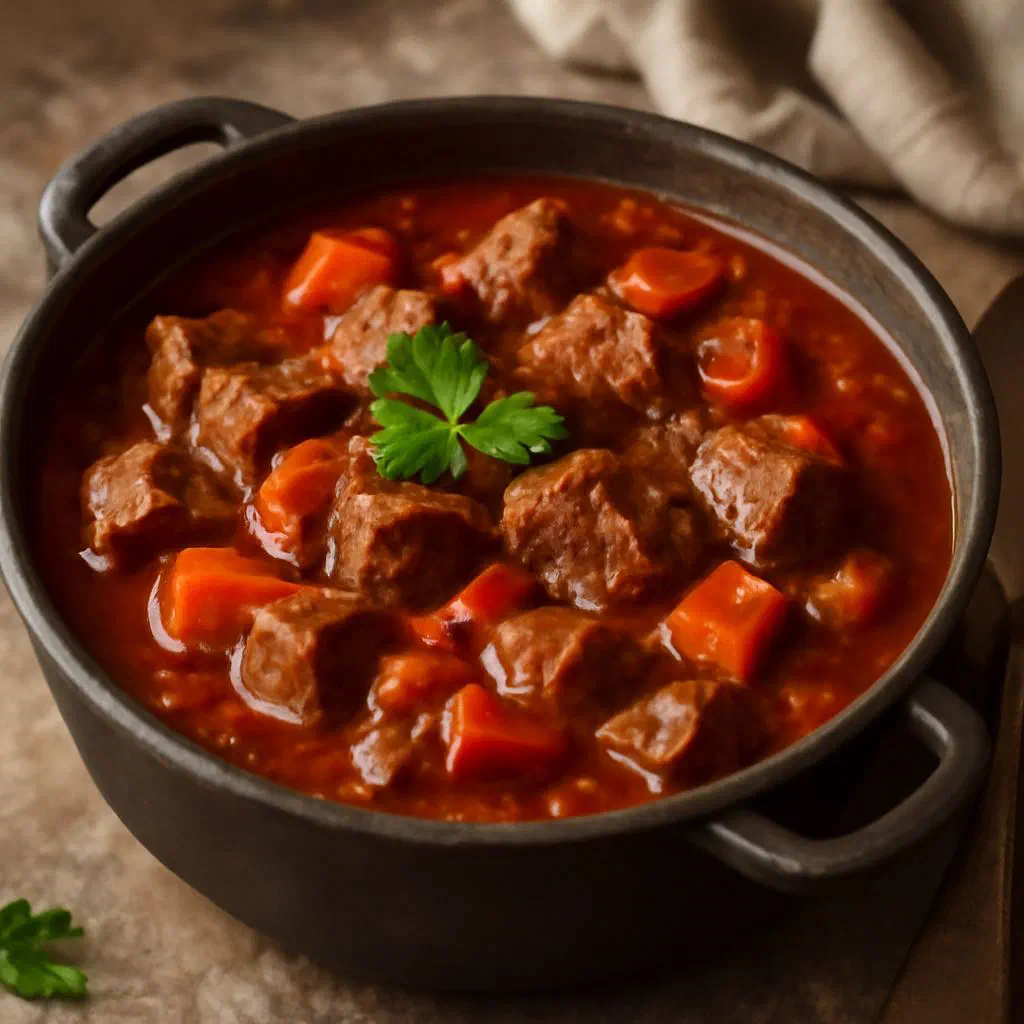
Few dishes capture the spirit of everyday East German cooking quite like a steaming pot of goulash. Built from a handful of humble ingredients, plenty of onions, sweet paprika and a good cut of beef, it slowly transforms over a gentle heat into a rich, satisfying braise. This classic GDR-style recipe was prized in busy households because it could be made ahead and often tasted even better the next day. Hearty, forgiving and endlessly adaptable, it is the kind of comforting meal that warms you from the inside out.
About Goulash
This goulash stands for a style of cooking that turns just a few ingredients into a hearty, everyday braise. The focus falls firmly on onions, paprika and tomato purée, all cooked down into a silky sauce that goes beautifully with sides such as potatoes or pasta. In daily life in the former GDR, goulash was popular because it could be prepared in advance and frequently tasted even better the following day. It is also wonderfully flexible: you can adjust the heat, the consistency and the accompaniments with ease, all without losing the classic character of the dish.
Ingredients (serves 1–2)
- 300–350 g beef goulash (or pork goulash as an alternative)
- 2 large onions (about 200–250 g), finely diced
- 1 clove of garlic, finely chopped (optional)
- 1–2 tablespoons oil or lard
- 1–2 tablespoons tomato purée
- 1–2 teaspoons sweet paprika
- 1/2 teaspoon caraway seeds (optional, but classic)
- 1 teaspoon marjoram (or dried thyme)
- 500–700 ml stock (beef or vegetable)
- 1 bay leaf
- Salt and black pepper
- 1 teaspoon mustard (optional, for depth)
- 1 tablespoon flour or cornflour to thicken (optional)
Shopping for the ingredients
When buying the meat, look for goulash cubes from the shoulder or shin, as these turn tender during braising and release plenty of flavour. If you have the choice, opt for slightly marbled meat, because a little fat gives you rounder, roasted flavours and a better-bound sauce. Onions are no mere supporting act here: for a classic result, be generous with the onions, since they break down during the long cooking and naturally make the sauce silky. With paprika it pays to choose good quality, as it strongly shapes both colour and aroma and should never taste bitter.
Preparing the dish
Cut the onions into a fine dice so they break down evenly during braising and leave no coarse pieces in the sauce. Pat the meat dry, because only dry meat will brown deeply when seared and develop those roasted notes. Have all your spices ready, since paprika burns quickly if added at the wrong moment and can then turn unpleasantly bitter. If you plan to thicken the sauce later, stir the flour or cornflour smooth with a little cold water first so it goes in lump-free.
Step-by-step instructions
- Heat the oil or lard in a pot and sear the meat in batches until it is well browned. Lift the meat out briefly afterwards.
- In the same pot, fry the onions over a medium heat until golden brown. Add the garlic for a moment if using.
- Stir in the tomato purée and let it cook for 1–2 minutes so it becomes milder and more aromatic.
- Pull the pot off the heat briefly, stir in the paprika and immediately deglaze with a splash of stock so the paprika does not burn.
- Return the meat to the pot, pour in the stock, add the bay leaf, caraway and marjoram, then season with salt and pepper.
- Cover and let everything braise gently over a low heat for 60–90 minutes, until the meat is tender. Stir from time to time and top up with stock if needed.
- Finally, taste and adjust the seasoning, stir in the mustard if using, and thicken the sauce lightly if you like: stir in the slaked flour or cornflour and let it simmer quietly for 2–3 minutes.
Gluten-free / lactose-free version
For a gluten-free version, simply leave out the flour and use cornflour instead, or reduce the sauce by simmering it longer with the lid off. Many classic GDR preparations get by without cream anyway, which means the dish can be naturally low in lactose to lactose-free, depending on which side you choose. Do check the label on your stock or mustard, as these can sometimes contain wheat derivatives or milk sugar. As a safe accompaniment, potatoes, rice or gluten-free pasta work well to keep the meal rounded and filling.
Tips for vegans and vegetarians
If you would like to cook the dish vegetarian or vegan, swap the meat for smoked tofu, soya chunks or a mix of mushrooms and lentils, as these bring both flavour and texture. Mushrooms in particular deliver plenty of umami and pair beautifully with paprika and onions, so the sauce never tastes flat. Use vegetable stock and, if needed, add a dash of soy sauce or a small spoonful of mustard for extra depth. The key is to brown the onions thoroughly, since those roasted notes account for a large part of the typical goulash flavour.
More tips and tricks
Goulash benefits enormously from time: a gentle braise over a low heat makes the meat tender and the sauce harmonious. If you rush it, you will end up with tougher pieces, because the collagen only turns to gelatine after a longer cooking time, lending the meat its juiciness. Season in stages rather than only at the start, as salt and pepper behave differently once the sauce has reduced and can otherwise become too dominant. Let the goulash rest for 10 minutes after cooking so the flavours settle and the sauce becomes noticeably silkier.
Adapting the recipe to your taste
If you like it hotter, add some hot paprika or a pinch of chilli, but go carefully so you do not mask the base flavour. For a fruitier note you can use more tomato purée or replace part of the stock with passata, which makes the sauce a little lighter and more tomatoey. If you want it really rich, a finely cut strip of bacon at the start works well, rendering down with the onions and bringing extra depth. The consistency is variable too: more onions give a naturally bound sauce, while more stock makes it lighter and ideal for mopping up. A similar slow-braised richness shines in a Saxon Pot Roast.
Ingredient substitutions
Instead of beef you can use pork goulash, which often turns tender a touch faster and is easier on the budget. If you have no tomato purée, ketchup-style solutions only help up to a point because they are usually sweeter; passata that you reduce a little harder is the better choice. Caraway is classic, but not everyone enjoys it, in that case reach for ground coriander instead, or leave it out and lean more heavily on the marjoram. For a darker, more savoury sauce you can use a small splash of malt beer or a robust stock without the dish losing its familiar character. The same comforting, onion-rich approach underpins a good Onion Steak.
Drink pairing ideas
A robust goulash calls for drinks that either bring freshness or pick up on the roasted flavours. A bitter beer harmonises well with the onions and paprika, while a dry red wine emphasises the savoury depth without tasting sweet. If you would rather stay alcohol-free, sparkling water with lemon or an unsweetened herbal tea make good companions, as they neutralise the palate between mouthfuls. For children, or anyone who prefers something mild, apple spritzer also works nicely, since its gentle acidity balances the sauce pleasantly.
Serving and presentation ideas
Serve the goulash in a warmed bowl so the sauce stays hot for longer and does not cool too quickly. A scattering of chopped parsley adds a splash of colour and a fresh touch without altering the flavour. As a side, boiled potatoes, mashed potato or pasta all do well because they soak up the silky sauce beautifully. If you have guests, set out small dishes of cucumber salad or red cabbage alongside, since a tangy counterpoint makes the dish feel more balanced. Try a bowl of Apple Red Cabbage.
A bit of history
Goulash has its origins in Central Europe and has been adapted over many decades across different regions, giving rise to countless variations. In the GDR it mattered that a dish was filling, easy to prepare ahead and possible to make with ingredients you could usually get hold of in daily life. For that reason many households relied on braised dishes, where onions, spices and time do most of the work. The result is a style of cooking that puts less emphasis on frills and more on bold flavour and practical execution, a thoroughly characterful corner of German cuisine.
More recipe ideas
Summary: Goulash
National Dish Germany: Goulash is an uncomplicated yet aromatic braise that wins you over above all through its onions, paprika and slow cooking. With just a few simple steps you get a silky sauce and tender meat, while you can easily steer the heat and consistency to suit your own taste. Thanks to a few small adjustments, the dish also works gluten-free or in a vegan or vegetarian version, without losing its hearty core idea. If you are after a meal that warms you, fills you up and keeps well, this goulash is a dependable choice.