National Dish Germany: Green Bean Salad (Recipe)
In this article
There is something quietly reassuring about a bowl of green bean salad made the old East German way. Tender beans, a savoury hit of onion and a clear, tangy vinegar-and-oil dressing come together into a dish that feels like proper home cooking. The ingredients could hardly be simpler, which is precisely why the little details matter, the bite of the beans, the balance of acidity and a whisper of sweetness. Whether it joins the evening spread, sits alongside the grill or rounds out a cold buffet, this is a classic that earns its place again and again.
About Green Bean Salad
The Green Bean Salad in the GDR style is an unpretentious, pleasantly seasoned dish that appeared in many households as a quick side or a light meal. Its character comes from tender green beans, a hearty note of onion and a clear vinegar-and-oil dressing that pulls the flavours together. Precisely because the ingredients are so simple, everything hinges on the details, how much bite the beans keep and the right ratio of acidity, salt and sweetness. As supper, as a barbecue companion or as part of a cold buffet, this recipe slots into countless occasions while staying reassuringly traditional.
Ingredients (serves 1–2)
For a really good bean salad, it is worth seeking out fresh or well-drained green beans, since they form the backbone of the flavour. The dressing depends on a clear interplay of vinegar, oil and gentle seasoning so that the beans are never overpowered. Onions lend a savoury depth, while a small pinch of sugar softens the acidity nicely. The quantities below are scaled for 1–2 portions and are easy to multiply.
- 300 g green beans (fresh or from a jar)
- 1 small onion
- 2 tbsp vinegar (e.g. table vinegar or cider vinegar)
- 2 tbsp neutral oil (e.g. rapeseed oil)
- 1 tsp mustard (mild)
- 1 tsp sugar (or to taste)
- 1–2 tbsp water or bean cooking water
- Salt and pepper
- optional: 1 tbsp chopped parsley or dill
Shopping for the ingredients
When shopping, the green beans are the most important component, and here you have two good options: fresh or store-cupboard. Fresh beans should be crisp and free of any limp patches, as that texture carries through into the finished salad. Jarred beans are handy when time is short, but they should be rinsed well so their flavour does not turn too dominant and the dressing does not end up watered down. For the dressing, a mild vinegar is ideal, and a more neutral oil keeps the taste of the beans firmly in the foreground.
Preparing the dish
Good preparation decides whether the salad turns out soggy or pleasingly firm to the bite. Fresh beans are washed, the ends trimmed, and, depending on preference, halved so they are easier to eat. The onion should be chopped as finely as possible so it spreads evenly and you avoid the odd over-sharp mouthful. If you are using herbs, cut them only just before mixing so they stay fragrant.
Step-by-step instructions
- Cook fresh beans in salted water for 8–12 minutes until firm to the bite, then drain and let them steam off briefly. Drain jarred beans well and give them a quick rinse.
- Finely dice the onion and tip it into a bowl.
- For the dressing, whisk together the vinegar, oil, mustard, sugar and water (or cooking water) with salt and pepper.
- Add the beans to the bowl and combine everything thoroughly but gently.
- Optionally fold in the herbs and let the salad rest for at least 15–30 minutes; then taste and adjust the seasoning.
Gluten-free / lactose-free version
This recipe is naturally very well suited to a gluten-free and lactose-free diet, since neither flour-based products nor dairy components are needed. The only thing to watch is the mustard, a quick glance at the label is wise, as some products contain additives that sensitive eaters may prefer to avoid. Vinegar blends and ready-made dressings can occasionally include extras too, which is why a homemade marinade is the safest choice. If you want to be strict about it, use a mustard labelled gluten-free and a neutral oil without added flavourings.
Tips for vegans and vegetarians
The salad is already vegetarian and, in its standard form, vegan too, as long as no animal-based extras creep in. For a more filling plate, you can combine it with boiled potato cubes or white beans without losing its classic character. For extra savouriness, smoked paprika or a hint of caraway lend the dish a hearty depth, much like the warming spices in a Green Bean Stew. With optional additions such as ready-made mustard or pickled items, simply make sure they contain no honey or dairy.
More tips and tricks
A decisive trick is good timing: while the beans are still slightly warm, the vegetable soaks up the dressing especially well and tastes more intense later on. At the same time the beans should not be dripping wet, or the marinade turns thin and the flavour falls flat. For a harmonious balance, it pays to steer the acidity with a small amount of sugar or, alternatively, with mild cider vinegar. If the salad has been in the fridge, let it come back up to temperature briefly before serving so the aromas are not muted.
Adapting the recipe to your taste
You can easily nudge the flavour towards mild or bold without losing the core idea. For a milder version, ease off the vinegar a little and increase the water, or reach for a particularly gentle vinegar. If you prefer it punchier, add a touch more mustard or stir in finely chopped gherkins, which deliver that typically hearty note. The texture is adjustable too: beans cooked for less time stay crunchy, while a longer cook makes them more tender and closer to old-fashioned home cooking.
Ingredient substitutions
If you cannot get hold of fresh beans, jarred beans work very well, provided you rinse them thoroughly and drain them well. Instead of table vinegar you can use cider vinegar, which is a touch fruitier, or white wine vinegar for a finer acidity. As for the oil, rapeseed oil is the classic neutral choice, but a mild sunflower oil is equally suitable and easy to find. If onions do not agree with you, finely sliced chives can be a gentler alternative that still brings freshness, a tip that also suits a crisp Bamberg Potato Salad.
Drink pairing ideas
Drinks that gently echo the light acidity of the dressing pair well with bean salad. Sparkling water or an apple spritzer are very fitting, since they refresh without masking the flavour. For something more traditional, a mild herbal tea (cooled) harmonises nicely with the onion and mustard notes. A pale, not-too-bitter beer can also suit, especially when the salad is served as a side to hearty dishes.
Serving and presentation ideas
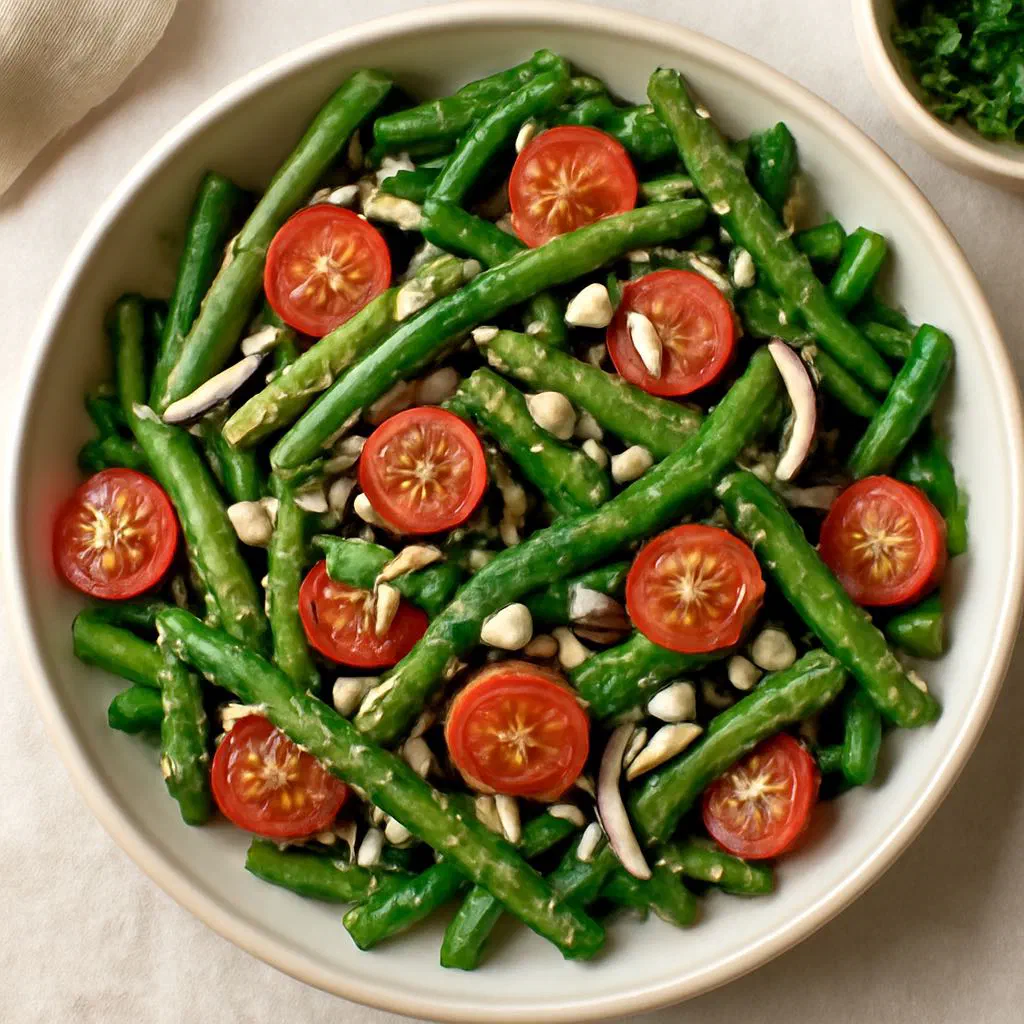
Plated simply, the salad looks most appetising when the beans glisten evenly with the dressing rather than swimming in liquid. You can serve it in a shallow dish and scatter a few fresh herbs over the top so it reads as fresh straight away. Finely sliced onion rings make an attractive topping too, lending visual structure. When you have guests, it is worth giving the salad a final toss just before serving and finishing it with freshly ground pepper.
A bit of history
In many GDR households, simple, seasonal ingredients were the foundation of everyday cooking, and green beans were a frequent fixture. Salads of this kind were popular because they prepare well in advance and work both warm and cold. Recipes could also be flexibly adapted to whatever was available without losing the dish’s character. The clear vinegar-and-oil approach remains typical of many traditional German salads to this day, and of plenty of hearty plates across German cuisine, because it keeps well, comes together fast and tastes reliably good.
More recipe ideas
Summary: Green Bean Salad
The Green Bean Salad in the GDR style wins you over with its simple ingredients, clear seasoning and the ease with which it comes together. The flavour rests on firm-to-the-bite beans, a well-balanced dressing and a little resting time so the aromas can find each other. Small tweaks to the vinegar, mustard or herbs let you tailor the dish to personal taste without sacrificing its classic feel. As a side or a light meal, this salad is an uncomplicated classic that keeps proving its worth in everyday cooking.