National Dish Germany: Holstein Soured Pork (Recipe)
In this article
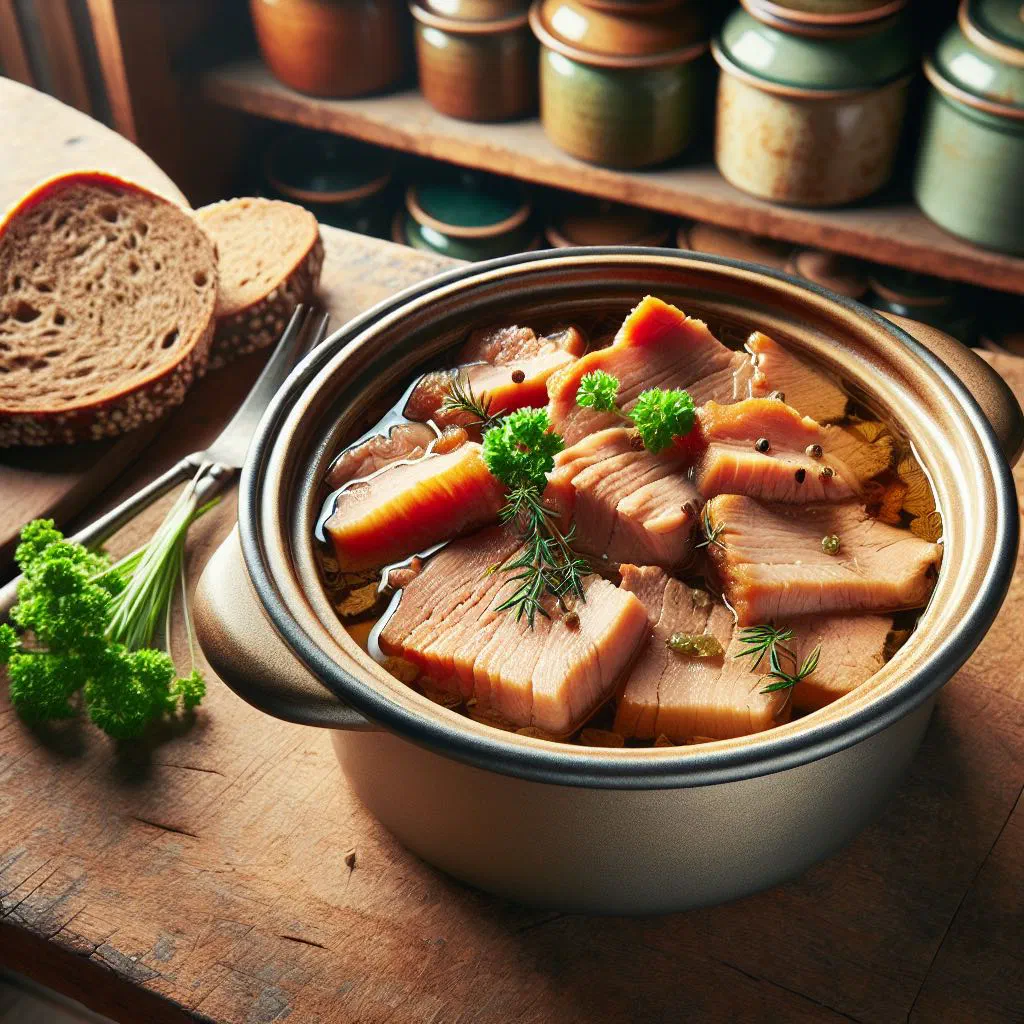
Say hello to Holstein Soured Pork, a true taste of northern Germany with its unmistakable tangy bite. Once a clever way of keeping meat through the colder months, this dish has earned its place at festive tables and family gatherings alike. Tender pork simmered in a fragrant vinegar marinade makes for a memorable plate that is far simpler to prepare than it looks. Bring a little of the cool, salt-air spirit of Schleswig-Holstein straight to your own kitchen.
About Holstein Soured Pork
Holstein Soured Pork is a traditional dish from northern Germany, set apart by its uniquely tart, vinegary note. It began life as a method for preserving meat and has since become a much-loved choice for celebrations and family meals. The combination of tender pork and a well-spiced marinade turns it into something genuinely memorable. In this article you will find everything you need to make this delicious dish at home, from shopping right through to serving.
Ingredients (serves 1–2)
- 500 g pork shoulder or pork neck
- 2 onions
- 4 bay leaves
- 10 peppercorns
- 250 ml white wine vinegar
- 500 ml water
- 2 tablespoons sugar
- Salt to taste
- Fresh dill, to garnish
Shopping for the ingredients
When shopping for the ingredients for Holstein Soured Pork, it pays to choose good-quality meat. Pork shoulder or pork neck work best, as both stay especially tender and juicy through the long simmer. White onions and bay leaves are easy to find in any well-stocked supermarket or at a weekly market. For the white wine vinegar, go for a mild but aromatic one. Bear in mind, too, that fresh dill is what rounds the whole dish off perfectly.
Preparing the dish
Preparing Holstein Soured Pork starts with cutting the meat into bite-sized pieces. Slice the onions into rings, and lightly crush the peppercorns to bring out more of their flavour. The bay leaves give the dish its distinctive character and really should not be left out. Get all your ingredients ready before you begin so the cooking runs smoothly from start to finish.
Step-by-step instructions
- Simmer the pork in a large pan of water for around 30 minutes.
- Add the onions, bay leaves and peppercorns and simmer for a further 30 minutes.
- Pour in the white wine vinegar and sugar and stir well to combine.
- Let everything simmer together for another 10 minutes, until the meat is beautifully tender.
- Allow the dish to cool, transferring the meat to a shallow dish and pouring the stock over the top.
Gluten-free / lactose-free version
Holstein Soured Pork is naturally gluten-free and lactose-free. The only thing to watch is that the spices and vinegar you use contain no hidden gluten. If you want to be completely sure, buy your ingredients fresh from the market or from a shop that specialises in foods for those with intolerances. This makes it an easy dish to share with guests who need to avoid gluten or dairy.
Tips for vegans and vegetarians
Vegans and vegetarians need not miss out on Holstein Soured Pork either. The pork can be swapped for tofu or seitan, both of which can be cooked and marinated in much the same way as the meat. Lentils or chickpeas also make a tasty, protein-rich alternative. Use vegetable stock in place of water to deepen the flavour, much as you would in a hearty Swabian Lentil Stew.
More tips and tricks
A good tip when making Holstein Soured Pork is to prepare it a day ahead. Letting the marinade steep overnight makes it especially aromatic, so keep the dish in the fridge as it rests. Another trick is to give the meat a quick fry after cooking, leaving it crisp on the outside and tender within. It is also worth experimenting with different vinegars to give your version a personal touch.
Adapting the recipe to your taste
The recipe for Holstein Soured Pork is easy to adjust to suit different tastes. Some prefer it a little sweeter and simply add more sugar, while a few juniper berries lend a particularly hearty note. You can vary the herbs too. Try rosemary or thyme for a Mediterranean twist. And if white wine vinegar is not to your liking, apple cider vinegar makes a fine substitute.
Ingredient substitutions
If certain ingredients are not available, or you simply fancy a change, there are tried-and-tested alternatives. Chicken or beef can stand in for the pork, much as they do in a comforting Saxon Pot Roast. For an alcohol-free take on the vinegar, lemon juice works well, and if you are out of sugar, honey or another sweetener will do the job. Experiment a little to find your perfect combination.
Drink pairing ideas
A range of drinks pairs beautifully with a hearty plate of Holstein Soured Pork. Traditionally it is served with a cold pilsner or a dry, bitter beer. Wine lovers might reach for a dry white wine, which complements the vinegar’s acidity rather nicely. A fizzy spritzer or a fruity lemonade makes for a refreshing addition, and a well-chilled mineral water is the ideal choice for anyone keeping it alcohol-free.
Serving and presentation ideas
Thoughtful presentation can lift the whole experience of Holstein Soured Pork. Serve it on an attractive wooden board or a rustic ceramic platter, and garnish with fresh dill and a few slices of lemon for a splash of colour. Pickled gherkins or beetroot make excellent sides that please the eye as much as the palate. A basket of freshly baked bread rounds the arrangement off perfectly.
A bit of history
Holstein Soured Pork carries a long tradition and hails originally from Schleswig-Holstein. Back then it was used above all to keep meat for longer, the tart marinade acting as a natural preservative ideal for stocking the larder. Today it is a popular dish, often served on special occasions. It captures the spirit of Germany’s northern cuisine, which is known for its simple yet deeply flavoursome cooking.
More recipe ideas
- Bremen Labskaus
- North German Pears, Beans and Bacon Stew
- Holstein Turnip Mash
- Holstein Flour Dumpling
- Pears, Beans and Bacon
Summary: Holstein Soured Pork
Holstein Soured Pork is a versatile, full-flavoured dish that adapts readily to all kinds of preferences. With its many possible combinations of ingredients and methods of preparation, it never grows dull. Make it gluten-free, cater to vegetarians or invent your own version, this dish offers plenty of room to play. Give it a go and savour a real piece of northern German cookery.