National Dish Germany: Jägerschnitzel GDR Style (Recipe)
In this article
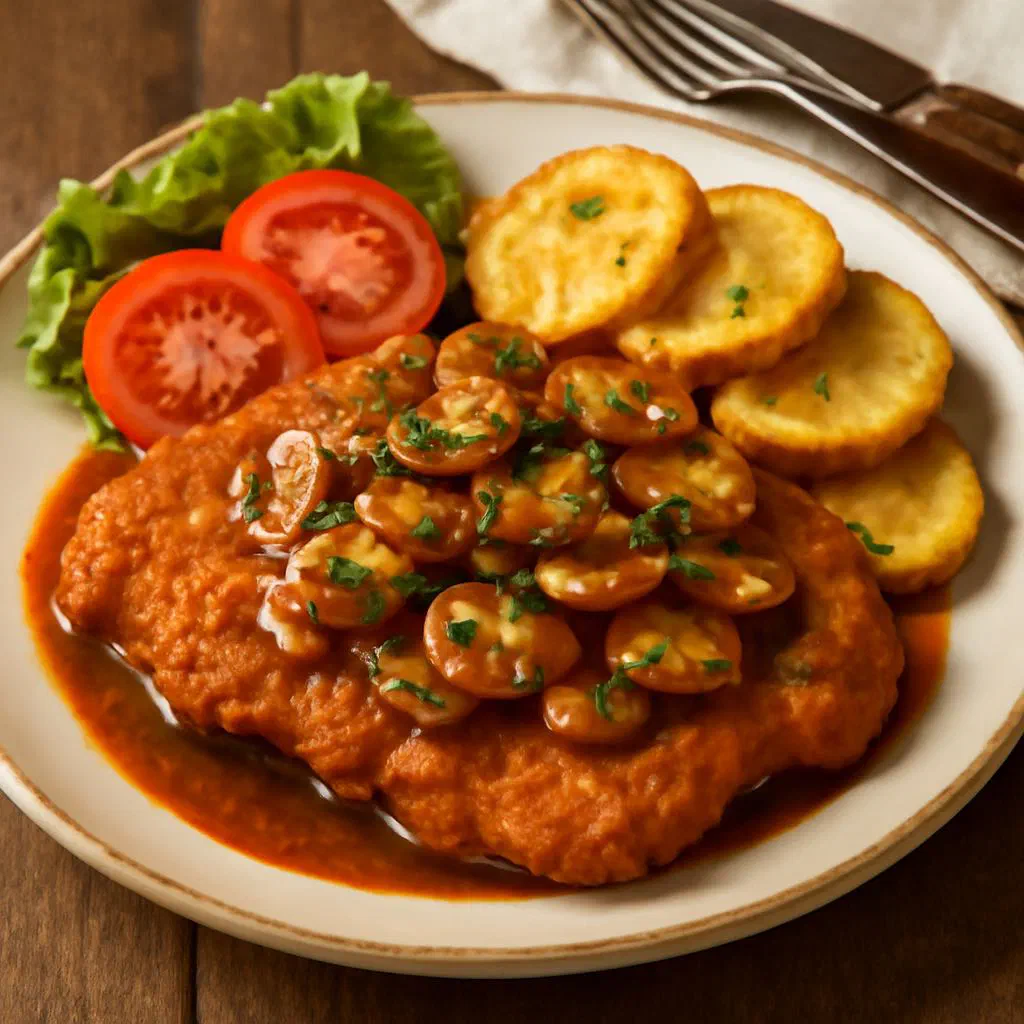
There is a particular kind of comfort that comes from the cooking of the former East Germany, and few dishes embody it quite like this GDR-style Jägerschnitzel. Forget the creamy mushroom sauce of its West German namesake. Here, slices of hunter’s sausage are crumbed, fried until crisp and golden, and bathed in a tangy tomato sauce. Paired with curly spiral pasta that catches every last drop, it is the sort of nostalgic, no-fuss meal that has earned a permanent place at countless family tables. Simple, satisfying and unmistakably retro.
About Jägerschnitzel GDR Style
For many people, Jägerschnitzel GDR style is a genuine slice of everyday East German cooking and remains a much-loved comfort dish to this day. Unlike the West German versions, the classic recipe is built around breaded hunter’s sausage (Jagdwurst), fried until crisp and served with a bright tomato sauce. Especially typical is the pairing with Spirelli or other short pasta shapes, which soak up the sauce beautifully. Anyone who has tried it once quickly understands why this dish still appears regularly on so many family menus.
Ingredients (serves 1–2)
- 4 slices of hunter’s sausage (Jagdwurst, cut roughly 1–1.5 cm thick)
- 2 eggs
- 3–5 tablespoons flour
- 6–8 tablespoons breadcrumbs
- Salt and pepper
- 1–2 teaspoons sweet paprika (optional)
- Oil for frying (rapeseed or sunflower oil, for example)
- 300–400 ml tomato sauce (made from passata, for instance)
- 1 small onion (optional, for the sauce)
- 1 teaspoon sugar, or a pinch (optional, to balance the flavour)
- 1–2 portions of pasta (such as Spirelli) to serve
Shopping for the ingredients
For an authentic result, the choice of hunter’s sausage is crucial, as it shapes the flavour and texture of the whole dish. When shopping, look for a sausage that can be cut into thick slices, so the coating holds well during frying while the inside stays juicy. For the sauce, passata makes an uncomplicated base that you can season to taste, whether you prefer it bolder or milder. If you plan to serve pasta on the side, Spirelli or short tube shapes are particularly well suited, because they soak up the sauce and keep the dish nicely balanced.
Preparing the dish
Before you begin, it is best to set up a small breading station so the preparation runs cleanly and quickly. Line up three shallow plates: one with flour, one with beaten eggs, and one with breadcrumbs. Pat the slices of hunter’s sausage dry so the first layer of flour adheres better and the coating does not slip off later. At the same time, you can already put the water on for the pasta, so the schnitzel, sauce and side come together neatly at the end.
Step-by-step instructions
- Set up the breading station: flour in the first plate, beaten eggs in the second, breadcrumbs in the third.
- Season the slices of hunter’s sausage lightly with salt and pepper (and optionally paprika), so the coating is rounded not only in texture but in flavour too.
- Bread each slice: first turn it in the flour, then draw it through the egg, and finally coat it in breadcrumbs. Press the crumbs on gently so the crust stays firm later.
- Heat plenty of oil in a pan over medium to medium-high heat and fry the breaded slices on both sides until golden brown. Then rest them briefly on kitchen paper so any excess fat can drain away.
- For the tomato sauce, optionally finely dice the onion and sweat it in a little oil until translucent. Add the passata, season with salt, pepper and a pinch of sugar if needed, and let the sauce simmer gently for a few minutes.
- Cook the pasta in salted water until al dente, drain, and serve alongside the schnitzel and tomato sauce.
To make the result truly convincing, the right heat is decisive: if the oil is too hot, the coating darkens quickly before the sausage is warmed through. If it is too cool, the coating soaks up fat and turns out less crisp. You will achieve an even, golden-brown crust if you avoid crowding the slices in the pan and let them fry undisturbed. If you are making several portions, you can keep finished slices warm briefly in a low oven without their going soft.
Gluten-free / lactose-free version
For a gluten-free version, the coating adapts very well without your having to give up that signature crunch. Simply use gluten-free flour or fine cornflour in place of wheat flour, and swap the breadcrumbs for gluten-free crumb or crushed gluten-free cornflakes. As for lactose, the dish is usually straightforward, since neither the coating nor the sauce strictly requires dairy, but check the hunter’s sausage carefully for any additives. If you want to be completely sure, choose a lactose-free sausage or a variety with a short ingredient list, and keep the sauce purely tomato-based without cream.
Tips for vegans and vegetarians
This dish works surprisingly well vegetarian if you replace the hunter’s sausage with vegetarian sausage slices or thick slices of breaded celeriac. For a vegan coating, you can swap the egg for a mix of chickpea flour and water or for plant-based yoghurt, so the crumbs adhere well. It is important to pat the substitute slices thoroughly dry too, otherwise the coating softens more quickly or slips off. In the sauce, you can build depth with smoked paprika or a splash of soy sauce, so a hearty impression comes through even in the plant-based version.
More tips and tricks
If you want a particularly crisp coating, a quick trick pays off: after breading, let the slices rest for 5 minutes so the layers bind better. For more aroma, you can mix the breadcrumbs with dried herbs or a little paprika without losing the classic character. The tomato sauce turns out rounder if it simmers a few minutes longer, as this lets the acidity and seasoning marry more fully. Take care, too, not to leave the sauce too watery, so it clings to the pasta and the dish does not “swim away”.
Adapting the recipe to your taste
You can vary the sauce from mild to spicy according to taste without changing the basic idea. For a fruitier note, chopped tomatoes or a small spoonful of tomato purée, briefly toasted before the liquid goes in, work well. Anyone who likes it spicier can add a pinch of chilli or a little garlic, while fans of milder cooking lean more towards sugar and basil to balance things out. You are flexible with the side too: alongside Spirelli, mashed potatoes or rice work nicely if you fancy a change. This kind of easy adaptability is part of what makes German cuisine such honest, dependable home cooking.
Ingredient substitutions
If you cannot get hunter’s sausage, you can fall back on similar, firm sliceable sausage varieties, as long as they can be cut into thick slices. For the coating, panko or coarse crumbs are an alternative that turns out especially crisp, though the result then looks a little different from the classic. In the sauce, you can replace passata with tomato juice plus tomato purée if you want to control the consistency yourself. If eggs do not suit, a flax egg (ground flaxseed with water) or a thin batter of flour and water as an intermediate layer also works for binding.
Drink pairing ideas
This hearty dish suits drinks that do not overpower the tomato sauce and that complement the coating in flavour. A mild beer or an alcohol-free malt drink harmonises well with the seasoning and the crisp crust. Those who prefer wine are often well served by a fruity, not-too-heavy red wine or a robust rosé, because tomato and gentle acidity play nicely together. For an alcohol-free option, sparkling water with lemon or an unsweetened iced tea makes sense, as they refresh the palate pleasantly between sauce and coating.
Serving and presentation ideas
The dish looks especially appetising when you keep the components clearly separate while still combining them well. Lay the pasta as a base on the plate, spoon the tomato sauce over it, and set the schnitzel slightly offset on top, so the coating stays crisp in the air. A small dab of sauce beside the schnitzel keeps the crust from soaking through completely, and looks tidy at the same time. For an uncomplicated finish, fresh parsley or a few finely diced onions bring colour and freshness.
A bit of history
This dish became established in many households because it delivers a filling result quickly with simple ingredients. Using hunter’s sausage as a “schnitzel” is a creative, practical solution that recreates the typical schnitzel character through breading and frying. The tomato sauce makes the whole thing juicy and pairs ideally with pasta, which makes the dish especially family-friendly. To this day it is best known as a nostalgic classic that reminds many people of canteen meals, family kitchens and uncomplicated home cooking. It sits comfortably alongside other thrifty East German favourites such as the Saxon Potato Soup on the menu of remembered comfort food.
More recipe ideas
Summary: Jägerschnitzel GDR Style
Jägerschnitzel GDR style wins people over with its simple preparation, the crisp bite of the coating and the harmonious combination of tomato sauce and pasta. With just a few basic ingredients, you get a dish that adapts well, through a gluten-free coating or plant-based alternatives, for example. If you mind the right temperature while frying and season the sauce in a balanced way, you will get a rounded result that works just as well on a weeknight as for guests. Served with Spirelli and a nicely glossy sauce, this classic remains a hearty favourite that fills you up and leaves you content.