National Dish Germany: Kasseler Smoked Pork Chops (Recipe)
In this article
There is something deeply comforting about Kasseler smoked pork chops, one of Germany’s most cherished home-cooked classics. The meat is cured and gently smoked, giving it a distinctive savoury depth that fills the kitchen with warmth the moment it hits the pan. Tender, well seasoned and cooked low and slow alongside potatoes and apples, it is the kind of hearty dish that turns an ordinary supper into something special. Bring this slice of traditional German cooking straight to your own table.
About Kasseler Smoked Pork Chops
Kasseler smoked pork chops are a traditional German dish that stands for hearty flavour and cosy comfort. Often served on special occasions, they enjoy enduring popularity across the country. The meat is cured and lightly smoked, which gives it its unmistakable taste and sets it apart from a plain cut of pork. Paired with potatoes and apples, it makes a deeply satisfying main course that feels both rustic and refined. Once you learn the simple method, you can recreate this delicious dish at home with ease.
Ingredients (serves 1–2)
- 400–500 g Kasseler smoked pork chops
- 2–3 large potatoes
- 2–3 tart apples
- 1 onion
- 200 ml meat stock
- Salt and pepper, to taste
- 1 tablespoon mustard
- 1 tablespoon oil
Shopping for the ingredients
To make the best Kasseler smoked pork chops, it is well worth choosing fresh, high-quality ingredients. When buying the meat, look for a cut that is nicely marbled rather than too lean, as this keeps it juicy during cooking. Local butchers often offer the finest quality, and they can advise you on a well-cured, properly smoked piece. Tart apples and floury potatoes round out the shopping list and are easy to find at any market.
Preparing the dish
Peel and cut the potatoes and apples into evenly sized pieces so they cook through at the same rate. Finely chop the onion, and have the meat stock measured out and ready to hand. With everything prepped before you start, the cooking comes together smoothly and at a relaxed pace, much like getting organised before a Saxon Pot Roast.
Step-by-step instructions
- Heat the oil in a pan and brown the Kasseler smoked pork chops on all sides until golden.
- Add the chopped onion and sauté briefly alongside the meat.
- Tip in the potatoes and apples and stir everything together well.
- Pour in the meat stock and add the mustard, stir to combine, then season with salt and pepper.
- Cover the pan and let the dish simmer over medium heat for about 30 minutes, until the meat is tender and the potatoes are soft.
Gluten-free / lactose-free version
Kasseler smoked pork chops are naturally gluten-free, provided that all the spices and other ingredients you use are gluten-free too. Take care to choose a meat stock and mustard free from additives that might contain gluten or lactose. With these simple checks, the dish suits anyone with a gluten or lactose intolerance without losing any of its hearty character.
Tips for vegans and vegetarians
For vegans and vegetarians, a similar dish can be made using smoked tofu or seitan in place of the meat. Swap the pork for one of these alternatives and use vegetable stock instead of meat stock. The remaining ingredients stay exactly the same, so you still enjoy the comforting combination of potatoes, apples and mustard with plenty of smoky flavour.
More tips and tricks
To get the very best from your dish, add fresh herbs such as thyme or rosemary, which lend an extra layer of aroma. It is also worth experimenting with different kinds of mustard to discover new flavour notes, from mild and sweet to sharp and grainy. A gentle simmer rather than a fierce boil keeps the meat beautifully tender right through to the end.
Adapting the recipe to your taste
You can easily adapt this recipe to your personal preferences. Add carrots, for instance, if you would like more vegetables in the pan, or stir through a pinch of chilli if you prefer a spicier finish. Small adjustments like these let you shape the dish to suit your own table, while keeping its traditional German heart intact.
Ingredient substitutions
Instead of regular potatoes, you can use sweet potatoes or parsnips for a slightly different texture and flavour. If mustard is not to your taste, try horseradish in its place for a sharper, more pungent kick. Each of these substitutes shifts the character of the dish a little, but always in a pleasing direction, so feel free to mix and match to what you have to hand.
Drink pairing ideas
A dry wheat beer or a light red wine pairs beautifully with Kasseler smoked pork chops. For non-alcoholic options, apple juice or a tart apple spritzer make ideal companions, echoing and supporting the apple flavour already in the dish. Either way, choose something refreshing that balances the savoury, smoky richness of the meat.
Serving and presentation ideas
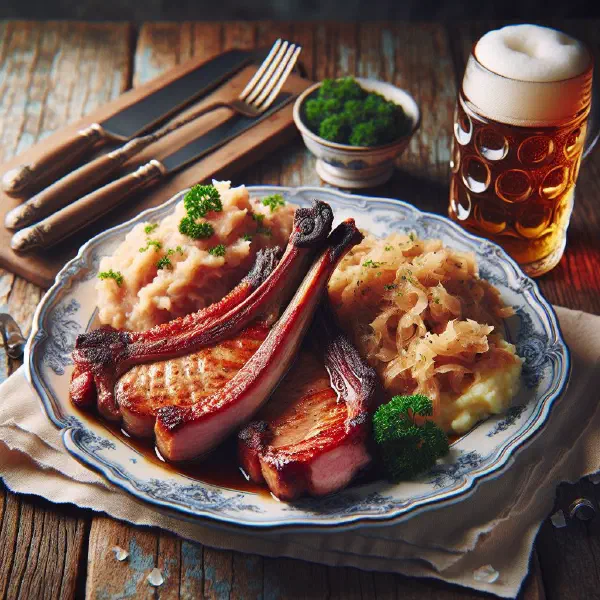
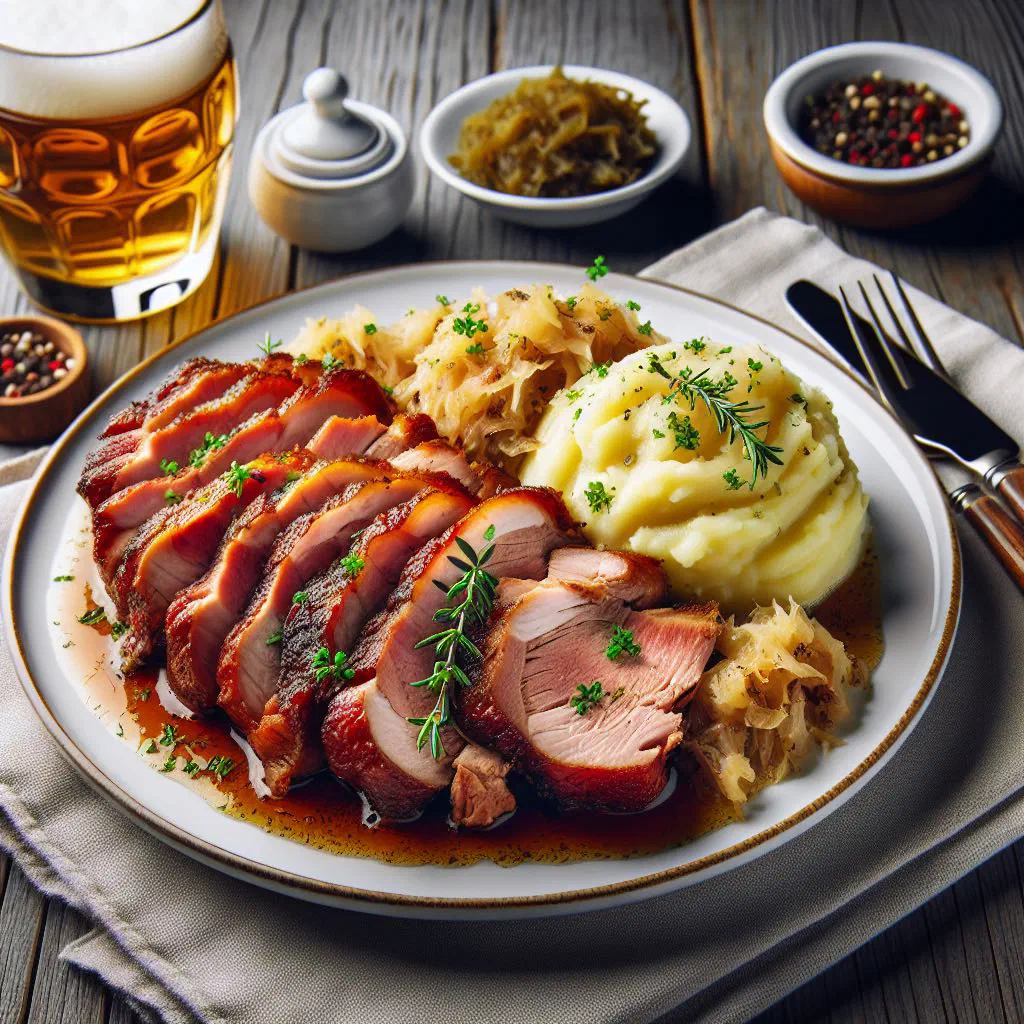
Present the Kasseler smoked pork chops on a large, rustic platter for the best effect. Place the pieces of meat in the centre and arrange the potatoes and apples around them. A scattering of fresh herbs such as parsley or thyme adds the finishing touch. Serving it alongside a bowl of Apple Red Cabbage makes for a colourful, inviting spread.
A bit of history
The word Kasseler is said to come from a Berlin butcher named Cassel, who in the 19th century was the first to cure and smoke pork in this way. The method spread quickly across the country and the result soon became a firm fixture of German cooking. Today it remains a beloved staple, enjoyed in homes and inns alike and standing as a fine example of German cuisine.
More recipe ideas
Summary: Kasseler Smoked Pork Chops
Kasseler smoked pork chops are a hearty, traditional German dish that is easy to prepare at home. With just a few fresh ingredients and a handful of simple tweaks, this recipe can be made to suit almost any taste. It delivers comfort and flavour in equal measure. Give it a try and enjoy a real taste of German home cooking.