National Dish Germany: Kassler (Recipe)
In this article
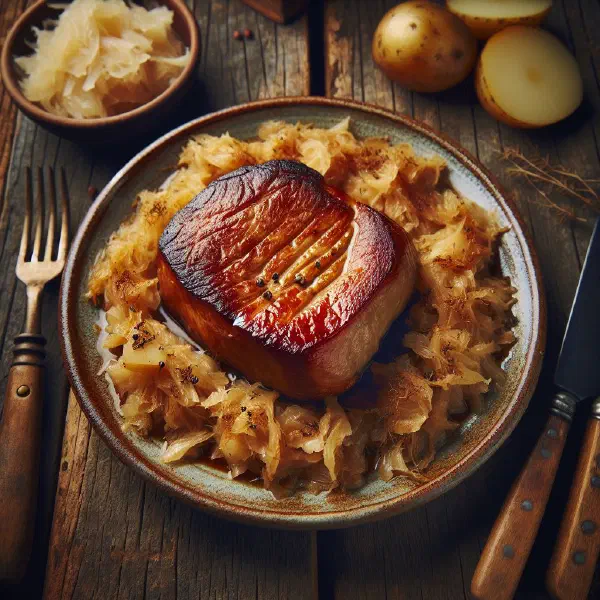
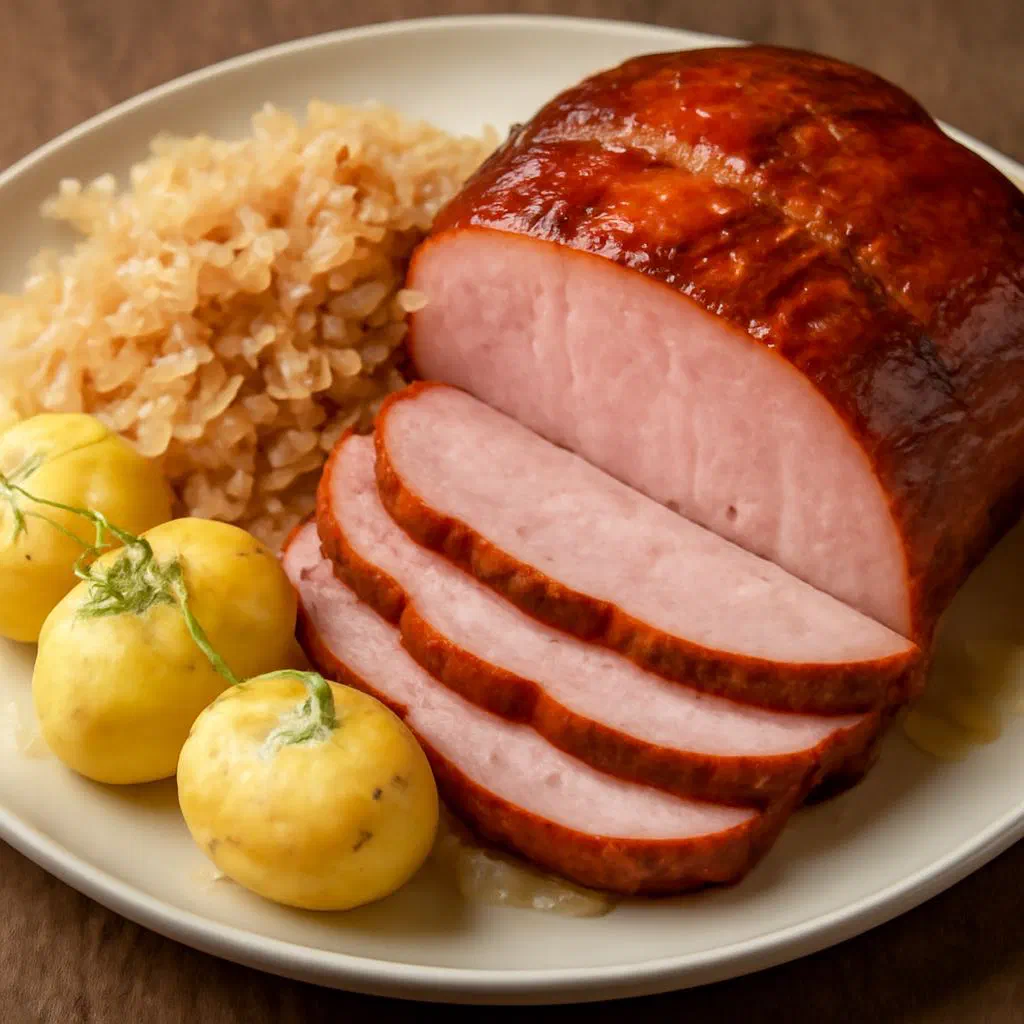
Meet Kassler, the cured, lightly smoked pork that became a beloved everyday classic in countless German kitchens, including across the former GDR. Saltier and more aromatic than fresh pork, it is simmered gently until tender and served with sauerkraut, potatoes and a glossy pan sauce. This is honest, no-fuss comfort food that delivers a deeply savoury, smoky flavour without demanding hours at the stove. If you want a hearty supper that comes together with a handful of pantry staples, this is the dish to reach for.
About Kassler
Kassler is one of the best-known meat dishes in everyday German cooking, and it was a firm favourite in many GDR households too. What sets it apart is the cured, lightly smoked pork, which gives the meat a robust aroma and a juicy texture. It is most often served with sauerkraut, potatoes or a silky sauce, because these sides perfectly balance its savoury, salty character. This recipe follows a down-to-earth approach: straightforward, reliable and ideal when you fancy a hearty meal without much effort, much like a comforting Saxon Pot Roast.
Ingredients (serves 1–2)
- 300–400 g Kassler (neck or chop, according to preference)
- 1 small onion
- 1 tablespoon clarified butter or oil
- 200–300 ml stock (vegetable or meat stock)
- 1 bay leaf
- 3–5 peppercorns
- 1 teaspoon mustard (optional, for extra savour)
- 1 teaspoon honey or sugar (optional, for a gentle balance)
- 1–2 teaspoons cornflour (optional, for thickening)
- Salt only if needed (Kassler is usually salty already)
For a well-rounded result it pays to mind the details, because Kassler is already cured and brings plenty of built-in seasoning. That is why it is wise to check the salt only right at the end, so the dish does not become over-seasoned. The combination of stock, onion and spices delivers a rounded flavour without masking the meat. If you would like a sauce, a little cornflour is helpful, though by no means essential if you prefer to serve a clear broth instead.
Shopping for the ingredients
When shopping, the quality of the meat is decisive: look for evenly marbled Kassler, as it stays juicier during cooking. Kassler is often sold as a neck piece, a chop or a loin, for this recipe, cuts that are not sliced too thinly work especially well. If you want to keep things classic, choose a robust stock and an ordinary yellow onion, since they bring plenty of aroma without any frills. For GDR-style everyday practicality, it is worth picking products you can find in any supermarket, so the recipe stays simple. The same shopping logic serves you well for other hearty mains like a Pfannenschlag Pork Stew.
Preparing the dish
Before you start cooking, pat the Kassler dry briefly so it browns better when seared and does not shed unnecessary liquid. Peel the onion and cut it into fine dice or half rings, depending on whether you want it in the sauce later or prefer to lift it out. Have the bay leaf and peppercorns ready so you can add them at the right moment and let their aromas pass straight into the broth. If you are planning a thickened sauce, mix the cornflour with a little cold water later on so it stays free of lumps.
Step-by-step instructions
- Heat the clarified butter or oil in a pan or a shallow pot and sweat the onions over medium heat until translucent.
- Add the Kassler and sear briefly on both sides until it develops light, golden roasting notes.
- Pour in the stock, add the bay leaf and peppercorns, and bring everything to a gentle boil once.
- Reduce the heat, put on the lid and let the Kassler simmer quietly for 10–20 minutes (depending on thickness); do not boil hard, so it stays juicy.
- Optionally stir in the mustard and a touch of honey or sugar to round off the seasoning.
- For sauce: lift out the Kassler, keep it warm, mix the cornflour and add it to the broth, then boil briefly until you reach the thickness you want.
- Taste: salt is usually needed only minimally or not at all; add a little pepper if you like and serve.
The important thing is not to cook the Kassler to death, because the curing means it is already cooked, or at least cooks through very quickly. A gentle simmer in stock keeps the meat tender and prevents it from drying out. The onion and spices create an aromatic broth that is the base for a simple sauce. If you are planning sides such as potatoes or sauerkraut, you can also use the broth to tie everything together in flavour.
Gluten-free / lactose-free version
In principle, Kassler with stock is often already gluten-free, but you should check the stock’s ingredient list, since some products may contain wheat. If you thicken the sauce, there is no need to replace the usual thickener, as cornflour (maize or potato starch) is generally gluten-free, to be safe, check the packet. For a lactose-free version, simply use neutral oil such as rapeseed oil instead of clarified butter, without any loss of flavour. Keep an eye on the additives in mustard and ready-made stock, too, so the dish remains reliably tolerable for those with intolerances.
Tips for vegans and vegetarians
Even though Kassler is a meat dish, you can recreate the idea beautifully in a vegetarian form by using smoked tofu or a vegan “ham” alternative. The characteristic flavour comes mainly from smoky aroma, onions, stock and spices, so the gentle-simmer method works just as well. Use a robust vegetable stock and optionally add a little smoked paprika to deepen the flavour. The key is to adjust the cooking time, because tofu needs less time and should be warmed through and flavoured rather than simmered at length.
More tips and tricks
A common mistake is boiling too hard: Kassler should simmer quietly, or it quickly turns dry and tastes overly salty. If you want a particularly juicy result, choose a slightly thicker piece and let it rest for 5 minutes after simmering, so the meat juices redistribute. For more aroma, you can sweat the onions a little longer until they turn faintly golden, as this lends a subtle sweetness and more depth. If the broth tastes too strong, a small splash of water or extra stock helps to balance the seasoning more pleasantly.
Adapting the recipe to your taste
If you like it especially savoury, you can work with mustard and a touch more pepper without adding extra saltiness. Anyone who prefers it milder can reduce the spices and lean more on onion aroma and a lightly thickened sauce. You can control the consistency too: with less liquid you get a concentrated broth, with more stock a lighter, soupier version. For a “Sunday” rendition, steamed carrots or peas make a fine vegetable side that you can simmer briefly in the same pot.
Ingredient substitutions
If you have no stock to hand, you can use water as a stopgap and build more flavour with bay leaf, pepper, onion and a little mustard. Shallots also work in place of onions, lending a finer note and softening more quickly. For the thickening, you can swap cornflour for mashed potato (a small piece of crushed potato stirred into the broth) if you fancy something especially rustic. Should Kassler be unavailable, smoked pork chop or a mildly smoked roasting joint in one piece is also an option, though you will then need to reassess the saltiness.
Drink pairing ideas
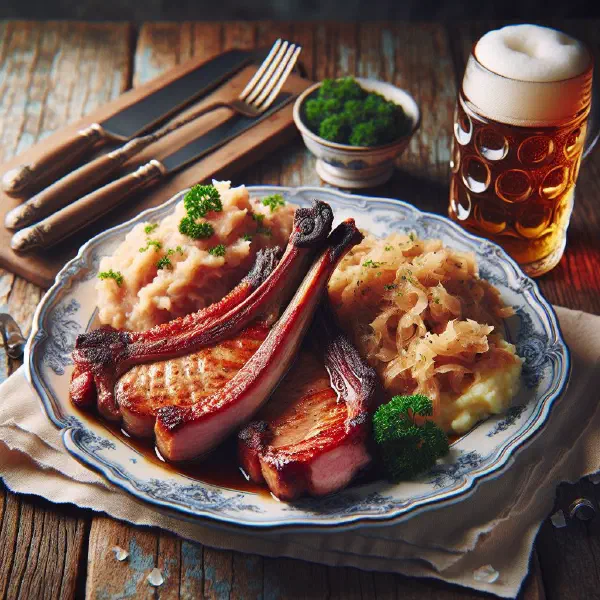
Kassler pairs well with drinks that catch the savoury notes and offset its salty, smoky tone. A very classic choice is a light lager, as its malty character rounds off the flavour without dominating. If you prefer something non-alcoholic, apple spritzer or a tart herbal tea is surprisingly fitting, since the gentle acidity or bitterness refreshes the palate. A dry white wine can work too, especially if you serve the Kassler with sauerkraut, which already brings a tangy component to the plate.
Serving and presentation ideas
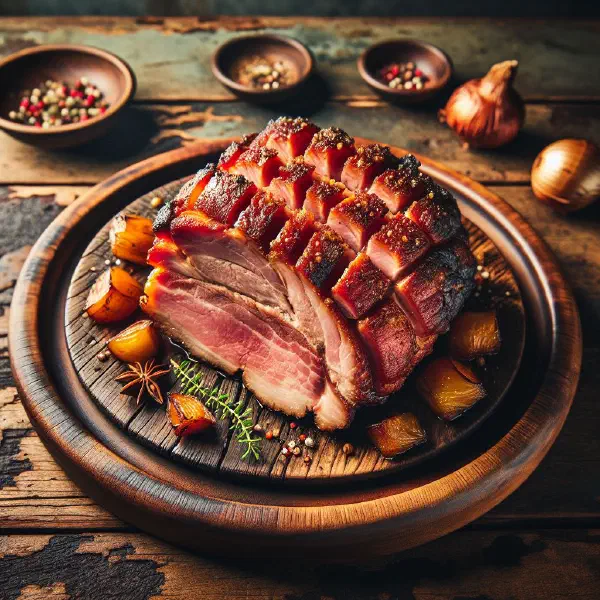
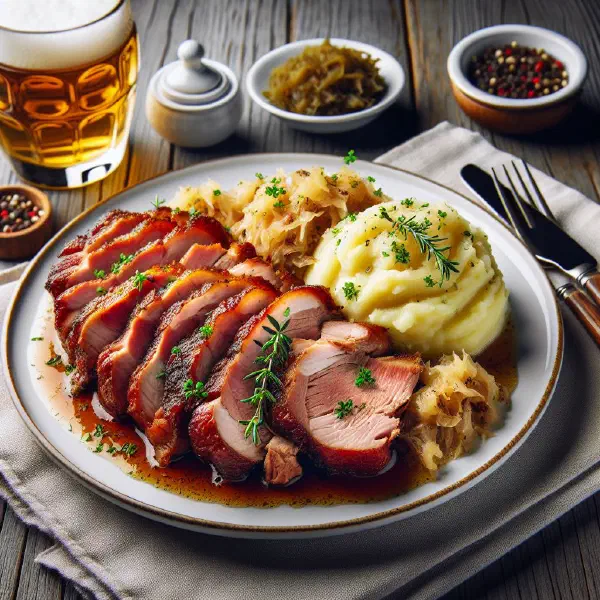
For an attractive presentation, slice the Kassler into even pieces and lay them slightly overlapping on the plate so it looks juicy. A spoonful of sauce or broth over the top adds shine and stops the meat from looking dry. For contrast, sides with texture work well, such as sauerkraut or potatoes, arranged in a clear shape rather than everything mixed together. A little finely chopped parsley or some freshly ground pepper as a topping is all you need to keep the look classic and down-to-earth.
A bit of history
Kassler is a product of the tradition of curing and smoking, methods that made meat keep longer, long before refrigeration was a given. This kind of meat played an important role in everyday cooking, because it reliably delivered flavour and combined well with simple sides. In the GDR, a pragmatic style of cooking was widespread: ingredients had to be available, the preparation predictable and the result filling, and Kassler ticked every box. The pairing with cabbage, potatoes or a broth-based sauce reflects that idea: few components, yet a complete, hearty meal that sits proudly within German cuisine.
More recipe ideas
If you enjoy Kassler, it is well worth playing with the cooking methods, because the meat is hugely versatile. It works especially well in dishes that benefit from a savoury, lightly smoky note, such as stews or pan dishes. Different sides bring variety too, without you having to change the basic principle. That way you can plan several meals around the same core ingredients while still keeping things interesting on the plate.
Summary: Kassler
Kassler is a straightforward, hearty dish that delivers a wonderfully aromatic result from just a few ingredients. The keys are a gentle simmer rather than hard boiling, a suitable stock and mindful seasoning, because Kassler already brings plenty of savour. With small adjustments such as mustard, a hint of sweetness or a thickened sauce, you can fine-tune the flavour exactly to your style. This dish remains a reliable, filling favourite for everyday meals.