National Dish Germany: Königsberger Klopse (Recipe)
In this article
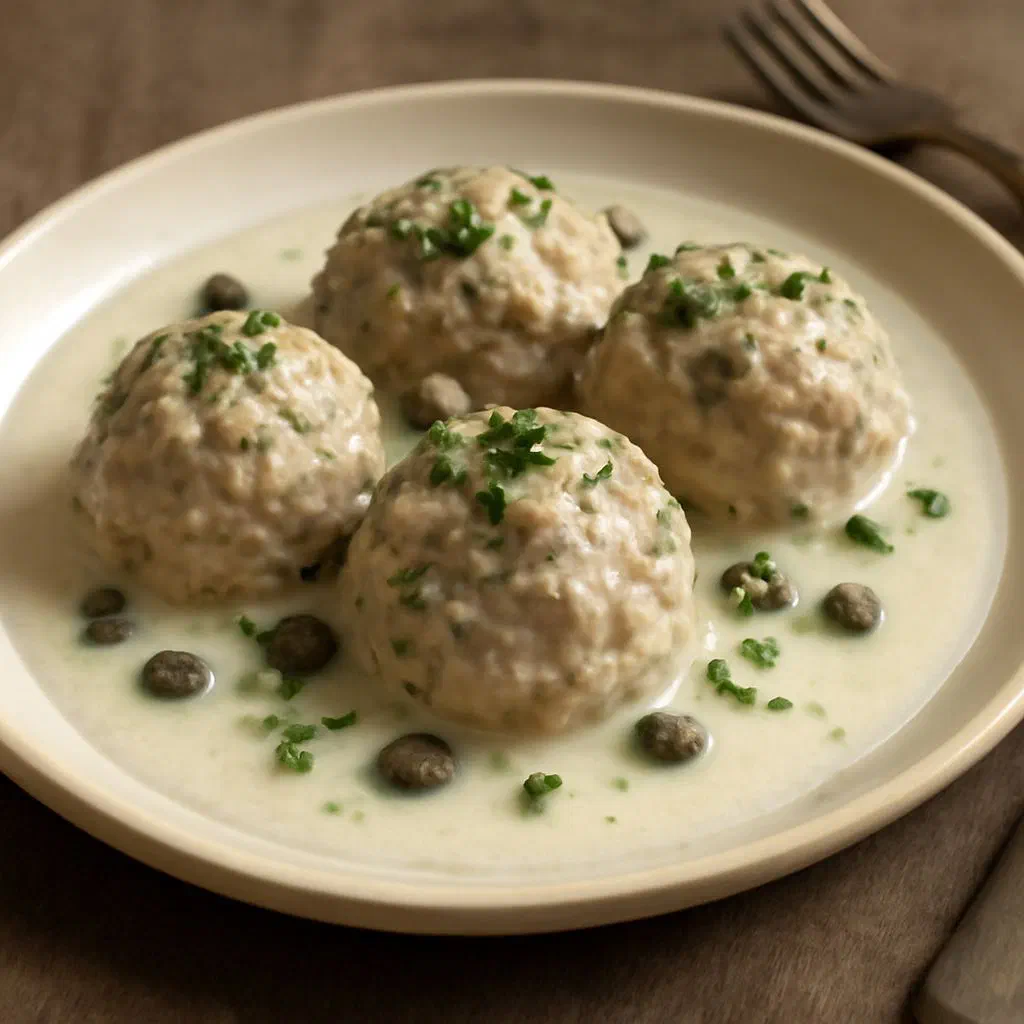
Meet Königsberger Klopse, one of the most cherished classics of German home cooking. Tender meatballs poach gently in a velvety white sauce sharpened with capers and a whisper of lemon, giving the dish its unmistakable mild yet tangy character. The East German kitchen made the recipe its own with simple, dependable ingredients and clear, no-fuss steps, turning out a meal that reliably comforts and satisfies. Served with boiled potatoes to soak up every drop of that creamy sauce, it is hearty fare that earns its place at any family table.
About Königsberger Klopse
Königsberger Klopse rank among the best-known dishes of German home cooking, prized above all for their creamy caper sauce and their tender meatballs. In the former GDR they were often cooked in a more pragmatic style: with readily available ingredients, straightforward steps and a result that dependably fills you up and leaves you content. The dish is defined by its mild, gently sour flavour, achieved through capers and a small splash of lemon or vinegar. Classically they are served with boiled potatoes or mashed potato, so the sauce is properly soaked up, a comforting plate that sits firmly within German Germany cuisine.
Ingredients (serves 1–2)
- 250 g minced meat (mixed or beef)
- 1 small onion, finely diced
- 1 egg
- 1 slice of stale bread roll or 2 tablespoons breadcrumbs
- 80–120 ml milk or water (for soaking)
- Salt, pepper, and optionally a little nutmeg
- 500 ml stock (beef or vegetable)
- 20–25 g butter (or margarine)
- 20–25 g flour
- 2–3 tablespoons capers (plus 1–2 tablespoons caper brine, to taste)
- 80–120 ml cream or milk (for the sauce)
- 1–2 teaspoons lemon juice or 1 teaspoon mild vinegar
Shopping for the ingredients
When shopping, it pays to look out for fresh minced meat, because it makes the meatballs especially juicy and helps them bind better. Capers are a key product here: choose capers in brine if you can, as they deliver a rounded aroma and let you fine-tune the acidity with their brine. For the stock, either home-made stock or a good instant version works well, the only thing that matters is that it is not too salty. If you are using a bread roll, a stale one is ideal, since it absorbs liquid and gives the mixture a light, airy structure.
Preparing the dish
Begin by soaking the bread roll in milk or water so it can later be distributed evenly through the meat mixture. While that softens, finely dice the onion, as small dice combine better and prevent large chunks ending up in the meatballs. Squeeze the soaked roll out well so the mixture does not become too soft and the meatballs hold their shape during cooking. Have the stock, capers and the sauce ingredients ready too, because once the meatballs are shaped, things move along quickly.
Step-by-step instructions
- Put the minced meat, squeezed-out bread roll, onion and egg into a bowl and season with salt, pepper and optionally a little nutmeg.
- Knead everything thoroughly until you have a well-bound mixture; add a tablespoon of breadcrumbs if needed.
- With dampened hands, shape 6–8 small meatballs and let them rest briefly on a plate.
- Heat the stock in a pan, then lower the heat so the liquid is just simmering (not boiling vigorously).
- Slip in the meatballs and let them poach for 12–15 minutes until cooked through; remove and keep warm.
- For the sauce, melt the butter in the pan, stir in the flour and cook for 1 minute without letting it brown.
- Gradually stir in the stock, whisking briskly, until you have a smooth, creamy sauce.
- Add the cream or milk, then stir in the capers and a little caper brine to taste.
- Adjust the seasoning with lemon juice or mild vinegar, return the meatballs to the sauce and let them warm through for 2–3 minutes.
Gluten-free / lactose-free version
For a gluten-free version, simply replace the bread roll with gluten-free breadcrumbs or soaked, gluten-free bread. In the sauce, swap the wheat flour for cornflour (slaked in cold liquid) or a gluten-free flour blend, building up the thickness slowly. The dish becomes lactose-free if you use lactose-free milk and lactose-free cream, or replace the cream with a neutral cooking alternative. The butter can also be exchanged without trouble for lactose-free butter or margarine, without losing the characteristic personality of the caper sauce.
Tips for vegans and vegetarians
A vegetarian version of the meatballs works well with a base of plant-based mince or a mixture of mashed beans and breadcrumbs, which supplies both structure and binding. As an egg substitute, a flax egg (ground flaxseed mixed with water) holds the mixture together and makes shaping easier. The sauce turns vegan if you replace the butter with plant-based margarine and use an unsweetened cooking alternative instead of cream. Careful seasoning with capers, lemon and pepper is essential, so the classic, savoury sauce flavour is preserved.
More tips and tricks
To stop the meatballs falling apart as they cook, keep the stock at a gentle simmer rather than a hard boil, since too much movement in the pan can split their surface. If the mixture seems too soft, breadcrumbs or a short rest in the fridge will help firm it up. For a particularly fine texture, sweat the onions until translucent beforehand. They turn milder and blend in more smoothly. The sauce becomes especially silky if you stir in the liquid gradually and whisk constantly, rather than pouring it all in at once.
Adapting the recipe to your taste
If you like it more robust, you can replace part of the stock with meat fond or work in a little extra pepper and nutmeg. For a milder version, cut back on the capers and use only a little caper brine, so the acidity stays gentle. The consistency of the sauce is easy to control too: more liquid makes it lighter, while a little more roux or a spoonful of cream makes it creamier. Anyone wanting to capture the GDR style most faithfully sticks to simple ingredients and relies on honest flavour rather than a long list of added spices.
Ingredient substitutions
If you have no bread roll to hand, rolled oats (briefly soaked) work as a binder, though they give the meatballs a slightly coarser bite. Instead of mixed mince you can use pure beef for a more intense flavour, or pork, which often turns out especially juicy. Capers are central, but if they really are unavailable, a mix of finely chopped gherkin and a little of its brine can point the dish in a similar sour-savoury direction, the same tangy lift that suits Eggs in Mustard Sauce. Cream can be replaced with milk plus a small knob of butter, in which case go a touch more carefully with the salt when seasoning.
Drink pairing ideas
Königsberger Klopse pair well with drinks that balance out the creamy sauce and the capers. A dry white wine such as Riesling or Silvaner harmonises with the gentle acidity and feels refreshing alongside it. If you would rather stay alcohol-free, sparkling water with a squeeze of lemon or a mild apple spritzer is a good choice, as it lightens the richness. A classic black tea can work nicely too, especially if you are serving the dish in a very traditional way.
Serving and presentation ideas
The meatballs look especially appetising when you arrange them in the sauce and finish with a few whole capers and a little freshly ground pepper. As a side, boiled potatoes cut a fine figure, since they soak up the sauce and keep the plate looking calm and balanced. A small splash of colour, such as chopped parsley or chives, lifts the dish noticeably without altering the flavour. If you have guests, serve the meatballs on a pre-warmed plate so the creamy sauce stays hot for longer.
A bit of history
Königsberger Klopse originally come from the East Prussian kitchen and were adopted and adapted across many regions over the decades. The signature pairing is mild meatballs with a pale sauce that gains its unmistakable note from capers. In the GDR many recipes were cooked to suit everyday life, often with ingredients that were reliably available and techniques that worked even without speciality products. That is precisely why this preparation remains popular to this day: it joins tradition with practical home cooking and succeeds even in a small kitchen, much like other dependable plates such as Saxon Pot Roast.
More recipe ideas
Summary: Königsberger Klopse
Königsberger Klopse in the GDR style are a dependable comfort dish with tender meatballs and a creamy caper sauce that tastes mild and full of character at once. With just a few easily sourced ingredients you get a result that works equally well for everyday meals and for guests. Pay particular attention to the gentle simmering of the meatballs and the gradual whisking of the sauce, and everything will stay intact and pleasingly smooth. With small tweaks for gluten-free, lactose-free or vegetarian eating, the dish also adapts effortlessly to suit your own needs.