National Dish Germany: LPG Cake (Recipe)
In this article
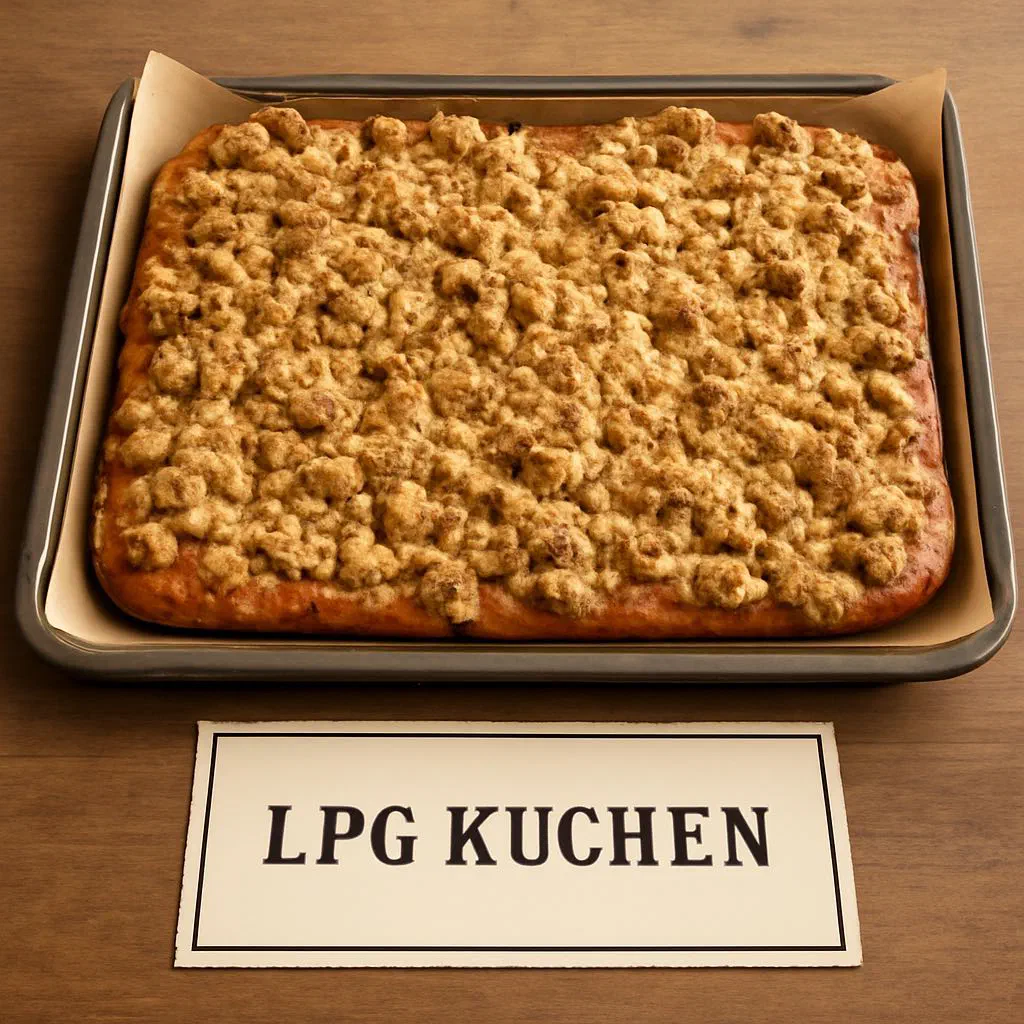
Meet LPG Cake, a humble fruit tray bake that still stirs fond memories in countless households across the former East Germany. Built from a soft sponge, a fruity layer and an optional crunchy crumble topping, it is the sort of unfussy bake that comes together with everyday store-cupboard staples. Forgiving enough for first-time bakers and even better the next day, it is the perfect companion for a leisurely afternoon coffee. Bring a slice of GDR nostalgia straight to your own kitchen.
About LPG Cake
LPG Cake is a classic tray bake that many families from the former GDR still remember as a simple, satisfying cake. It is defined by a light sponge batter, a fruity layer (often from compote or cherries) and a crisp crumble or sugar crust. The recipe is built around readily available basic ingredients, which makes it a reliable success even for novice bakers. Thanks to its uncomplicated nature, the cake is wonderful for coffee gatherings, children’s birthdays or as a keeping cake, since it often tastes even better the following day.
Ingredients (serves 1–2)
- 80 g flour (wheat or spelt)
- 50 g sugar
- 1 egg
- 50 ml milk
- 40 g butter (plus extra for the tin)
- 1 tsp baking powder
- 1 pinch of salt
- 80–120 g fruit of your choice (e.g. cherries, diced apple, plums or drained compote)
- 1/2 tsp vanilla sugar or vanilla extract (optional)
- Crumble, optional: 30 g flour, 20 g sugar, 20 g butter, a pinch of cinnamon
These quantities are deliberately kept small and yield roughly 1–2 portions depending on your tin, making them ideal for a little loaf tin, a mini springform or an ovenproof dish. If you use tinned fruit, draining it well is important so the batter does not turn watery. The cake’s character comes from simple ingredients without any fuss, just as you find in so many GDR baking recipes. The optional crumble gives the cake a rustic, crunchy surface, but it is not essential.
Shopping for the ingredients
When shopping, it pays to stick to everyday quality, since this cake thrives on solid basics rather than exotic specialities. You probably already have flour, sugar, baking powder and salt in the cupboard, while fresh fruit or compote is the flexible element. If you reach for compote, choose varieties without too much syrup so there is less liquid in the batter later and the base does not go soggy. Butter and milk also shape the flavour noticeably, so a good-quality butter makes a real difference, even in small amounts.
Preparing the dish
Preheat the oven in good time to 175–180 °C (top and bottom heat) so the cake can rise evenly. Grease the tin carefully and dust it lightly with flour if needed, so the cake releases cleanly later. The fruit should be prepped: pit the cherries, dice the apples finely, or let compote drain thoroughly in a sieve. If you are planning a crumble, you can knead it in advance and chill it briefly, which makes it especially crumbly and crunchy once baked.
Step-by-step instructions
- Melt the butter and let it cool a little, so the egg does not curdle later.
- Beat the egg and sugar (plus optional vanilla) vigorously in a bowl for 2–3 minutes, until the mixture turns paler.
- Stir in the milk and melted butter, combining everything into a smooth base.
- Mix the flour, baking powder and salt and fold in only briefly, until no dry flour remains.
- Pour the batter into the greased tin and scatter the prepared fruit evenly over the top (press it in lightly, but do not bury it).
- Add the crumble if using and bake the cake in the preheated oven for 20–30 minutes, depending on the depth of the tin.
- Do the skewer test: if it comes out almost clean (a few moist crumbs are fine), the cake is done.
- Let it cool for 10 minutes, then turn it out of the tin and allow it to steam off further before slicing.
It is important not to overmix the batter once the flour and baking powder have gone in, otherwise it can turn tough. The baking time depends heavily on the tin: in a shallow tin the cake is ready sooner, while a small loaf tin tends to need the full time. The combination of sponge and fruit creates a moist texture that pairs especially well with coffee or black tea. If you let the cake rest briefly after baking, the crumb stabilises and it slices more neatly.
Gluten-free / lactose-free version
For a gluten-free version, replace the flour with a gluten-free flour blend for cakes, or with rice flour plus a little starch so the crumb does not turn crumbly. Make sure your baking powder is declared gluten-free, as it can contain traces depending on the manufacturer. The recipe turns lactose-free very easily: use lactose-free milk and lactose-free butter, or a dairy-free margarine. With tinned fruit, it is sensible to check the ingredient list if you are sensitive to additives.
Tips for vegans and vegetarians
The cake is vegetarian as it stands, but it becomes vegan with a few tweaks: the egg can be replaced with apple purée (about 2–3 tbsp) or a flax egg mixture, which also boosts moistness. Swap the milk for a plant-based drink such as oat or soya, and the butter for a plant-based margarine with a good fat content. If you make the crumble, check that the sugar is genuinely vegan, since some varieties are processed with animal-derived agents. Flavour-wise, apple, cinnamon and vanilla suit vegan versions particularly well, as these aromas preserve the classic character.
More tips and tricks
A neat trick for more aroma is a pinch of cinnamon or a little lemon zest in the batter, especially when you use apples. If you work with very juicy fruit, you can toss it first with 1 tsp starch or a little flour, so the juice binds during baking. For a golden surface it helps to pop the crumble under the grill at the very end of the baking time, but do stay by the oven so nothing burns. It also pays to let the cake cool completely, as the flavour then develops more roundly and the fruit holds together better in each piece.
Adapting the recipe to your taste
You can adjust the sweetness very easily by reducing the sugar by 10–20 g, especially if you are using sweet compote. Anyone who likes it especially GDR-typical goes for cherries or plums and tops it with crumble, since that reminds many people of the tray bakes from canteens and family parties. For more bite, you can replace part of the flour with ground nuts, giving the batter a slightly nutty note, a trick that works just as well in a Silesian Streusel Cake. If you serve the cake as a dessert, a dollop of whipped cream or a scoop of vanilla ice cream goes splendidly alongside.
Ingredient substitutions
If there is no butter in the house, neutral oil (such as rapeseed) also works, though the cake then tastes a little less buttery but turns out very moist. Instead of milk you can use buttermilk, which brings a fine tang and makes the batter lighter, provided you do not need to bake lactose-free. With fruit there are few limits to the imagination: berries, apricots, pears or even rhubarb (with a little more sugar) each take it in a different direction, much as the fruit does in a Cherry Cake or a Rhubarb Cake. If you have no baking powder, bicarbonate of soda plus a splash of lemon juice can help in a pinch, although that alters the crumb slightly.
Drink pairing ideas
LPG Cake pairs with classics such as filter coffee or a strong black tea, since they balance the sweetness and bring out the fruity note. If you use cherries or plums, rosehip or fruit tea also harmonises very well, as it rounds off the acidity. For children, milk or cocoa is an obvious companion, especially when the cake is baked on the mild, vanilla-led side. In summer you can serve the cake with a homemade spritzer, apple or blackcurrant for instance, to underline the freshness.
Serving and presentation ideas
The cake looks especially inviting if you dust it lightly with icing sugar once cooled, particularly with dark fruit such as cherries. Served in small portions, a slice on a plate with a dollop of yoghurt or cream makes a café-worthy impression without much effort. If you have guests, you can deliberately arrange the fruit visibly on top so the surface looks fruitily patterned. A simple but effective idea is also to cut the cake into squares and arrange them on a platter, since that recalls the classic tray-bake buffets of German baking.
A bit of history
The name “LPG” recalls the Agricultural Production Cooperatives of the GDR, and many recipes of that era were designed for practicality and good availability. Cakes often had to work with ingredients you could get in everyday life, which is why simple sponge batters and fruit from the garden or the jar were especially popular. In many regions, such tray bakes were baked for celebrations, gatherings or the Sunday coffee, because they are easy to portion and relatively quick to make. Today the LPG Cake is often baked again as a nostalgic GDR recipe, a familiar, homemade taste that sits squarely within German cuisine, because it is uncomplicated and delivers exactly that comforting flavour.
More recipe ideas
Summary: LPG Cake
LPG Cake is an uncomplicated, moist fruit cake that gets by with few ingredients, which makes it especially suited to everyday baking. With the right preparation, a fitting tin and carefully drained fruit, it succeeds even without much baking experience. Through simple tweaks you can bake it gluten-free, lactose-free or vegan without losing its familiar character. Anyone after a quick, classic cake that pairs with coffee, tea or a spritzer will find a recipe here that works time and again.