National Dish Germany: Mashed Potato (Recipe)
In this article
There is something deeply comforting about a bowl of proper mashed potato, and the East German version turns that humble side into a true taste of home. Made with just a handful of honest ingredients, this GDR-style classic was the everyday family supper that stretched a modest budget yet always arrived at the table creamy, fragrant and satisfying. The secret lies in the right floury potatoes, a little warm milk and butter, and the restraint to keep things light and fluffy. Recreate that nostalgic flavour in your own kitchen with this simple, time-honoured recipe.
About Mashed Potato
For many people mashed potato is among the best-loved side dishes in German cuisine, prized for being filling, inexpensive and endlessly versatile. In the former East Germany it was frequently cooked as an everyday family meal that made do with very few ingredients yet still turned out creamy and full of flavour. The hallmark is its plain, honest preparation: floury potatoes, a splash of milk and a little butter, seasoned with salt and a pinch of nutmeg if you like. Anyone chasing the taste of the old days pays particular attention to the right variety of potato and takes care not to “overwork” the mash, so it stays beautifully light.
Ingredients (serves 1–2)
- 500 g floury potatoes
- 80–120 ml milk (depending on the consistency you want)
- 20–30 g butter
- 1/2 tsp salt (or to taste)
- 1 pinch nutmeg (optional, but traditional)
Shopping for the ingredients
For a really good mashed potato, floury potatoes are crucial, because they break down easily after boiling and become especially creamy. When shopping, look for tubers of a similar size so they cook evenly and you do not have to pick out any half-raw pieces. Milk and butter shape the flavour to a great extent, so it is worth choosing a quality of both that tastes good to you. If you use nutmeg, freshly grated is often more intense and rounded than ready-ground powder.
Preparing the dish
Wash the potatoes thoroughly and then peel them, so the mash turns out especially smooth later on with no bits of skin to spoil it. Cut the potatoes into similar-sized pieces, as this shortens the cooking time and helps everything soften at the same rate. Have the milk ready, ideally gently warmed, because cold milk quickly cools the mash down and can make the consistency less harmonious. Also keep the butter, salt and nutmeg within easy reach, so you can work quickly after draining while the potatoes are still hot.
Step-by-step instructions
- Put the potato pieces into a pan, cover with cold water and add salt. Bring to the boil and cook over medium heat for 15–20 minutes, until a knife slides in easily.
- Drain the potatoes and let them steam off briefly in the pan, so excess moisture escapes and the mash does not turn watery later.
- Add the butter to the hot potatoes and roughly crush everything with a potato masher or a ricer. This creates a light base structure without making the mixture sticky.
- Add the warm milk a little at a time, carefully mashing or stirring as you go, until the desired creaminess is reached. Finally, season to taste with salt and nutmeg.
Gluten-free / lactose-free version
By nature, mashed potato is usually gluten-free, as long as no gluten-containing additions such as certain ready-made mixes or seasoned butter varieties are used. For a lactose-free version, simply swap the milk for lactose-free milk or an unsweetened plant-based drink and use lactose-free butter. Make sure the plant-based drink is neutral in flavour, so the classic potato taste stays in the foreground. If you want a particularly creamy consistency, a small splash of lactose-free cream or a suitable plant-based cooking cream can help.
Tips for vegans and vegetarians
For a vegan version, the butter can be replaced very well with plant-based margarine or vegan butter alternatives, which melt similarly while you mash. Instead of cow’s milk, unsweetened varieties such as oat drink or soya drink work nicely, with oat in particular bringing a pleasantly rounded creaminess. It is important to add the liquid slowly, because plant-based drinks bind differently depending on the brand and the mash can otherwise become too soft. Vegetarians can usually take the basic recipe unchanged and round it off, according to taste, with crispy fried onions, herbs or a dollop of soured cream.
More tips and tricks
A classic mistake is beating the mash too hard with a hand mixer, as this can make mashed potato sticky and “gluey”. A masher or potato ricer is better, because it keeps the texture fluffy while still making it fine. If you like your mash particularly aromatic, you can briefly warm the milk beforehand with a bay leaf or half a clove of garlic and then remove them again. A small pinch of nutmeg also adds flavour, underlining the potato note without being overpowering. The same gentle approach pays off with a Potato and Carrot Mash.
Adapting the recipe to your taste
The consistency is very easy to control: more milk gives a creamy, soft mash, while less milk makes it firmer and more able to hold its shape. If you like it especially rich, an extra little knob of butter increases the smoothness and brings more “melt”. Anyone who wants to emphasise the potato flavour more strongly should reduce the milk and instead work in some of the potato cooking water, which contains starch and binds well. Seasonings such as white pepper, chives or marjoram can also change the character without losing the basic recipe.
Ingredient substitutions
If no floury potatoes are available, mainly waxy ones can be used, though the mash will then usually turn out a little lumpier and less fluffy. Instead of butter, you can also use lard if you prefer a heartier taste, although the flavour will be noticeably stronger. Milk can be replaced with stock if you want a more savoury, less milky version, although the classic character then changes perceptibly. For a finer texture, part of the milk can be swapped for cooking cream, as long as you add it slowly. A similar hearty richness shows up in Holstein Turnip Mash.
Drink pairing ideas
Drinks that go with mashed potato are those that do not overpower the food but accompany it pleasantly. A sparkling mineral water is ideal, because it balances the creaminess and keeps the palate neutral. If you prefer something more traditional, you can reach for a mild beer, which goes well with hearty combinations such as bratwurst or meatballs like Meatballs in Tomato Sauce. An unsweetened herbal tea or apple spritzer can also work well, especially when mashed potato is served with vegetables or lighter sides.
Serving and presentation ideas
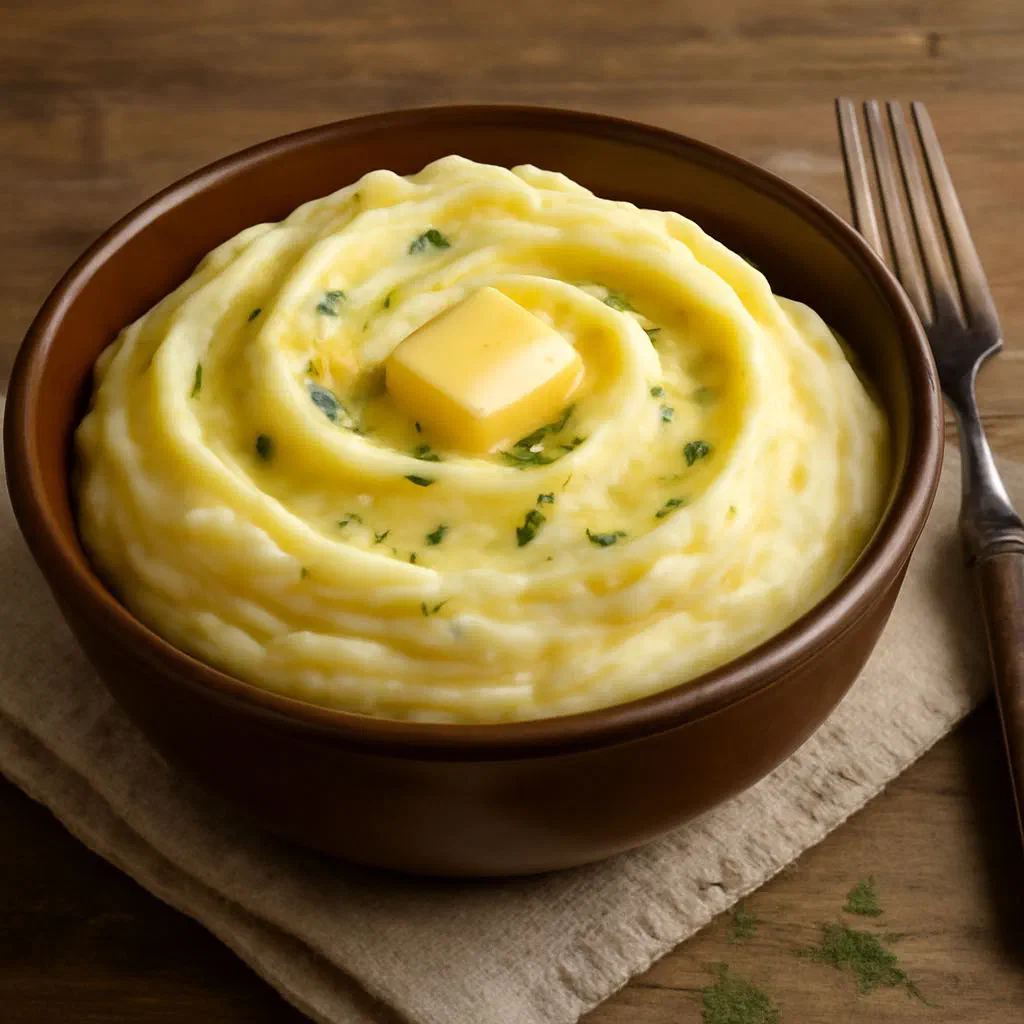
Visually, mashed potato looks especially inviting if you shape it into a gentle wave with a spoon or draw grooves with a fork in which butter can melt. A small knob of butter on top and a little freshly grated nutmeg set clear accents and look classic at the same time. If you use herbs, chives or parsley are well suited, because they bring a fresh contrast in colour and make the dish look more lively. For a harmonious plate, you can use the mash as a base and place a main component on top, so a clear focal point emerges.
A bit of history
Potatoes have long held great importance in Germany, because they are easy to store and reliably fill people up even in simple households. In the former East Germany, mashed potato was a typical everyday dish, as it made do with few ingredients and could quickly adapt to changing availability. It was often used as a side dish for sauces, vegetables or meat dishes, making it a true all-rounder in the kitchen, much like the regional Saxon Potato Soup. The nostalgic flavour comes less from exotic ingredients and more from the right technique and a focus on good basic produce.
More recipe ideas
- Potato and Carrot Mash
- Holstein Turnip Mash
- Saxon Potato Soup
- Potato Pancakes with Apple Sauce
- Meatballs in Tomato Sauce
Summary: Mashed Potato
GDR-style mashed potato wins people over with its simplicity, its creamy consistency and the familiar flavour drawn from just a few ingredients. The keys are floury potatoes, careful mashing rather than mixing, and adding the milk gradually so the texture turns out exactly as you like it. With small adjustments the dish also succeeds lactose-free or vegan, without losing its essential character. That gives you a flexible, inexpensive and always fitting dish that works both as a side and as a base for many combinations.