National Dish Germany: Munich White Sausage (Recipe)
In this article
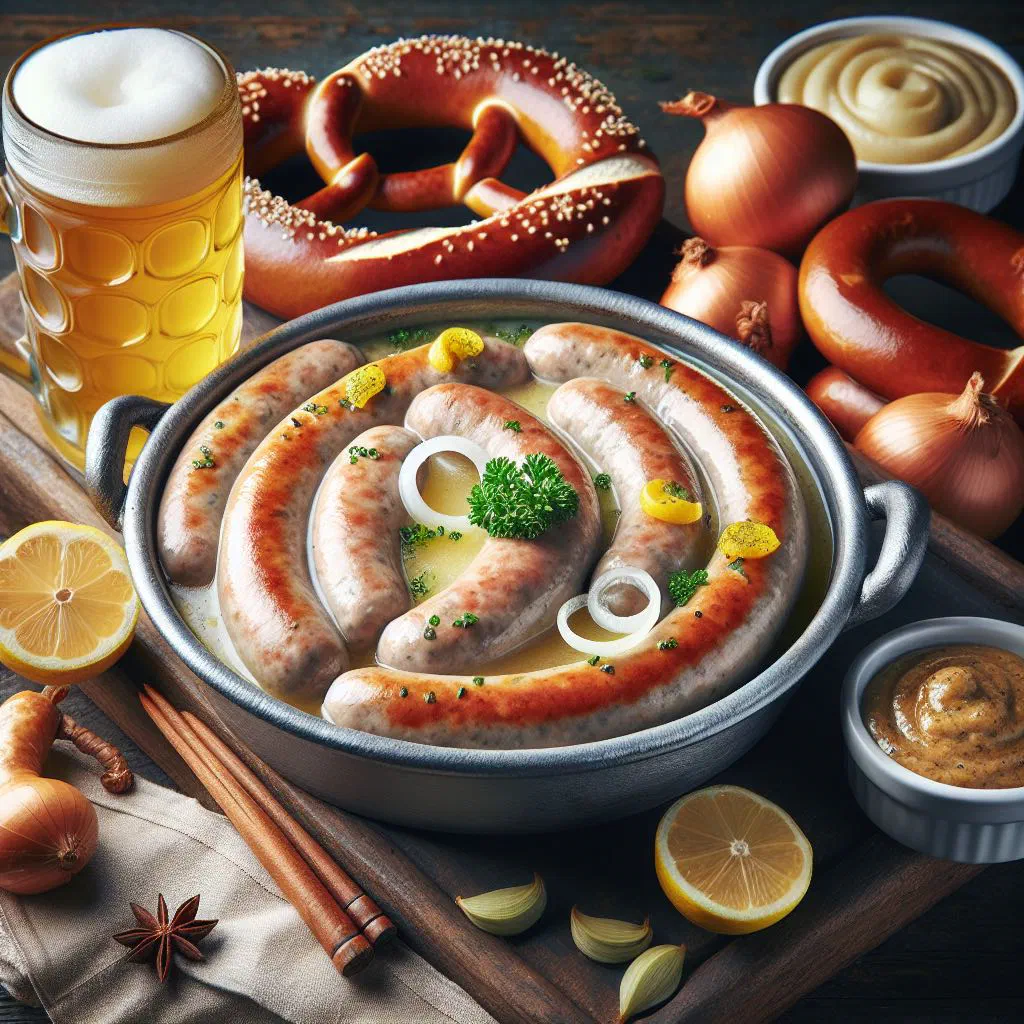
Few things capture the easy charm of Bavaria quite like the Munich White Sausage. These pale, delicate veal sausages, gently flecked with fresh herbs, are a morning ritual cherished by locals and visitors alike. Poached slowly in hot water and served with sweet mustard and freshly baked pretzels, they bring a touch of southern German Gemütlichkeit straight to your table. Roll up your sleeves and recreate this beloved classic in your own kitchen.
About Munich White Sausage
The Munich White Sausage is a true emblem of Bavarian cooking, adored by locals and tourists in equal measure. These tender, pale sausages are made traditionally from veal, pork fat and fresh herbs such as parsley and lemon zest. They are gently poached rather than boiled, which gives them their signature soft, silky texture. Enjoy them warm, served with sweet mustard and freshly baked pretzels, for an authentic taste of Bavaria. This dish sits proudly among the most recognisable classics of German cuisine.
Ingredients (serves 1–2)
- 250g veal
- 100g pork fat
- 1 onion
- 20g fresh parsley
- 2 tablespoons lemon juice
- 40ml iced water
- Salt and pepper, to taste
- Sweet mustard and pretzels, to serve
Shopping for the ingredients
To get the very best from your Munich White Sausage, it pays to shop for fresh ingredients. Visit a local butcher, who may even make their own white sausages in house. Choose good-quality veal and fresh herbs to bring out the finest flavour. The pork fat matters too, as it contributes to both the juiciness and the gentle aroma of the finished sausages.
Preparing the dish
Before you start making the Munich White Sausage, a little careful preparation goes a long way. First, make sure the meat and fat are well chilled, as this is key to achieving the right texture as you work. Finely chop the onion and the parsley, then mix everything together thoroughly. Depending on your taste, you can add a few extra spices to fine-tune the seasoning.
Step-by-step instructions
- Cut the veal and the pork fat into small cubes.
- Combine the meat, fat, onion, parsley, lemon juice and iced water in a bowl and mix well.
- Season the mixture with salt and pepper until it tastes just right.
- Fill the sausage meat into a sausage stuffer and shape into even sausages.
- Poach the sausages for about 20 minutes in gently simmering water.
Gluten-free / lactose-free version
The Munich White Sausage is naturally gluten-free and lactose-free, since its main ingredients are meat, fat and herbs. Even so, double-check that everything you serve alongside is gluten-free, particularly the mustard and pretzels. Use gluten-free pretzels or a suitable alternative to keep the whole plate safe. That way, anyone with an intolerance can still enjoy this Bavarian favourite.
Tips for vegans and vegetarians
While the traditional Munich White Sausage is neither vegan nor vegetarian, adventurous cooks can try a plant-based version. Use a blend of plant protein, vegetables and spices to create a meat-free sausage. Take care to balance the seasoning well so it echoes the flavour of the original. These days there are plenty of recipes built around plant-based products that deliver genuinely convincing results.
More tips and tricks
When it comes to the perfect Munich White Sausage, the cooking time is everything. Make sure the water never comes to a rolling boil, or the sausages may burst. A steamer is a reliable way to cook them through evenly. If you want to keep your sausages for later, you can freeze them, but do so before cooking, to preserve their delicate texture.
Adapting the recipe to your taste
The Munich White Sausage recipe is easy to tailor to your own preferences. Experiment with different herbs, such as thyme or chives, to explore new flavours. You could also vary the meat, trying other cuts or blends for an interesting twist.
Ingredient substitutions
If you do not have some of the traditional ingredients to hand, there are plenty of creative alternatives. In place of veal you might use chicken for a lighter, different flavour. For a leaner result, opt for leaner pork fat. And instead of sweet mustard, a sharper mustard can add an intriguing edge, much like the punchy condiments behind dishes such as Onion Steak.
Drink pairing ideas
A number of drinks pair beautifully with the Munich White Sausage. A cool wheat beer is the classic choice and complements the mild flavour of the sausages perfectly. A crisp apple cider or a simple sparkling mineral water also make excellent companions. For those who prefer to skip the alcohol, flavoured lemonades or herbal teas are a lovely alternative.
Serving and presentation ideas
To present your Munich White Sausage attractively, dress the table with traditional Bavarian touches. Use rustic wooden boards as a base and garnish the sausages with fresh herbs. Serve the white sausages on a handsome plate alongside a little dish of sweet mustard and warm pretzels, much as you would a plate of Franconian Bratwurst. This kind of presentation looks the part and lifts the whole dining experience.
A bit of history
The Munich White Sausage has a long history that reaches back to the 19th century. It was first made in the butchers’ shops of Munich and quickly became hugely popular. By tradition, white sausages in Bavaria are eaten only until midday, which led to the old rule that they should be enjoyed before the noon chimes. This unique food culture is part of Bavarian identity and reflects a deep sense of regional pride.
More recipe ideas
Summary: Munich White Sausage
The Munich White Sausage is more than a delicious speciality; it is a slice of Bavarian culture. Made with light, fresh ingredients, it offers a taste that brings together tradition and a sense of cosy contentment. These sausages invite you to savour the Bavarian way of life. Give our recipe a try and bring a little bit of Munich to your plate.