National Dish Germany: Mustard Eggs (Recipe)
In this article
Few dishes capture the spirit of everyday East German cooking quite like Mustard Eggs. With nothing more than a handful of store-cupboard staples, this homely classic turns hard-boiled eggs and a silky mustard sauce into something genuinely comforting. It is quick, thrifty and endlessly adaptable, mild or punchy depending on your mustard, and easy to tweak for vegetarian, vegan, gluten-free or lactose-free diets. Serve it with potatoes and you have a proper bit of home cooking on the table in minutes.
About Mustard Eggs
Mustard Eggs belong to that special group of dishes that deliver a surprisingly creamy and filling result from very few ingredients. The hallmark is the pairing of hard-boiled eggs with a mustard sauce that tastes gently piquant and goes especially well with potatoes. The recipe was a firm favourite in many East German households because it was affordable, quick to cook and perfectly suited to everyday life. At the same time it is true comfort food, ranging from soft and mellow to bold and fiery depending on the mustard you choose.
Ingredients (serves 1–2)
- 3–4 eggs
- 20 g butter (or margarine)
- 20 g plain flour
- 300 ml milk
- 100 ml vegetable or meat stock
- 2–3 tablespoons mustard (medium-hot, to taste)
- 1 teaspoon sugar (optional, to round things off)
- 1–2 teaspoons lemon juice or a small dash of vinegar
- Salt and pepper
- Optional: fresh parsley
Shopping for the ingredients
When shopping, it pays to look for fresh eggs, as they make a real difference to both texture and aroma. Not all mustard is the same: a medium-hot classic brings that familiar note, while a bold mustard makes the sauce spicier and needs less in the way of extra seasoning. For the stock you can use a homemade batch or a good, not-too-salty version, so the sauce does not end up over-seasoned. If you tolerate dairy well, reach for full-fat milk for extra mouthfeel; lower-fat milk makes a lighter sauce, though a little less velvety.
Preparing the dish
Start by boiling the eggs, as they can cool alongside the sauce and are easier to peel once cooled. For hard-boiled eggs, 9–10 minutes from boiling point is usually ideal, depending on their size. Plunge them straight into cold water afterwards so the shells slip off more easily and the cooking stops. While the eggs cool, measure out the ingredients for the sauce, a steady, unhurried approach is a big help when making a roux.
Step-by-step instructions
- Hard-boil the eggs (9–10 minutes), refresh in cold water, peel and halve or quarter.
- Melt the butter in a pan over medium heat, stir in the flour and cook for 1–2 minutes without letting it brown.
- Gradually pour in the milk, stirring constantly, then stir in the stock.
- Let the sauce simmer gently for 3–5 minutes until smooth and glossy, stirring regularly.
- Season with salt, pepper and, if you like, sugar and lemon juice or vinegar.
- Stir in the mustard, taste and add a little more stock or milk if needed.
- Add the eggs to the sauce and let them warm through for 1–2 minutes only.
- Scatter over a little parsley if you wish and serve straight away.
Gluten-free / lactose-free version
For a gluten-free version, simply swap the wheat flour for a gluten-free flour blend or cornflour. With cornflour, the trick is to stir it smooth in a little cold milk (or plant-based drink) first, then add it to the hot liquid so no lumps form. The dish becomes lactose-free with lactose-free milk and butter, or with a plant-based alternative, oat or soya drink gives a pleasantly creamy texture. Do also check that the mustard and stock contain no hidden gluten or dairy, as additives can sneak into ready-made products.
Tips for vegans and vegetarians
The dish is usually vegetarian anyway, provided you use vegetable stock rather than meat stock. For a vegan version you can replace the eggs with smoked tofu, fried mushrooms or cauliflower florets, all of which sit happily in the mustard sauce. The sauce turns out beautifully vegan with plant-based margarine and a neutral plant drink; a small spoonful of plant cream helps add richness. If you miss that characteristic “eggy” note, a pinch of kala namak (black salt) lends a surprisingly authentic touch, the same clever trick that lifts a plant-based Frankfurt Green Herb Sauce.
More tips and tricks
A really good mustard sauce thrives on the balance between heat, acidity and a touch of sweetness. If the sauce turns too sharp, a little more milk or a knob of butter helps; if it is too mild, add a second mustard for an extra kick. Take care not to let the sauce boil furiously, as it can catch or lose its stability. It is also worth slipping the eggs into the sauce only just before serving, so the yolks do not go grey and the pieces stay looking their best.
Adapting the recipe to your taste
You can easily tailor Mustard Eggs to your own palate by playing with mustard varieties: medium-hot for the classic, Dijon for something bolder, sweet mustard for a milder result. If you like things really savoury, add a pinch of paprika, a little nutmeg or some finely chopped onion gently softened in butter. The consistency is in your hands too: more liquid gives a lighter sauce, a slightly longer simmer makes it thick and creamy. The sides set the tone, potatoes make it hearty, bread keeps it simple, and rice feels surprisingly modern.
Ingredient substitutions
If you would rather not use butter, margarine or a neutral oil work too, though butter delivers that classic rounded flavour. Flour can be replaced with cornflour, and milk swapped for lactose-free milk or plant drinks without the sauce losing its character. At a pinch you can use water instead of stock, but then season more generously, or it will lack depth. For the acidity, lemon juice is pleasantly fresh while vinegar leans into the savoury edge. Both work, depending on how hearty you like it. The same creamy-sauce thinking carries over neatly to Eggs in Mustard Sauce.
Drink pairing ideas
Mustard Eggs go best with drinks that are either pleasantly neutral or balance the spicy sauce. A chilled pilsner or a mild lager works well, as the bitterness contrasts with the creamy sauce. If you prefer something alcohol-free, sparkling water or a light apple spritzer is a good call, as both keep the palate fresh. An unsweetened herbal tea can work too, especially if you make the dish on the lighter, less spicy side.
Serving and presentation ideas
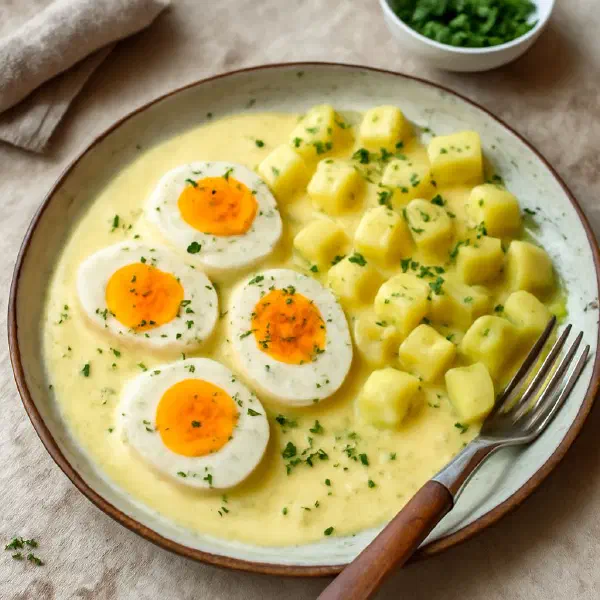
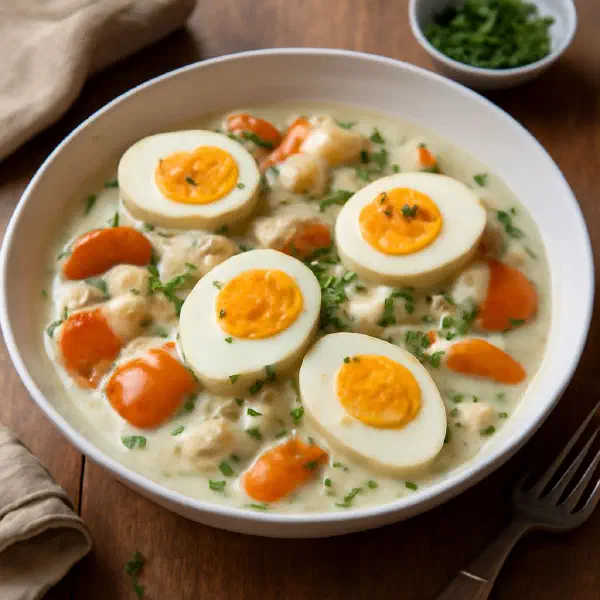
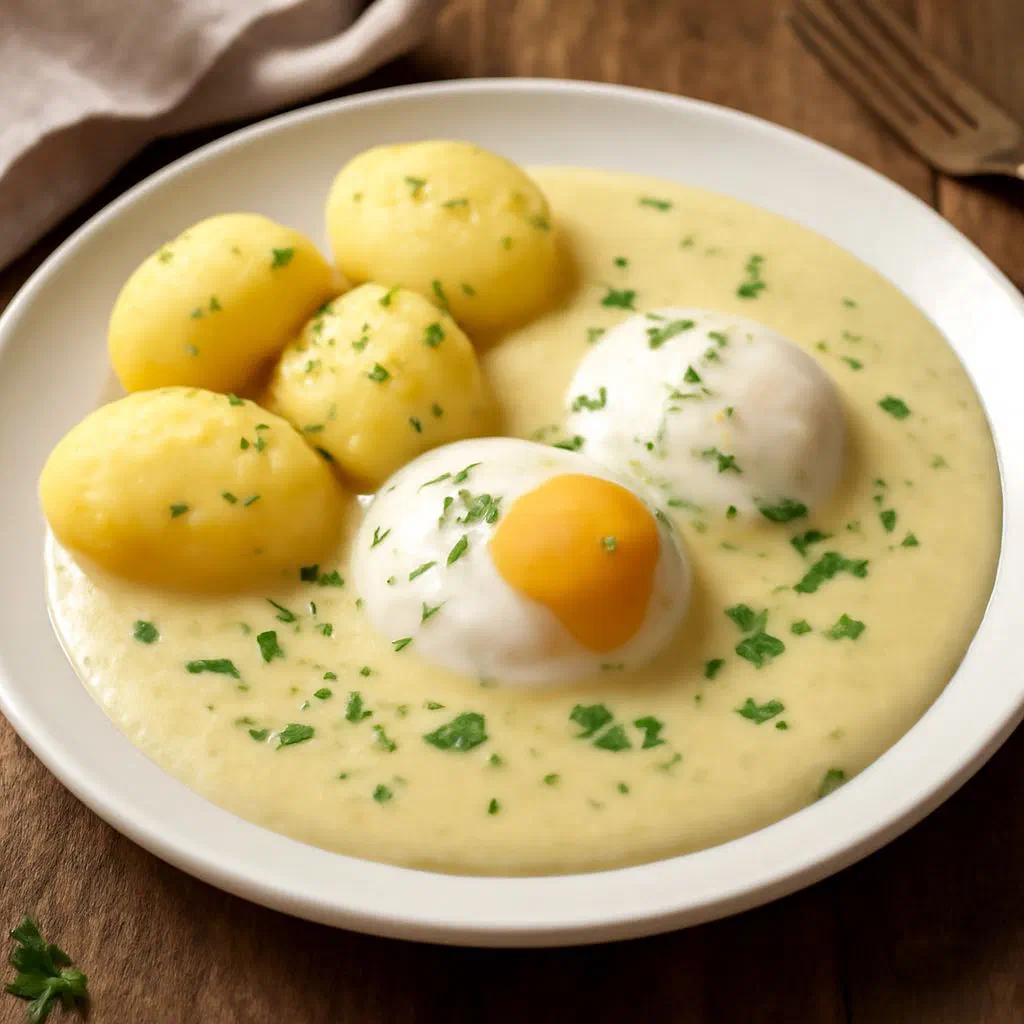
For a pretty plate, it is worth halving the eggs cleanly and setting them cut-side up in the sauce. A little freshly chopped parsley or chives adds instant colour while bringing extra aroma. If you serve potatoes alongside, you can arrange them as small boiled potatoes next to the dish or as a mash in the centre with the sauce poured over. A final twist of pepper and a small dab of mustard at the edge of the plate make the dish look clear and appetising.
A bit of history
Mustard Eggs are a fine example of how simple basic ingredients become a complete, warming meal. In East Germany dishes like this were part of everyday life because they fed plenty of people on a modest budget with little effort. Mustard played a key role, lending flavour and character even when meat was not the centrepiece. To this day many people remember Mustard Eggs as a typical home-style dish that cooks quickly yet still tastes of “proper cooking”, much like the comforting nostalgia of a Saxon Pot Roast or the thrifty appeal of classic German cuisine.
More recipe ideas
Summary: Mustard Eggs
Mustard Eggs are an uncomplicated dish that comes together quickly with hard-boiled eggs and a creamy mustard sauce. With a few simple levers, the type of mustard, the acidity and the consistency of the sauce, you can fine-tune the flavour exactly to taste. Versions without gluten or lactose are easy to manage, too, since the flour and milk are both straightforward to swap. Served with potatoes, bread or rice, you end up with a down-to-earth meal that is simple, affordable and pleasantly tangy.