National Dish Germany: Mustard Sauce (Recipe)
In this article
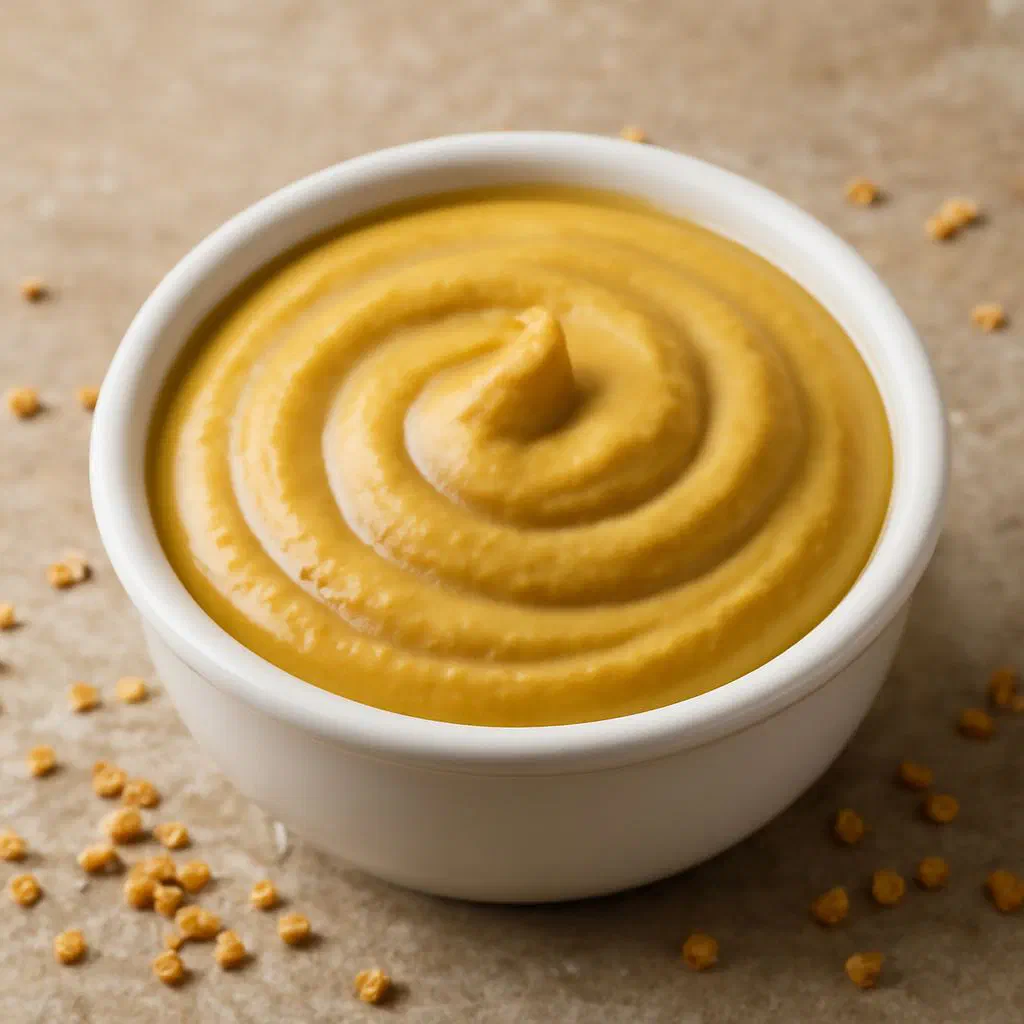
Few dishes capture the comfort of an old-fashioned German midday meal quite like this creamy mustard sauce from the days of the GDR. Built on a simple roux and finished with a generous spoonful of mustard, it turns the most ordinary ingredients into something genuinely satisfying. Spooned over boiled potatoes, halved eggs or gently steamed vegetables, it is the very essence of unfussy home cooking, quick to make, endlessly adaptable and warmly nostalgic.
About Mustard Sauce
The mustard sauce in the classic GDR style is a proper bit of comfort food, the kind many people associate with canteen cooking, family lunches and straightforward home cooking. What makes it so appealing is the balance of a creamy sauce, a pleasant mustard heat and a gentle acidity that keeps the whole thing lively. It is especially loved alongside eggs, potatoes or mild vegetables, because it transforms a handful of plain ingredients into something hearty. Once you have the method down, you have a quick base recipe that can be nudged towards your own taste with very little effort.
Ingredients (serves 1–2)
- 20 g butter (or margarine)
- 20 g flour (plain wheat flour; or a gluten-free blend)
- 250 ml milk (or plant-based drink)
- 1–2 tablespoons medium-hot mustard (to taste)
- 1 teaspoon sugar (optional, rounds out the flavour)
- 1–2 teaspoons vinegar or a squeeze of lemon juice
- Salt and pepper
- Optional: a pinch of nutmeg or a little mustard powder for extra depth
Shopping for the ingredients
For a successful mustard sauce it is worth choosing your mustard according to your own preference: medium-hot mustard gives the classic flavour, while a hotter mustard brings more of a kick. Milk, butter and flour are everyday staples, but quality pays off here because the sauce is so pure that small differences show up quickly. If you want a particularly smooth consistency, reach for fresh milk rather than a heavily sweetened milk drink, as the latter changes the taste. Keep the vinegar mild, a white wine vinegar or a neutral table vinegar, so the acidity never dominates.
Preparing the dish
Before you start, set out all your ingredients, because the sauce cooks in just a few minutes and needs your attention. Measure the mustard, milk and seasonings in advance so you are not hunting for things while you stir and risk the sauce catching. A small whisk is a great help too, as it prevents lumps and quickly creates a creamy bind. If you plan to serve the mustard sauce with eggs and potatoes, it is best to put the potatoes on first so everything is ready at the same time.
Step-by-step instructions
- Melt the butter in a small saucepan over medium heat, taking care not to let it brown.
- Stir in the flour and cook for 1–2 minutes until it smells faintly nutty, stirring constantly.
- Gradually pour in the milk, whisking vigorously so that no lumps form.
- Let the sauce simmer gently for 3–5 minutes until it noticeably thickens; stir now and then so nothing burns.
- Stir in the mustard and season with salt, pepper and, optionally, sugar and nutmeg.
- Finally, balance it out with a little vinegar or lemon juice and warm through once more, but do not let it boil rapidly.
Gluten-free / lactose-free version
For a gluten-free version, replace the flour with a gluten-free flour blend or starch (such as cornflour), bearing in mind that starch binds a touch faster. If you use starch, it is best to mix it into cold milk first and then add it to the hot butter so it does not clump. The sauce becomes lactose-free with lactose-free milk and lactose-free butter or a mild margarine, without losing its characteristic mustard flavour. Do check that your mustard contains no unwanted additives if you are very sensitive, as some varieties include small amounts of milk components or flavourings.
Tips for vegans and vegetarians
The mustard sauce is vegetarian by nature and very easy to put together, since it traditionally needs no meat and pairs especially well with boiled potatoes and eggs. It turns out vegan with a plant-based drink (unsweetened oat or soya) and plant-based margarine, which keeps the sauce just as creamy. The key is to choose an unsweetened drink so the sauce does not turn accidentally sweet and the mustard stays in the foreground. If you want more umami, a tiny amount of nutritional yeast can help without altering the character of the sauce.
More tips and tricks
The quickest way to control the consistency is through the liquid: if the sauce is too thick, add milk a splash at a time and stir well. If it is too thin, let it simmer gently for a few more minutes, as it will thicken further on cooling. For a particularly fine texture it is worth stirring in the mustard only at the end, because too much cooking can weaken the mustard aromas slightly. If lumps do appear, a quick blast with a stick blender or passing the sauce through a sieve will put things right.
Adapting the recipe to your taste
If you like it stronger, combine medium-hot and hotter mustard, or increase the quantity in small steps so the heat does not suddenly take over. For more acidity an extra splash of vinegar works nicely, while a pinch of sugar rounds the sauce out and softens the mustard heat. If you prefer it extra creamy, add a small splash of cream or swap in a higher-fat milk. A hint of nutmeg or a little white pepper can also strengthen the classic flavour without overloading the sauce. This same gentle creaminess works beautifully in a Potato and Carrot Mash.
Ingredient substitutions
Butter can be swapped for margarine without any fuss, which makes the sauce a little lighter and is needed for vegan versions anyway. Instead of wheat flour, spelt flour also works, though the sauce may taste minimally nuttier and bind a touch differently. Vinegar can be exchanged for lemon juice, which brings a fresher note and goes well with potatoes, much as it does on a plate of Potato Pancakes with Apple Sauce. If you only have wholegrain mustard in the house you can use it, but expect the sauce to turn out more rustic and to have more texture.
Drink pairing ideas
A warm, creamy mustard sauce pairs best with drinks that are not too sweet and do not mask the mustard. A light beer or a mild pilsner harmonises well with the savoury note, especially when you serve the sauce with potatoes. If you prefer something non-alcoholic, sparkling water with lemon or a slightly tart apple spritzer is a good match, as it nicely complements the acidity of the sauce. An unsweetened iced tea or a mild herbal tea can also work well if you want to keep things light.
Serving and presentation ideas
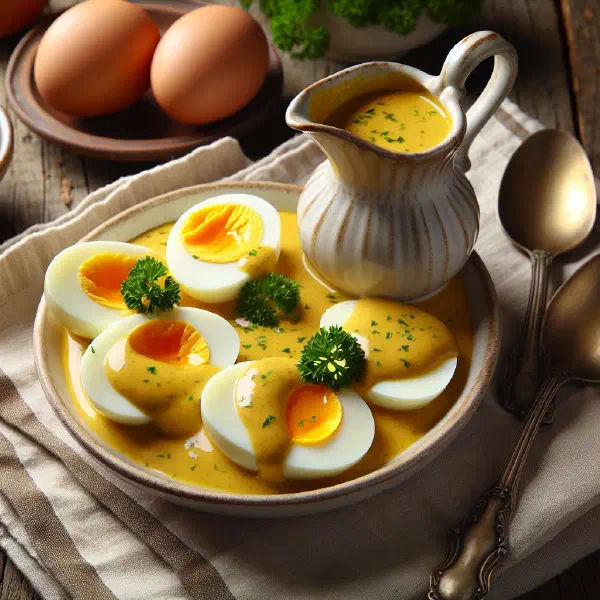
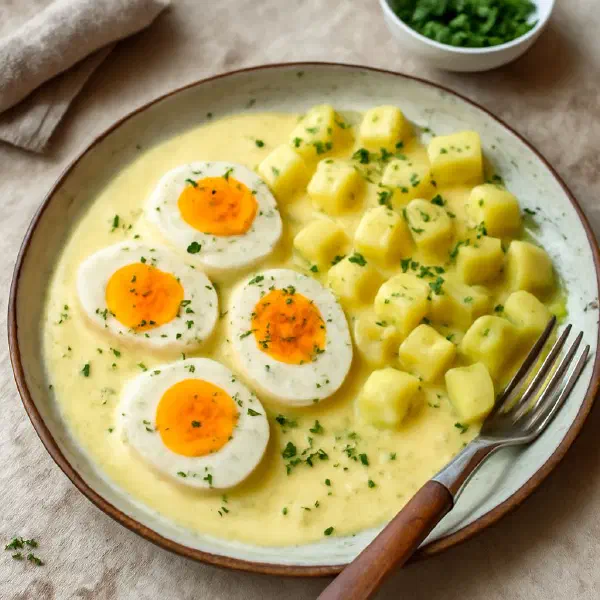
For a lovely look, serve the mustard sauce in a small jug or pour it straight over the potatoes so it spreads easily and glistens appetisingly. A few fresh herbs such as parsley or chives add colour and make the dish feel fresher, without changing the underlying flavour. If you are serving eggs alongside, halved eggs with a spoonful of sauce over the top look particularly classic and immediately signal what defines the plate. Take care not to lay the sauce on too thickly, as an even coating looks more elegant and stops the side dishes from being overwhelmed.
A bit of history
Mustard sauces have a long tradition in everyday German cooking, because mustard is cheap, keeps well and is endlessly versatile. In the GDR, simple, filling sauces built on basic ingredients were especially popular, as they suited families and communal catering. The combination of roux, milk and mustard is a classic principle that turns a few ingredients into a stable, warm sauce, and it sits comfortably within the wider tradition of German cuisine. To this day the dish reminds many people of familiar home cooking that is quick to make yet still delivers plenty of flavour.
More recipe ideas
- Eggs in Mustard Sauce
- Frankfurt Green Herb Sauce
- Potato and Savoy Cabbage Stew
- Holstein Turnip Mash
- Green Bean Stew
Summary: Mustard Sauce
The mustard sauce in the GDR style is a quick, inexpensive and versatile dish that reliably succeeds with just a few ingredients. The key lies in a cleanly stirred roux, the gradual addition of the milk and the final seasoning with mustard and a touch of acidity. With small adjustments you can make it gluten-free, lactose-free or vegan without losing its characteristic charm. Served with potatoes, eggs or vegetables, it delivers exactly the kind of uncomplicated pleasure that so many people treasure in classic German home cooking.