National Dish Germany: Poached Eggs (Recipe)

In this article
Few dishes capture the spirit of homely East German cooking quite like poached eggs in a velvety mustard sauce. Gently set in barely simmering water, the whites turn tender while the yolks stay soft and creamy, ready to spill across the plate at the first cut. With only a handful of everyday ingredients, this old GDR canteen favourite proves that good technique and a well-seasoned sauce matter far more than a long shopping list. It is honest, comforting fare that still brings a touch of nostalgia to the table.
About Poached Eggs
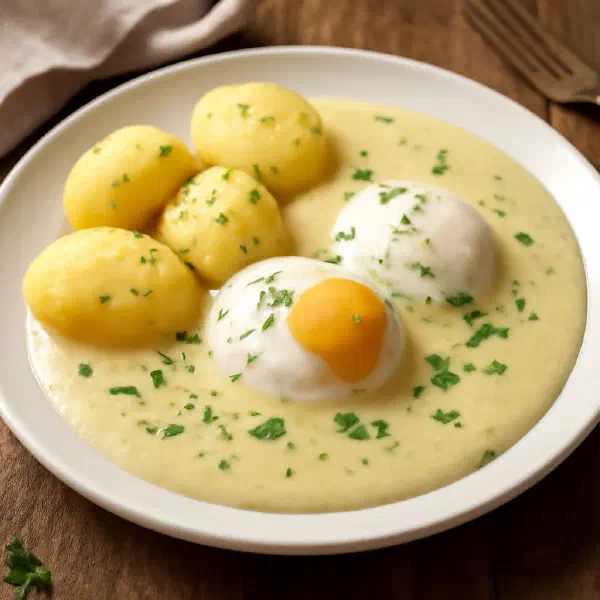
Poached eggs, known in German as verlorene Eier (literally “lost eggs”), are a classic, down-to-earth dish that many associate with GDR cooking and traditional canteen fare. The eggs are gently cooked in hot water without their shells and then usually served with a creamy mustard sauce. The result is simple yet refined: a delicately set white surrounding a soft, creamy yolk that runs invitingly when sliced. Precisely because the ingredients are so few, success comes down to clean technique, careful timing and a well-balanced sauce.
Ingredients (serves 1–2)
- 2–3 fresh eggs
- 1 tablespoon vinegar (for the poaching water — optional but helpful)
- Salt and pepper
- 20–30 g butter
- 1 tablespoon flour
- 250 ml milk
- 1–2 teaspoons medium-hot mustard (to taste)
- 1 pinch of sugar (optional, to round off the flavour)
- A side of your choice: boiled potatoes, mashed potato or bread
- Optional: chopped parsley or chives
Shopping for the ingredients
When shopping it pays to focus on freshness and quality, since this dish uses so few ingredients and is less forgiving than most. Look for eggs with the most recent lay date possible, or pick up farm-shop eggs, as these usually give the best results when poaching. With the mustard you can choose between medium-hot and hot, but the key is a clear mustard flavour so the sauce does not taste flat. For a particularly traditional touch, choose waxy potatoes as your side. They slice cleanly and hold their shape under the sauce.
Preparing the dish
A little groundwork takes the stress out of poaching, as the eggs need only a few minutes and are best served straight away. First, set a pan of water on the hob and keep a bowl of cold water to hand in case you want to refresh the eggs briefly or park them while you finish. For the sauce it helps to measure out all your ingredients so you can stir the roux together smoothly. If you are cooking potatoes alongside, start those first, as they take considerably longer than the eggs and the sauce.
Step-by-step instructions
- Peel the potatoes (if using), boil in salted water until tender and keep warm.
- For the sauce, melt the butter in a pan over medium heat, stir in the flour and cook for 1–2 minutes without letting it brown.
- Gradually whisk in the milk, stirring vigorously until you have a smooth, silky sauce. Let it simmer gently for 5 minutes.
- Stir in the mustard and season with salt, pepper and, if you like, a pinch of sugar. Keep warm but do not let it boil hard.
- For the eggs, heat water in a pan until it is barely moving (no vigorous bubbling). Add the vinegar if using.
- Crack each egg into a cup, then carefully slide it into the water. Poach for 3–4 minutes, until the white has set but the yolk is still soft.
- Lift the eggs out with a slotted spoon, drain briefly and serve at once with the mustard sauce and your chosen side. Scatter with herbs if you wish.
Gluten-free / lactose-free version
For a gluten-free version, the flour in the sauce is easily swapped without losing any creaminess. Use cornflour or a gluten-free flour blend and stir it in lump-free, ideally mixed first with a little cold liquid. To make the dish lactose-free, use lactose-free milk and lactose-free butter; the mustard sauce stays very close to the original in taste. Take care to heat the sauce only gently, as substitute products sometimes split more readily if cooked too hard.
Tips for vegans and vegetarians
Vegetarians can enjoy the recipe just as it is, since it contains no meat and is satisfying thanks to the eggs and sauce. For a vegan interpretation, replace the eggs with a plant-based alternative, such as tofu (gently fried or steamed) or a slice of celeriac cooked as a “steak” to carry the sauce. The mustard sauce works well made vegan with plant margarine and an oat or soya drink; it is worth choosing unsweetened versions. When seasoning, you can add depth with nutritional yeast so the sauce stays full-bodied.
More tips and tricks
To get nicely compact poached eggs, the eggs should be as cold and fresh as possible, and the water should only just simmer. A common problem is straggly egg white; this improves markedly if you first pass the egg through a fine sieve to let the thin, watery white drain off. Constant stirring is important for the sauce, especially as you add the milk, so it stays smooth and creamy. If you poach the eggs just before serving while the sauce is already finished, you get the best combination of warm egg and fresh mustard sauce.
Adapting the recipe to your taste
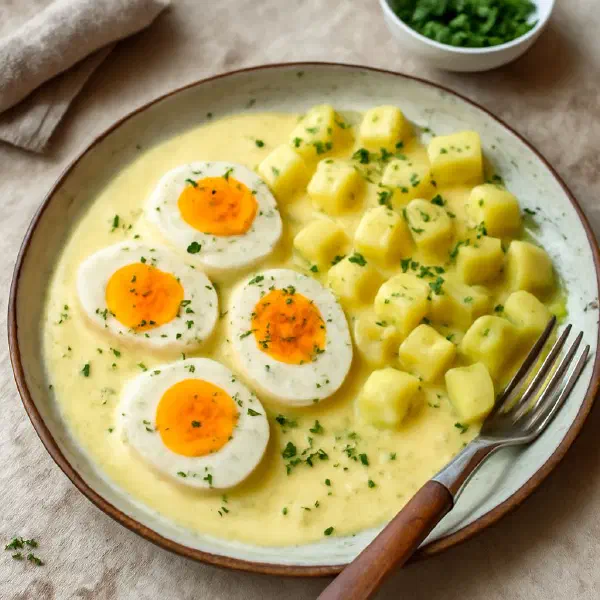
You can easily tailor this dish to your own palate without losing its characteristic charm. If you like it bolder, use a sharper mustard or add a knife-tip of horseradish to give the sauce more bite. For a milder version, a small splash of cream or a gentler mustard rounds off the spice. Herbs are another simple lever: chives taste fresh, parsley feels classic, and dill lends a special note. It sits comfortably alongside other German comfort classics such as Eggs in Mustard Sauce.
Ingredient substitutions
If you would rather not use milk, unsweetened plant drinks work well, with oat turning especially creamy and soya binding reliably. Butter can be replaced with margarine, though a product with a higher fat content tastes closer to the original. If you want to avoid flour, you can also bind the sauce with starch alone, but a short cooking time is then essential so the starchy taste disappears. Instead of potatoes, rice or toasted bread also work, as both soak up the sauce well and keep the dish fuss-free.
Drink pairing ideas
Poached eggs in mustard sauce pair best with drinks that are not too sweet and that complement the gentle spice. A sparkling mineral water or a light apple spritzer works nicely, refreshing the palate between bites. If you prefer tea, a black tea or a mild herbal infusion is a good match, as neither masks the mustard note. In the evening, a dry white wine (a light Riesling, for instance) can suit, as long as it is not too sharply acidic.
Serving and presentation ideas
Poached eggs look especially appetising when the sauce is pooled as a mirror across the plate with the egg set neatly in the centre. Cut into the egg slightly so the creamy yolk spills out, instantly giving that “freshly cooked” appeal. A little green topping such as chives, parsley or even fine spring onion rings brings contrast to the pale sauce. If you serve potatoes alongside, even slices or small new potatoes look tidy and are easy to nap with the sauce.
A bit of history
Poached eggs have long been known across the German-speaking world and stand as a symbol of simple cooking that gets by with very few ingredients. In the GDR, dishes like this were cooked often because they were practical for everyday life, satisfying and easy to prepare in larger quantities. The pairing of egg and mustard sauce is particularly typical, as mustard delivers plenty of flavour as a seasoning without needing many extra ingredients. The German name verlorene Eier, “lost eggs”, refers to the egg being cooked without its shell and so “lost in the water”, where it takes on its characteristic shape. It is a fine example of homely German cuisine.
More recipe ideas
Summary: Poached Eggs
Poached eggs (GDR recipe) are a timeless comfort dish that wins you over with soft poached eggs and an aromatic mustard sauce. With fresh eggs, calm water and a carefully whisked sauce, they turn out reliably even at home. Small adjustments such as a gluten-free binding or lactose-free milk keep the dish flexible without sacrificing its character. Served with potatoes and a little green on top, you get an uncomplicated meal that brings pleasure both as everyday fare and as a nostalgic classic.