National Dish Germany: Pork Roast (Recipe)
In this article
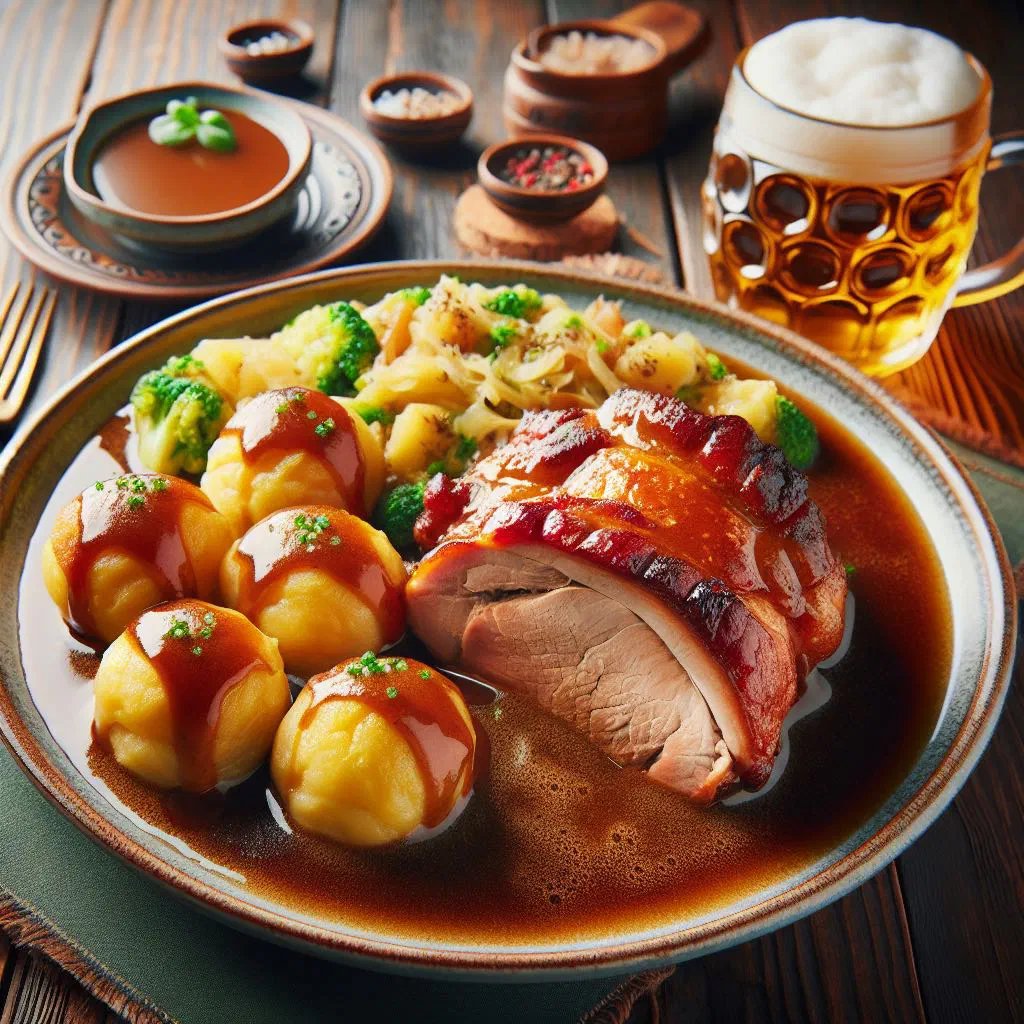
Few dishes say “Sunday lunch in Germany” quite like a pork roast. With its burnished, crackling crust and meltingly tender meat beneath, this classic of the German table is built for celebration, the festive gathering, the long lazy weekend, the table full of family. The secret lies in patient cooking and a handful of well-chosen herbs and spices. Let us walk through it together and unlock the magic of this much-loved roast.
About Pork Roast
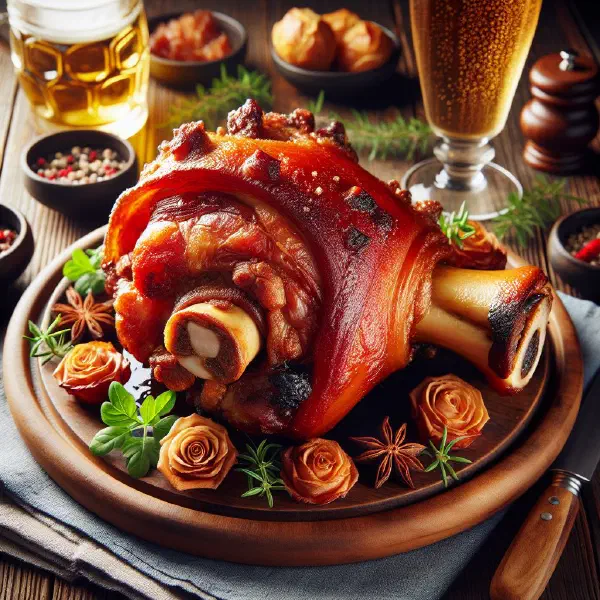
The traditional German pork roast is a true cornerstone of German cooking. What sets it apart is the contrast between its crisp, golden crackling and the juicy, tender meat within. With the right seasoning and a little care in the kitchen, every mouthful becomes a small celebration. It is a dish deeply tied to Sunday lunches and festive occasions, and it remains a firm favourite across the country. Served with the right sides, it turns an ordinary meal into something memorable.
Ingredients (serves 1–2)
- 500g pork neck
- 1 onion
- 2 cloves of garlic
- 150ml vegetable stock
- 100ml dark beer
- 1 carrot
- 1 teaspoon mustard
- 1 teaspoon marjoram
- Salt and pepper, to taste
Shopping for the ingredients
Fresh ingredients are the be-all and end-all of a successful pork roast. Take the time to buy good-quality meat from a butcher you trust, as the cut makes all the difference to the finished dish. Fresh onions, garlic and carrots are just as important for rounding out the flavour. Finally, a decent dark beer and well-stocked spices will pull the whole thing together.
Preparing the dish
Slice the onion into fine rings and chop the garlic into small dice. The carrot should likewise be cut into small cubes. Prepare the marinade from mustard, marjoram, salt and pepper, then rub it thoroughly all over the meat so the flavours can begin to work their way in.
Step-by-step instructions
- Preheat the oven to 180°C.
- Heat a little oil in a large roasting pan and sear the meat hard on all sides.
- Add the onion, garlic and carrot and let them fry briefly with the meat.
- Deglaze everything with the vegetable stock and the dark beer.
- Place the roasting pan in the oven for about 90 minutes.
- Check regularly that there is enough liquid, topping up with a little more if needed.
- Once cooked, remove the meat and let it rest briefly before serving.
Gluten-free / lactose-free version
This pork roast is easy to adapt for dietary needs. For a gluten-free version, swap the beer for a gluten-free beer or simply use extra stock instead. For a lactose-free version, just make sure every ingredient, especially the stock, is free from dairy. With these small tweaks, even guests with intolerances can tuck in without missing out.
Tips for vegans and vegetarians
The traditional pork roast is, of course, not suited to vegans and vegetarians. A delicious alternative, though, is a roast made from seitan or tofu. Prepared with the same herbs and the same generous helping of vegetable sides, it can be seasoned to echo the flavour of the original roast surprisingly well, giving plant-based eaters a hearty centrepiece of their own.
More tips and tricks
The crackling is what makes or breaks a good pork roast. It comes out best when you start with a high heat and then let the meat cook on slowly and gently. Another little secret: homemade vegetable stock lends the dish a real depth of aroma. And do not forget to let the roast rest after cooking. This keeps the precious meat juices where they belong, locked inside the meat.
Adapting the recipe to your taste
Add your favourite herbs, thyme or rosemary, for instance, to tailor the pork roast to your own palate. Experimenting with different styles of beer can also bring out interesting variations in flavour. The cut of meat is worth playing with too: pork neck stays particularly juicy, while a leaner piece gives a more delicate, lower-fat result.
Ingredient substitutions
If dark beer is not to your taste, it can be replaced with apple juice or simply more stock. In place of marjoram, other herbs such as oregano or thyme work just as well. And for a different take altogether, beef makes a fine alternative to pork, as it suits much the same method of slow cooking. Try it the way the locals do in a Saxon Pot Roast.
Drink pairing ideas
Dark beers pair especially well with the traditional German pork roast, the very same kind used in the recipe itself. For an alcohol-free option, a sparkling apple spritzer or a sharp, dry apple juice fits the bill nicely. Robust, full-bodied red wines such as a Cabernet Sauvignon also harmonise beautifully with the rich flavours of the dish.
Serving and presentation ideas
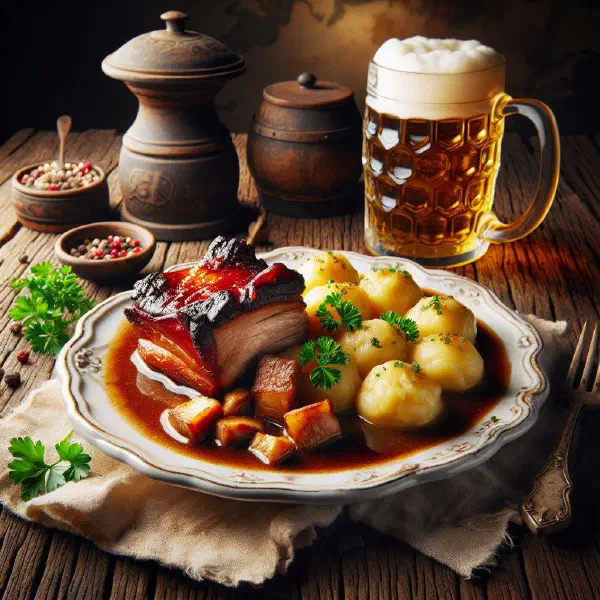
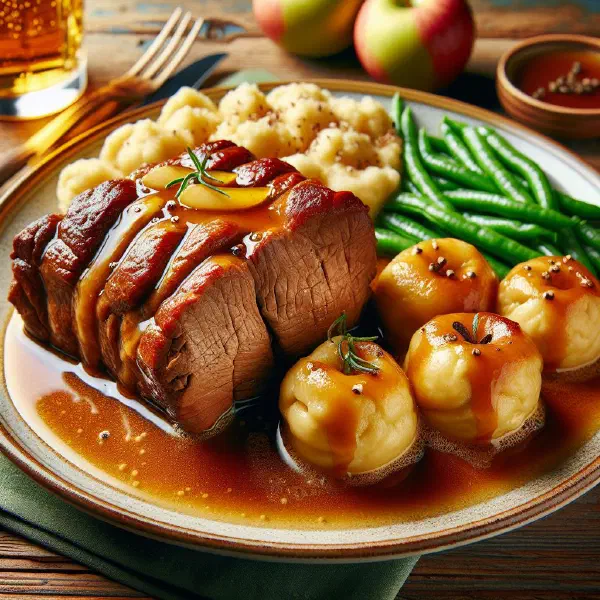
Arrange the meat on a large serving platter and scatter it with freshly chopped herbs. For sides, dumplings, sauerkraut or red cabbage are all natural partners, complementing the roast in both flavour and appearance, much like the Apple Red Cabbage so beloved in German cooking. Use attractive serving dishes and pay a little attention to the table setting for the perfect dining experience.
A bit of history
The traditional German pork roast has a long history and is deeply rooted in Bavarian cuisine. Originally it was a dish of poorer households, who could only rarely afford to put meat on the table. Over time, however, it evolved into a festive favourite, and today it is enjoyed in many regions across Germany. It is a wonderful example of hearty German cuisine at its most comforting.
More recipe ideas
- Bavarian Meatloaf
- Swabian Onion Roast Beef
- Pfannenschlag Pork Stew
- Authentic Thuringian Dumplings
- Wine Sauerkraut
Summary: Pork Roast
The traditional German pork roast is a timeless classic that brings joy to any feast. With the right ingredients and a little care in the cooking, this dish comes out a winner every time. Let our tips and tricks inspire you, and savour your own perfect roast straight from the oven. Happy cooking, and enjoy your meal.