National Dish Germany: Potato Soup (GDR Recipe) (Recipe)

In this article
There is something deeply reassuring about a pot of Potato Soup bubbling away on a cold afternoon. This GDR-era recipe turns a handful of humble ingredients into a warming, filling meal that carries the unfussy spirit of everyday East German cooking. Potatoes, root vegetables and a hearty sausage come together in a fragrant broth scented with marjoram and bay, and it tastes even better the next day once the flavours have had time to settle. It is the kind of honest comfort food that has earned its place at family tables for generations.
About Potato Soup (GDR Recipe)
Potato Soup (GDR Recipe) represents a style of cooking that conjures a warming, satisfying everyday meal from just a few ingredients. The classic combination of potatoes, root vegetables and a savoury sausage garnish could be varied according to whatever happened to be in the larder. It comes into its own on cooler days, because it keeps you full for hours and reheats beautifully. What is more, it often tastes even rounder the day after, as the flavours have time to meld in peace.
Ingredients (serves 1–2)
- 400 g potatoes (floury or mainly waxy)
- 1 small onion
- 1 carrot
- 1 piece of celeriac (roughly 80–120 g) or 1 celery stick
- 1 tablespoon oil or lard
- 700 ml vegetable or meat stock
- 1 bay leaf
- Marjoram (1–2 teaspoons, dried)
- Salt and pepper
- Optional: 1–2 Vienna sausages or Bockwurst, sliced
- Optional: 2 tablespoons cream or a splash of milk
- Optional, to serve: parsley or chives
Shopping for the ingredients
When you shop, it pays to look out for fresh, firm potatoes with no green patches, as these taste better and are cleaner to prepare. Root vegetables such as carrot and celeriac give the soup a robust base flavour, so good quality and freshness matter here in particular. For the stock you can either use a good jarred base or work with stock cubes, though a balanced level of salt makes the later seasoning much easier. If you plan to add sausage, Vienna sausages or Bockwurst are handy, because they heat through quickly and lend the soup a hearty note.
Preparing the dish
Before cooking, peel the potatoes and cut them into even cubes so that everything cooks through at the same time. The onion, carrot and celeriac should likewise be finely diced, since small pieces release their flavour into the broth more quickly. If you prefer a creamier consistency, it helps to cut a portion of the potatoes slightly smaller, as they break down more easily during cooking. Keep your herbs and spices within easy reach, because marjoram and bay shape the aroma especially clearly.
Step-by-step instructions
- Heat the oil or lard in a pot and sweat the onion for 2–3 minutes until translucent.
- Add the carrot and celeriac and sauté for a further 3–4 minutes so that some toasty aromas develop.
- Add the potato cubes, toss them briefly in the pot, then pour in the stock.
- Stir in the bay leaf and marjoram, bring to the boil and then leave to simmer gently for 15–20 minutes.
- Once the potatoes are soft, remove the bay leaf and partly purée the soup if you like (or leave it chunky).
- Optionally add the sausage slices and let them warm through for 3–5 minutes, then season to taste with salt and pepper.
- Optionally stir in cream or milk, warm through briefly and serve with parsley.
Gluten-free / lactose-free version
This soup is naturally often gluten-free, as long as you use a stock that contains no gluten-based additives. Pay particular attention to the ingredient lists of ready-made stocks and sausages, as these may include thickeners or spice blends. For a lactose-free version, simply leave out the cream and milk, or replace them with lactose-free cream or a plant-based alternative such as oat or soya cuisine. If you want the soup creamier, you can instead purée a portion of the potatoes more finely, since the potato starch provides body with no dairy at all.
Tips for vegans and vegetarians
The potato soup turns out beautifully vegetarian with a robust vegetable stock and a little extra root vegetable for depth. It becomes vegan if you leave out the sausage and use a plant-based cooking cream instead of dairy cream, or simply purée more of the potatoes. For a hearty mouthfeel you can add smoked paprika or fried mushrooms, as both bring umami without any animal products. Crisp fried onions or croutons made from gluten-free bread also work well as a topping for more texture, much as they would over a Swabian Lentil Stew.
More tips and tricks
A classic trick is to sweat the onion and vegetables really well at the start, because this makes the soup more aromatic later on. If you like it traditionally thick, purée only around a third to half of the soup and stir it back in, so that chunks remain for bite. When seasoning, it helps to add the marjoram sparingly at first and top it up at the end, as dried herbs gain intensity during cooking. Leftovers keep very well in the fridge for 1–2 days, and when reheated the soup often tastes even better.
Adapting the recipe to your taste
If you fancy a particularly hearty version, you can fry off a little bacon as well or use a robust meat stock, which makes the soup fuller-bodied. For a lighter take, cut back on the sausage and reach instead for more vegetables, such as leek or parsnip, which also pair well with potato. If you like things spicy, add a pinch of chilli or a little mustard, which boosts the warmth of the flavour without masking the base. The consistency is entirely up to you too: from creamy (purée more) to rustic (keep it chunky).
Ingredient substitutions
Celeriac can be swapped for parsley root if needed, which likewise delivers a savoury depth and harmonises well with potatoes. Instead of Vienna sausages you could also use diced Kassler, smoked tofu or fried mushrooms, depending on whether you prefer it classic or meat-free. If there is no stock in the house, water with salt, pepper, marjoram and a little onion will do at a pinch, though a good stock makes the soup noticeably rounder, as in any proper German cuisine classic. For more freshness at the end, a squeeze of lemon juice or finely chopped chives helps to brighten the dish.
Drink pairing ideas
Simple drinks that do not overpower the hearty flavour suit potato soup best, such as sparkling water or a mild apple spritzer. If you like it traditional, reach for a pale beer, whose gentle bitterness pairs well with the savoury note of the soup. An unsweetened herbal tea can also make a pleasant accompaniment, especially if the soup has turned out very spicy. For an alcohol-free, wintry feel, a warm apple tea with a little cinnamon offers a gentle contrast to the soup as well.
Serving and presentation ideas
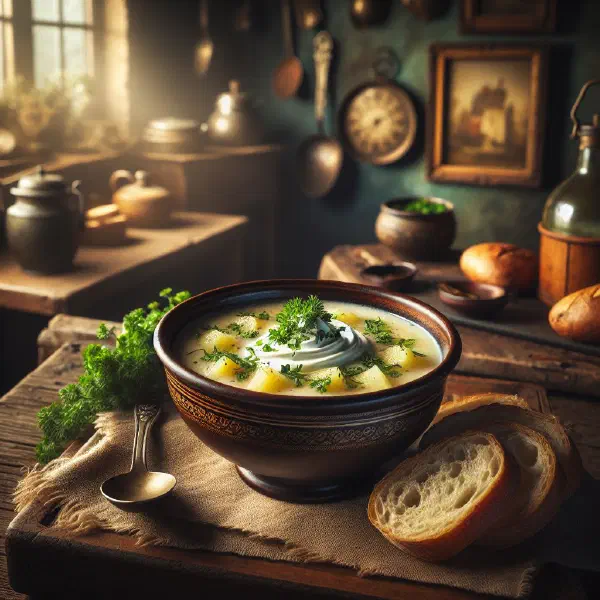
Serve the soup in pre-warmed bowls so that it stays hot for longer and feels comforting to eat. A swirl of cream or plant-based cream looks pretty and brings a mild component to every spoonful. Fresh parsley or chives as a topping add colour and signal freshness straight away. If you are using sausage, even slices or small pieces look especially neat and portion out nicely.
A bit of history
Potato soup was a classic everyday dish in many regions of Germany, because potatoes keep for a long time and are comparatively inexpensive. In the GDR, cooking often made the most of whatever was available, and that is precisely why so many variations exist, with different garnishes and proportions of vegetables. The guiding idea was to cook a filling meal for the whole family from a few basic ingredients, one that could also be stretched easily. Herbs such as marjoram and simple sausages shaped the familiar taste and made the soup a fixture of home cooking, alongside other staples like Pea Stew with Bacon.
More recipe ideas
- Saxon Potato Soup
- Pomeranian Potato Soup
- Potato Soup with Vienna Sausages
- Green Bean Stew
- Rhenish Bean Soup
Summary: Potato Soup (GDR Recipe)
Potato Soup (GDR Recipe) is an uncomplicated dish that brings a down-to-earth flavour to the table with potatoes, root vegetables and marjoram. With small changes such as a vegetarian stock, vegan garnishes or lactose-free alternatives, the basic principle stays intact while the soup becomes wonderfully flexible. The result is a warm, dependable meal that is easy to prepare ahead and still tastes really good the next day.