National Dish Germany: Prasselkuchen (Recipe)
In this article
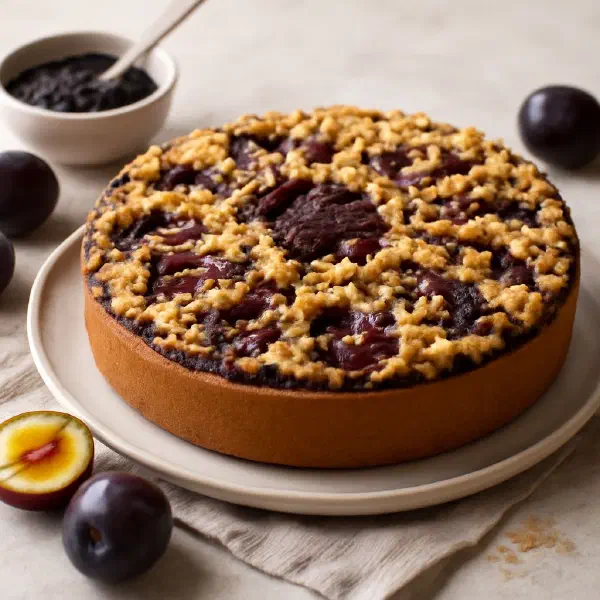
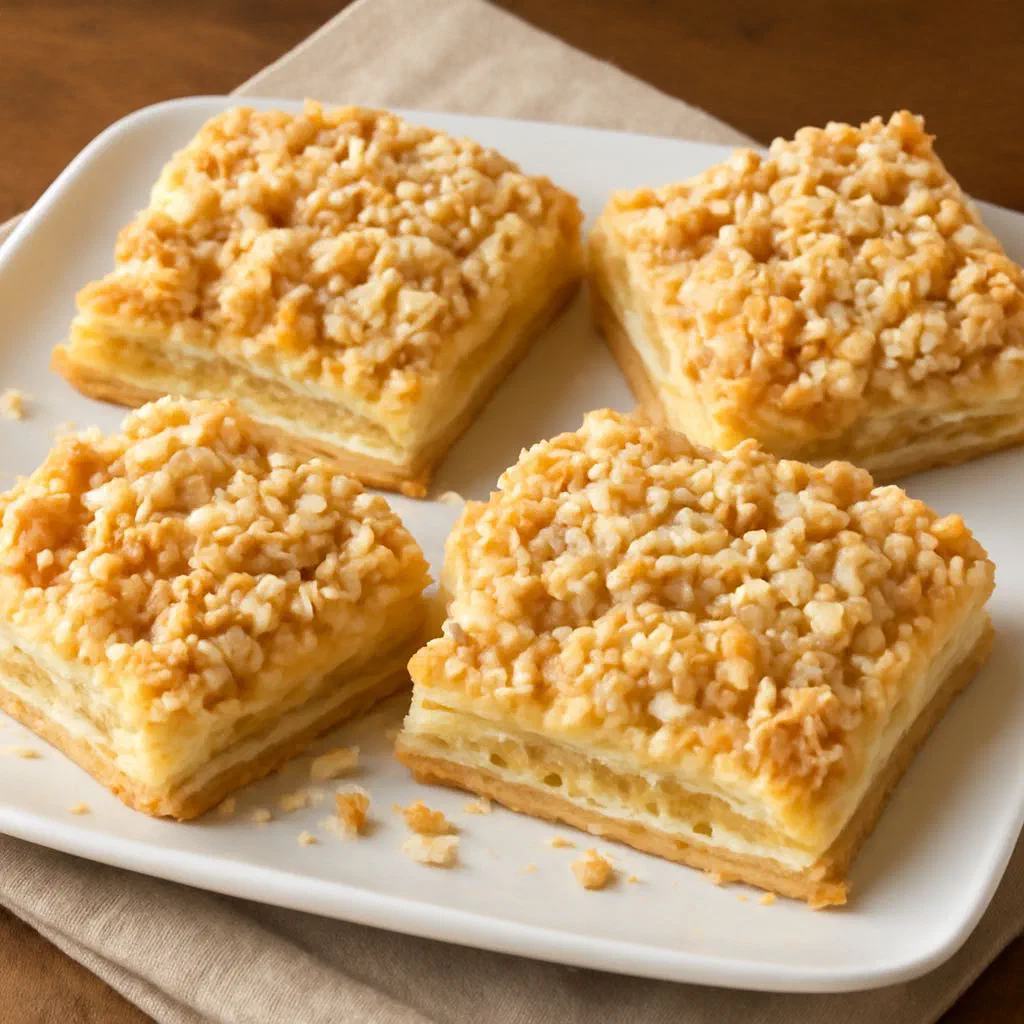
Meet Prasselkuchen, a much-loved tray bake from the old East German baking tradition that earns its name from the satisfying crackle of its crunchy streusel crust. Built on a soft, fluffy yeast dough and crowned with buttery crumbs, it was the kind of cake that turned a weekend coffee table into an occasion, feeding a crowd with very little fuss. Made from honest, everyday ingredients you most likely already have in the cupboard, it tastes wonderful both warm from the oven and cooled the next day.
About Prasselkuchen
Prasselkuchen is a beloved classic from the DDR (former East German) home bakery, prized above all for its crunchy streusel topping and its moist yeast dough. For many people it brings back memories of weekend coffee tables, where a single tray bake could quickly make a whole room of guests happy. The hallmark of the cake is the interplay of buttery streusel, a gentle sweetness and a wonderfully straightforward method using ingredients most households keep to hand. If you enjoy traditional German tray bakes such as a Silesian Streusel Cake, this recipe gives you an authentic, everyday cake that tastes just as good warm as it does cold.
Ingredients (serves 1–2)
For a small quantity, ideal for a little tin (around 18–20 cm) or as a mini tray bake, you need only a handful of ingredients, but each one matters. Pay particular attention to fresh yeast or a reliable dried yeast, as this is what gives the cake its characteristic lightness. With the butter and milk it is worth choosing good quality, because the flavour of the cake benefits noticeably. The quantities below are scaled for 1–2 portions and are easy to double if you need more.
- 150 g plain flour (type 405 wheat flour)
- 75 ml milk, lukewarm
- 5 g fresh yeast (or ½ tsp dried yeast)
- 35 g sugar (10 g for the dough, 25 g for the streusel)
- 70 g butter (20 g for the dough, 50 g cold for the streusel)
- 1 small egg (or ½ large egg, beaten and halved)
- 1 pinch salt
- ½ sachet vanilla sugar (optional, but classic)
- ½ tsp cinnamon (optional, for the streusel)
Shopping for the ingredients
When shopping it helps to check the staples first: flour, sugar, butter, milk and yeast are the load-bearing pillars of this recipe. It is especially important that the yeast is fresh, as older yeast often rises poorly and leaves the cake less light. For a rounded flavour it is worth reaching for real butter, since margarine will give the streusel structure but rather less taste. If you bake often, it also pays to keep vanilla sugar and cinnamon in the cupboard, as they reinforce that unmistakable cake aroma.
Preparing the dish
Ideally take the butter, egg and milk out of the fridge early so they are easier to work with and do not “shock” the yeast. Do not preheat the oven yet, as the dough needs to prove first, and depending on the room temperature that can take a while. Line a small baking tin with baking paper or grease it well, so the cake comes out cleanly later and the streusel does not stick.
Step-by-step instructions
- Activate the yeast: Stir the lukewarm milk with 10 g sugar, crumble in the yeast (or stir in the dried yeast) and leave for 5–10 minutes until bubbles form.
- Knead the dough: Put the flour, pinch of salt, egg and 20 g soft butter into a bowl, add the yeast milk and knead for 6–8 minutes into a smooth, elastic dough.
- Prove: Cover the dough and leave it to rise in a warm place for 45–60 minutes, until visibly risen.
- Prepare the tin: Press or roll out the dough and lay it in the tin, then let it rest for 10 minutes so it relaxes.
- Make the streusel: Rub together 50 g cold butter, 25 g sugar, vanilla sugar (optional), cinnamon (optional) and 60 g flour with your fingertips into streusel crumbs.
- Top the cake: Scatter the streusel evenly over the dough and press lightly so they cling during baking yet stay crumbly.
- Bake: Bake at 180 °C (conventional) or 160 °C (fan) for about 18–25 minutes, until the streusel is golden brown.
- Cool: Leave to rest in the tin for 10 minutes, then turn out and cool completely, or serve lukewarm.
Gluten-free / lactose-free version
For a gluten-free version you can use a gluten-free flour (a bread/yeast-dough blend), as single plain flours without binding agents often turn out crumbly. Make sure the blend already contains xanthan gum or guar gum, so the dough gains stability and does not fall apart. The cake works very well lactose-free using lactose-free milk and lactose-free butter, and the flavour stays remarkably close to the original. Just keep an eye on the proving times, as gluten-free yeast doughs can feel softer and tend to need a tin to give them support.
Tips for vegans and vegetarians
Prasselkuchen is vegetarian to begin with, but a few simple swaps make it pleasingly easy to turn vegan. Replace the milk with oat drink or soya drink and use a vegan butter alternative that rubs nicely into streusel even when cold. You can swap the egg for 1–2 tablespoons of apple purée or a small amount of soya yoghurt; both keep the dough moist and help it bind. With vanilla sugar, simply check that it contains no animal additives, though most varieties are vegan anyway.
More tips and tricks
If you want especially aromatic streusel, you can replace part of the sugar with brown sugar, which brings a gentle caramel note. For a finer crumb in the yeast dough it helps to let the dough rest briefly for 5 minutes after the first knead, then knead again for 1–2 minutes. Do not bake the cake too dark, as streusel firms up a little after coming out of the oven and can taste bitter if overbaked. A neat trick for extra moistness is a wafer-thin layer of butter brushed over the dough before the streusel goes on.
Adapting the recipe to your taste
Prasselkuchen is easy to vary without losing its character, because the core of yeast dough and streusel always stays the same. If you fancy something fruitier, you can spread a thin layer of apple purée or scatter a few finely diced apples under the streusel, which also adds moisture, much like a Rhubarb Cake. For a less sweet version, reduce the sugar in the streusel by around a third without the structure suffering. If you like it especially crunchy, increase the streusel slightly and bake the cake 2–3 minutes longer, until the surface is a lovely golden.
Ingredient substitutions
If you cannot get hold of fresh yeast, dried yeast is a reliable alternative, though the proving time may sometimes run a little longer. Butter in the dough can be replaced with margarine, but for the streusel a firm fat is important so the crumbs do not turn to paste. Instead of ordinary sugar you can also use fine cane sugar; this shifts the flavour slightly but suits traditional tray bakes very well, just as it does a German Cheesecake. If you would rather skip the egg, a small amount of yoghurt (or plant-based yoghurt) works as a stand-in, bringing both moisture and binding to the dough.
Drink pairing ideas
Traditionally Prasselkuchen is served with coffee, as the roasted notes make a lovely counterpoint to the sweetness of the streusel. Black tea works just as well, or a robust East Frisian Tea with Rock Sugar and Cream, especially if you offer the cake lukewarm. For children, or as a lighter option, milk, cocoa or a mild fruit tea all suit it well, underscoring the vanilla and butter aromas. If you fancy something a touch more festive, a glass of apple spritzer also pairs nicely, its light acidity balancing the buttery flavour.
Serving and presentation ideas
A lovely effect comes from dusting the cooled Prasselkuchen with a whisper of icing sugar, which visually highlights the texture of the streusel. It is best to cut the pieces with a sharp knife, wiping the blade between cuts so the streusel does not fray and the edges stay clean. Serve the cake on a simple plate so the golden-brown crust takes centre stage, adding a dollop of cream or a plant-based alternative if you like. For guests it looks especially inviting served slightly warm, as that is when the scent of vanilla and butter comes through most strongly.
A bit of history
In the DDR, tray bakes such as Prasselkuchen were popular because they got by on simple ingredients and were well suited to family celebrations and coffee rounds. Streusel cakes have a long tradition across Germany, yet regional and period-specific variations often arose simply from whatever happened to be available. The name “Prassel” itself is frequently linked to the crunchy sound of the streusel as you slice or bite into the cake. Even today the recipe recalls a kitchen that made a great deal of flavour from just a few components, one in which yeast dough played an important role as an inexpensive, filling base, the same thrifty spirit behind a Hessian Bacon Cake. It is a small but enduring piece of German German cuisine.
More recipe ideas
Summary: Prasselkuchen
Prasselkuchen is a timeless, fuss-free classic that wins you over with its light yeast dough and crunchy streusel. With just a few ingredients, a little patience for the proving and the right streusel consistency, it succeeds even in a small portion for 1–2 people. Thanks to a handful of simple adjustments it is also easy to make lactose-free, gluten-free or vegan without losing its characteristic charm. Whether for a coffee break or as a sweet reminder of traditional baking days, this cake tastes best when you bake it fresh and lift the streusel golden brown from the oven.