National Dish Germany: Rumtopf (Recipe)
In this article
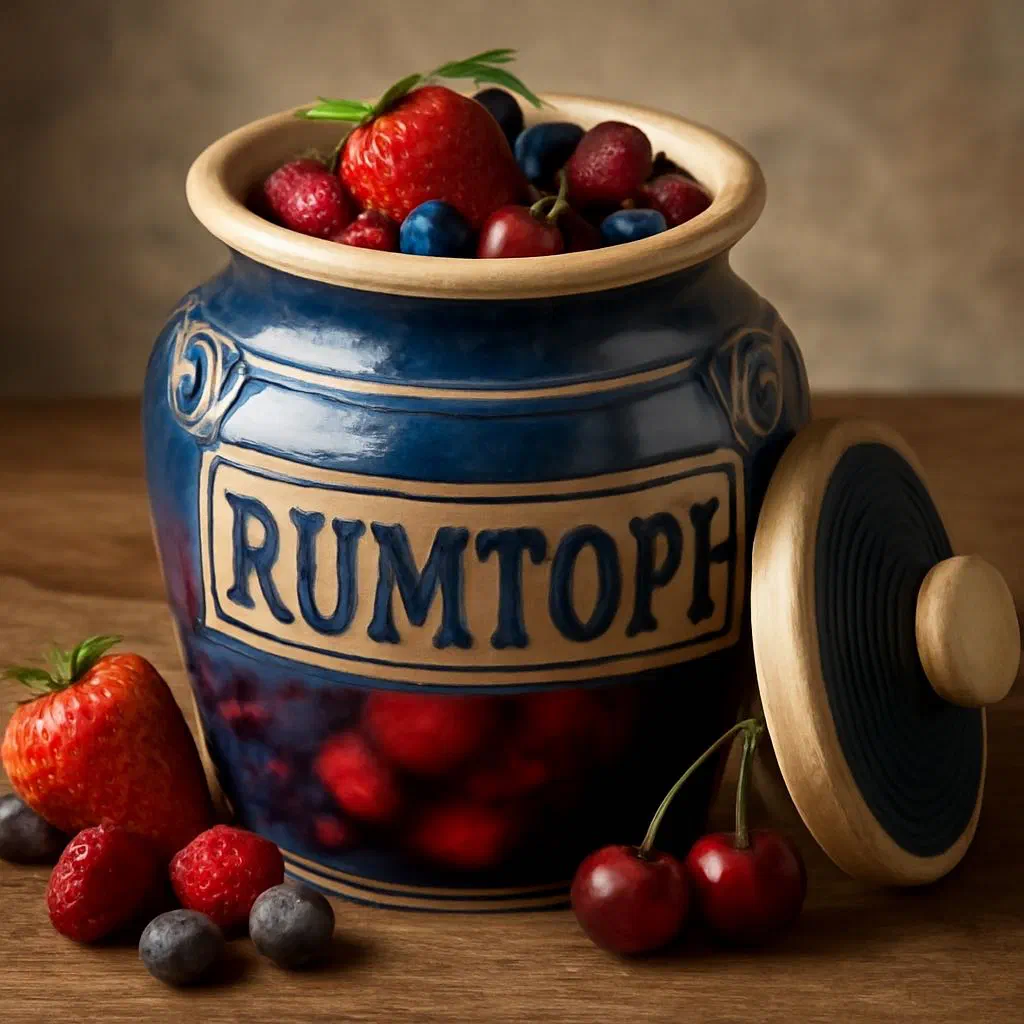
Meet Rumtopf, one of Germany’s most cherished store-cupboard classics, a fruity dessert built up layer by layer over the course of a summer. Ripe seasonal fruits are steeped in rum and sugar until they take on a deep, heady aroma, ready to be spooned over ice cream or cake when the festive season arrives. With very little effort it turns whatever the orchard offers into something that tastes utterly special, making it a wonderful way to capture the warmth of summer in a single jar.
About Rumtopf
Rumtopf is one of the best-known preserving classics from Germany, kept in countless households as a fruity dessert or as an aromatic accompaniment to cake. With this traditional DDR recipe, seasonal fruits are added little by little to a base of rum and sugar, so that an intense flavour develops over several weeks. The guiding idea is to make the most of whatever summer and autumn fruits happen to be in season and to preserve them in alcohol. Rumtopf is especially popular because it comes together with so little effort, yet it instantly tastes like an occasion. Perfect for holidays and family gatherings.
Ingredients (serves 1–2)
- 200–250 g mixed fruits (e.g. strawberries, cherries, apricots, plums; as ripe and aromatic as possible)
- 80–120 g sugar (depending on the sweetness of the fruit and your own taste)
- 150–200 ml rum at 54% vol (or at least 40%, but then work very cleanly)
- Optional: 1 small piece of vanilla or a pinch of cinnamon for extra depth
For just one or two portions a small batch works well, behaving like a “mini Rumtopf” that turns aromatic more quickly. The proportions are key: the fruit should end up completely covered with rum so it is safely preserved. The sugar draws juice from the fruit and helps carry the flavours into the liquid, creating an intense fruit syrup. Vanilla or cinnamon adds a familiar, warming note that suits the winter months particularly well.
Shopping for the ingredients
When shopping, take care to choose fruit that is undamaged and as ripe as possible, since under-ripe fruit gives off less fragrance and can taste rather flat in the alcohol. Aromatic varieties such as dark cherries, plums or apricots are especially good, as they give the Rumtopf a rich colour and real depth. With the rum it is important to pick one that is strong enough: traditionally a high-proof overproof rum (54% vol) is favoured, as it preserves better and dilutes less. For the sugar you can use ordinary household sugar, or combine part of it with brown sugar for a gentle caramel note. The same instinct for ripe, seasonal fruit also lies behind a classic Hamburg Red Berry Pudding.
Preparing the dish
Before you begin, every container should be absolutely clean, as hygiene determines both the keeping quality and the flavour. A small, well-sealing jar is ideal; rinse it with hot water or briefly sterilise it so that no stray microbes get to work. The fruit is washed, thoroughly dried and, depending on the variety, stoned, cored or cut into bite-sized pieces. It is also worth remembering not to cut very juicy fruit such as strawberries too small, so they do not disintegrate too quickly in the rum.
Step-by-step instructions
- Wash the fruit, dry it thoroughly, stone or core it and cut into pieces.
- Put the fruit into a clean jar and sprinkle with sugar; leave for 10–20 minutes until the juice is drawn out.
- Top up with rum until the fruit is completely covered; add vanilla or cinnamon if using.
- Seal the jar tightly and store it in a cool, dark place.
- Leave to steep for at least 7–14 days; occasionally swirl the jar gently so any remaining sugar dissolves.
- To serve, spoon the fruit with a little of the syrup into a small bowl or use it as a topping (over ice cream or cake, for example).
The longer the mixture rests, the more harmoniously the fruit, sugar and rum combine into a rounded flavour. If you want to lay down several fruits across the season, only add new fruit while there is still enough liquid to keep everything completely covered. A small batch for one or two portions is ready to serve sooner, but can still stand for several weeks if you have worked cleanly. After the resting time it is worth tasting once and, if needed, fine-tuning very slightly with a little more rum or sugar.
Gluten-free / lactose-free version
Rumtopf is by nature usually gluten-free and lactose-free, since at heart it consists only of fruit, sugar and rum. Even so, if you are very sensitive, check that the rum used contains no flavoured additives that could carry traces of gluten. When you serve Rumtopf with accompaniments, it is often the companions that cause trouble: in that case choose gluten-free biscuits or a suitable gluten-free cake. It stays effortlessly lactose-free if you simply offer plant-based alternatives or sorbet alongside instead of cream.
Tips for vegans and vegetarians
The basic recipe is generally already vegan, as no animal products are required. Just make sure you really use only sugar, fruit and rum, and avoid adding any dessert ingredients containing gelatine or dairy when serving. Rumtopf goes particularly well with vegan vanilla ice cream or a cream made from whipped coconut cream. For an even fruitier note you can also steep a little untreated orange zest very sparingly, since it quickly turns dominant in the alcohol.
More tips and tricks
The most important rule is this: the fruit must always stay below the surface of the liquid, otherwise it can oxidise or spoil. If you notice that the fruit is releasing liquid and is no longer fully covered, top up with rum in good time. Very delicate fruits such as raspberries are delicious but break down faster; they are better suited to short steeping times or as a later addition. For a clear flavour it helps to combine varieties of similar intensity, so that no single fruit overpowers the rest.
Adapting the recipe to your taste
You can easily steer the Rumtopf towards milder or bolder, by adjusting the amount of rum and varying the steeping time. If you prefer it less alcoholic, use a rum at 40% vol and let the mixture mature a little longer so the flavour still turns deep. For extra sweetness you can reduce the sugar if you use very ripe fruit, or increase it slightly if you steep sharper varieties such as redcurrants. Spices are another lever: vanilla feels soft and rounded, while cinnamon is warm and wintry.
Ingredient substitutions
If you would rather not use a classic rum, a brown rum makes a fine variation, often bringing a caramel-like depth. A measure of fruit brandy (kirsch, for example) can also be interesting, but should be added with care so the fruit aroma stays in the foreground. With the sugar you can vary between white sugar, brown sugar or even a small amount of vanilla sugar, as long as the sweetness does not mask everything. As for fruit, pears or peaches work well alongside the classics, while very watery melons are best avoided as they quickly turn mushy. The same caution with watery fruit also applies to a long-simmered Fruit Soup.
Drink pairing ideas
Rumtopf is best matched with drinks that balance the fruity sweetness and do not make the alcohol feel any heavier. A black tea or a strong coffee is ideal, as the bitterness and roasted notes provide a lovely contrast. For something more festive, serve a small glass of sparkling wine or a dry white wine, where dry works far better than sweet. For an alcohol-free pairing, sparkling water with lemon or an unsweetened fruit tea is a good choice, keeping the dessert at the centre of attention.
Serving and presentation ideas
Rumtopf looks especially inviting when served in small, clear bowls, so the fruit colours show through. A spoonful of the rum-and-sugar syrup over vanilla ice cream or a Rice Pudding with Cinnamon turns a simple base into an aromatic highlight in moments. For a bit of texture you could scatter over toasted flaked almonds or a few biscuit crumbs, switching these out as needed for allergies. Layering it in a glass also looks beautiful, perhaps with plant-based yoghurt, fruit and a little syrup as a “sauce”.
A bit of history
Rumtopf is a traditional example of how fruit can be preserved by steeping while also preparing a festive dessert for later in the year. In many German families, whatever the season offered was gathered over months, and at the end of the year the Rumtopf came to the table as a special treat. The DDR recipe in particular stands for a down-to-earth, practical kitchen: available, long-keeping and with a strong focus on stocking the larder. Precisely because fresh exotic fruits could not be taken for granted, regional fruit and good planning played a central role in flavour and enjoyment, a thrifty spirit shared across much of German cuisine.
More recipe ideas
Summary: Rumtopf
The Rumtopf is an aromatic classic in which ripe fruit matures with sugar and rum into a long-keeping dessert. The keys are working cleanly, covering the fruit completely and allowing enough time for it to steep, so the flavours can come together. Thanks to the flexible choice of fruit, the taste is easily adapted to the season and to personal preference, from mild and fruity to bold and spiced. Served over ice cream or cake, or as a dessert in a glass, Rumtopf brings a special, festive note to the table.